Vorposten im Schach
Es gibt einen Moment, der in vielen Schachpartien eintritt, wenn eine Figur plötzlich nicht mehr provisorisch wirkt. Sie landet auf einem Feld und bleibt dort. Nicht, weil der Gegner sie vergessen hat, sondern weil es nicht mehr einfach ist, sie zu vertreiben. Das Feld ist gedeckt, die umliegenden Bauern sind fixiert, und jeder Zug um diese Figur herum wird unangenehm. Dann sprechen Spieler meist von einem Vorposten. Für neuere Spieler kann die Idee zunächst abstrakt wirken. Aber sobald man ein paar Partien durch einen starken Springer-Vorposten verliert, beginnt man, diese Felder überall zu sehen.
Was ist ein Vorposten im Schach?
Also, was ist ein Vorposten im Schach?
Ein Vorposten befindet sich tief im feindlichen Gebiet. Ein sicheres Feld, auf dem Ihre Figur sitzen kann, ohne angegriffen zu werden.
Meist von einem Springer genutzt, daher in den Schachmedien auch als „Springerposten“ bekannt.
Ein Läufer kann manchmal auch einen Vorposten besetzen, aber Springer profitieren dramatischer davon, da Springer in der Nähe des Zentrums stärker werden.
Das wichtige Detail ist die Bauernstruktur.
Wenn feindliche Bauern die Figur nicht mehr vertreiben können, wird das Feld wertvoll.
Das ist die Grundlage fast jedes starken Vorpostens im Schach.
Ein einfaches Beispiel sieht so aus:
- Weiß platziert einen Springer auf d6
- Schwarz hat keinen Bauern mehr auf c7 oder e7
- Der Springer kann nicht von Bauern angegriffen werden
- Nahe Felder werden schwer zu verteidigen
Einmal etabliert, kontrolliert dieser Springer oft die gesamte Stellung.
Das Seltsame an einem guten Vorposten ist, dass er nicht sofort Material gewinnt.
Manchmal macht er den Gegner nur zwanzig Züge lang unangenehm.
Dieser Druck summiert sich langsam.
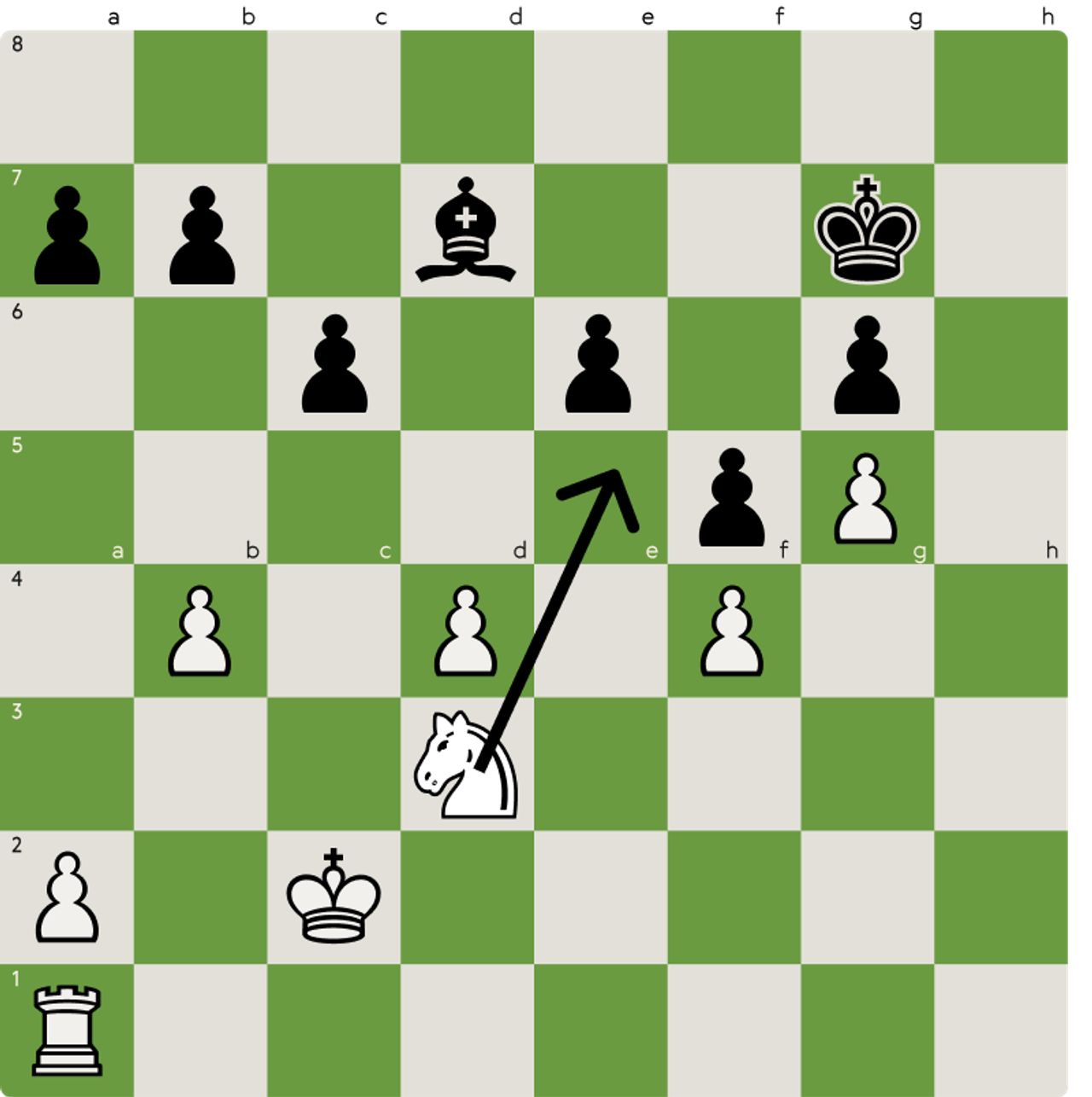
Bedeutung des Schach-Vorpostens
Der Ausdruck „Bedeutung des Schach-Vorpostens“ klingt technisch, aber die meisten erfahrenen Spieler verstehen ihn instinktiv.
Eine sichere Figur verändert die Spielweise beider Seiten.
Starke Vorposten:
- schränken die Bewegungsfreiheit ein
- blockieren Bauernvorstöße
- schaffen taktische Drohungen
- unterstützen Angriffe auf den König
- kontrollieren wichtige Zentrumsfelder
Ein gedeckter Springer-Vorposten kann besonders lästig sein, da Springer in ungewöhnlichen Mustern angreifen. Anders als Läufer oder Türme können sie nicht einfach blockiert werden.
Deshalb bauen viele Positionsspieler ihre Strategie aktiv um die Schaffung eines Vorpostens im Schach auf, anstatt sofortige Angriffe zu starten.
Manchmal wird das Feld selbst wichtiger als Material.
Es gibt auch eine psychologische Seite.
Wenn ein starker Springer ein fortgeschrittenes Feld erreicht, werden Gegner oft ungeduldig. Sie versuchen, ihn zu schnell zu entfernen, und schwächen dabei andere Teile der Stellung.
Diese Reaktion schafft Gelegenheiten.
Beispiele für Schach-Vorposten
Der einfachste Weg, Beispiele für Schach-Vorposten zu verstehen, ist, sich typische Mittelspielstrukturen vorzustellen.
Ein typisches Szenario tritt in geschlossenen Stellungen auf.
Stellen Sie sich Folgendes vor:
- Weiße Bauern stehen auf e5 und c4
- Schwarz‘ d-Bauer ist verschwunden
- Ein weißer Springer springt nach d6
Nun greift der Springer an:
- f7
- e8
- c8
- b7
Inzwischen können schwarze Bauern ihn nicht mehr angreifen.
Das ist eine klassische Schach-Vorposten-Situation.
Ein weiteres häufiges Beispiel stammt von Königsangriffen.
Ein Springer gelangt nach f5, meist gedeckt durch einen Bauern auf e4. Wenn auf der gegnerischen Seite kein g-Bauer mehr vorhanden ist, wird es sehr schwierig, den Springer zu vertreiben.
Von dort kann er unterstützen:
- Opfer auf h6
- Angriffe in der Nähe des Königs
- Druck auf Zentrumsfelder
Stellungen wie diese tauchen ständig in aggressiven Eröffnungen auf.
Interessanterweise missverstehen Anfänger manchmal die Idee.
Sie nehmen an, dass jeder fortgeschrittene Springer als Vorposten zählt.
Nicht ganz.
Wenn ein Bauer den Springer im nächsten Zug noch vertreiben kann, ist das Feld meist noch nicht stabil genug.
Die wahre Stärke eines Vorpostens im Schach kommt von der Beständigkeit.
Warum Springer am meisten profitieren
Andere Figuren können ebenfalls fortgeschrittene Felder nutzen, aber Springer erhalten den größten Schub.
Ein Läufer greift bereits aus der Ferne auf langen Diagonalen an. Ein Turm arbeitet am besten auf offenen Linien.
Springer sind anders.
Ohne fortgeschrittene Felder können Springer sehr schnell passiv werden.
Aber ein gut platzierter Springer-Vorposten ändert das völlig.
Plötzlich beeinflusst der Springer beide Seiten des Bretts gleichzeitig.
Deshalb schätzen viele strategische Spieler Springer in geschlossenen Stellungen höher ein, wo Vorposten leichter zu schaffen sind.
Fazit
Das Fazit ist recht einfach.
Eine Figur kann mit einem Vorposten viel Stabilität gewinnen, Einfluss auf das Brett und langfristigen Druck ausüben. Bevorzugt wird dies von einem Springer auf diesem Posten. Dies erklärt die Idee des Springerpostens.
Was das Konzept interessant macht, ist, dass der Vorteil sich normalerweise allmählich aufbaut.
Es mag keine sofortige Taktik oder schnelles Schachmatt geben. Stattdessen verbessert der Vorposten langsam Zug um Zug die Stellung einer Seite, bis das Verteidigen unangenehm wird.
Sobald Sie beginnen, Vorposten in Partien zu erkennen, sehen Sie sie überall – und danach wird es schwer zu ignorieren, wie mächtig ein einzelnes gedecktes Feld wirklich sein kann.
Siehe auch
Lesen Sie mehr: Springer im Schach, Strategie im Schach und Taktik im Schach.