Bishop in Chess
People learning chess for the first time usually pay attention to the queen. It moves everywhere, attacks quickly, and tends to decide games. The bishop feels quieter. Some beginners even forget about it for several moves. Then, sooner or later, they lose to one. A single diagonal can suddenly become dangerous. A king gets trapped, a rook hangs undefended, or a pawn structure starts collapsing from long range. That is often when players begin to appreciate the role of the chess bishop. Unlike knights, bishops do not jump. Unlike rooks, they avoid straight lines completely. Their strength comes from distance and angles.
What is Bishop Chess Piece
So, What is Bishop Chess Piece in practical terms?
Every player starts with two bishops. One begins on a light square and the other on a dark square. They stand between the knights and the king or queen at the beginning of the game.
An important detail catches many newer players off guard: a bishop never changes square color. If it starts on dark squares, it remains on dark squares for the entire game.
That affects strategy much more than people expect.
The bishop chess piece moves diagonally only. If the path is clear, it can cross several squares in one turn.
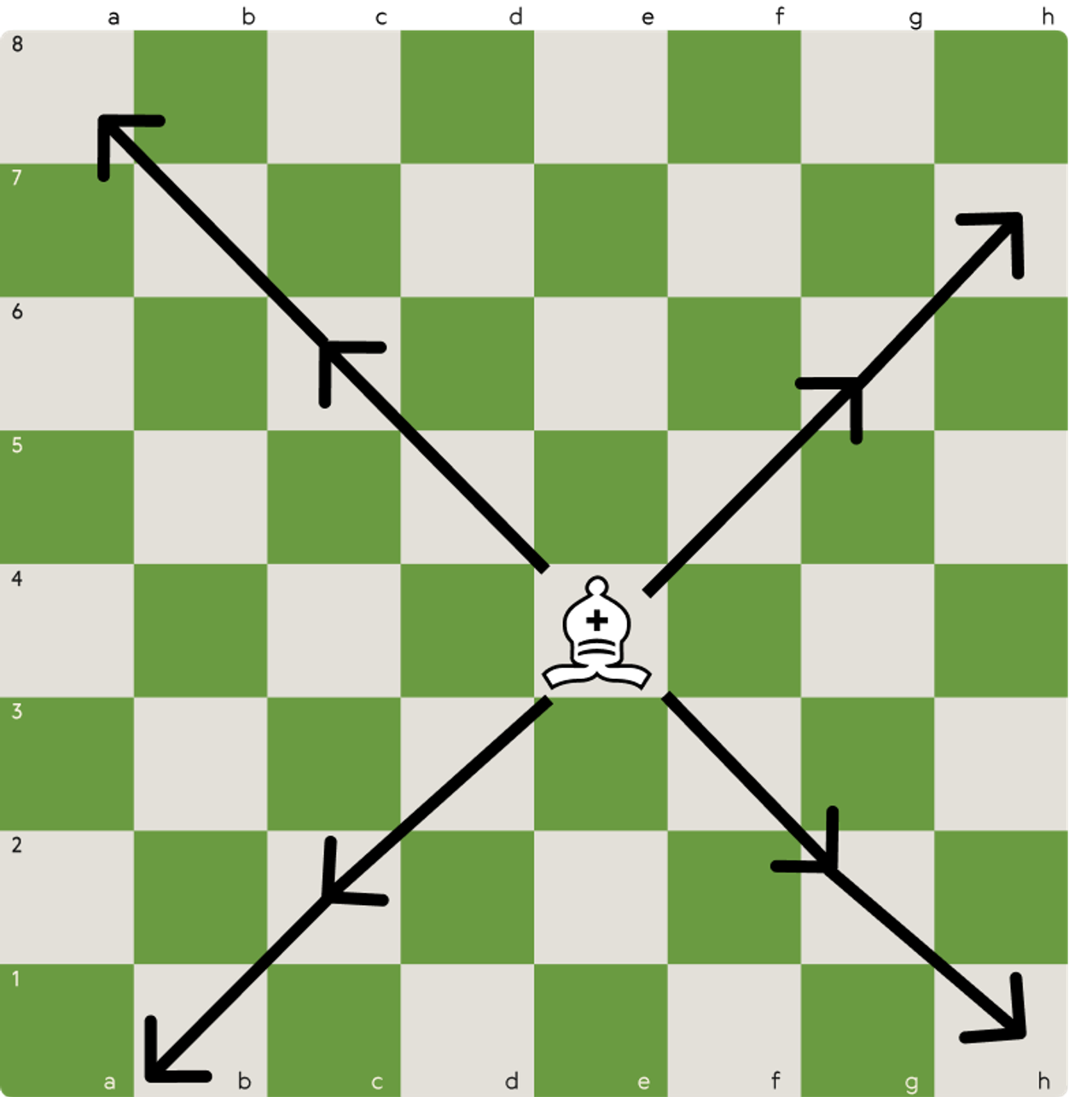
Sometimes a bishop becomes trapped behind its own pawns. Other times it cuts across the entire board and controls key squares without needing support.
That contrast is part of what makes bishops interesting.
How Does a Bishop Move In Chess
The section How Does a Bishop Move In Chess is easier to understand visually than verbally.
A bishop travels diagonally:
- upward
- downward
- left diagonal
- right diagonal
The movement of the bishop could be anything from one square to moving across the whole board as long as nothing is in the way.
One of the key bishop rules is that bishops cannot jump over pieces. If a pawn stands in front of the diagonal, movement stops there.
This explains why bishops sometimes feel weak early in games. Pawns clog the board and reduce open lines.
Later, after exchanges happen, bishops usually gain more freedom.
As an example:
- a bishop on f1 might move to g2, h3, e2, d3, c4, b5, or a6
- but only if those squares are open
Capturing follows the exact same pattern.
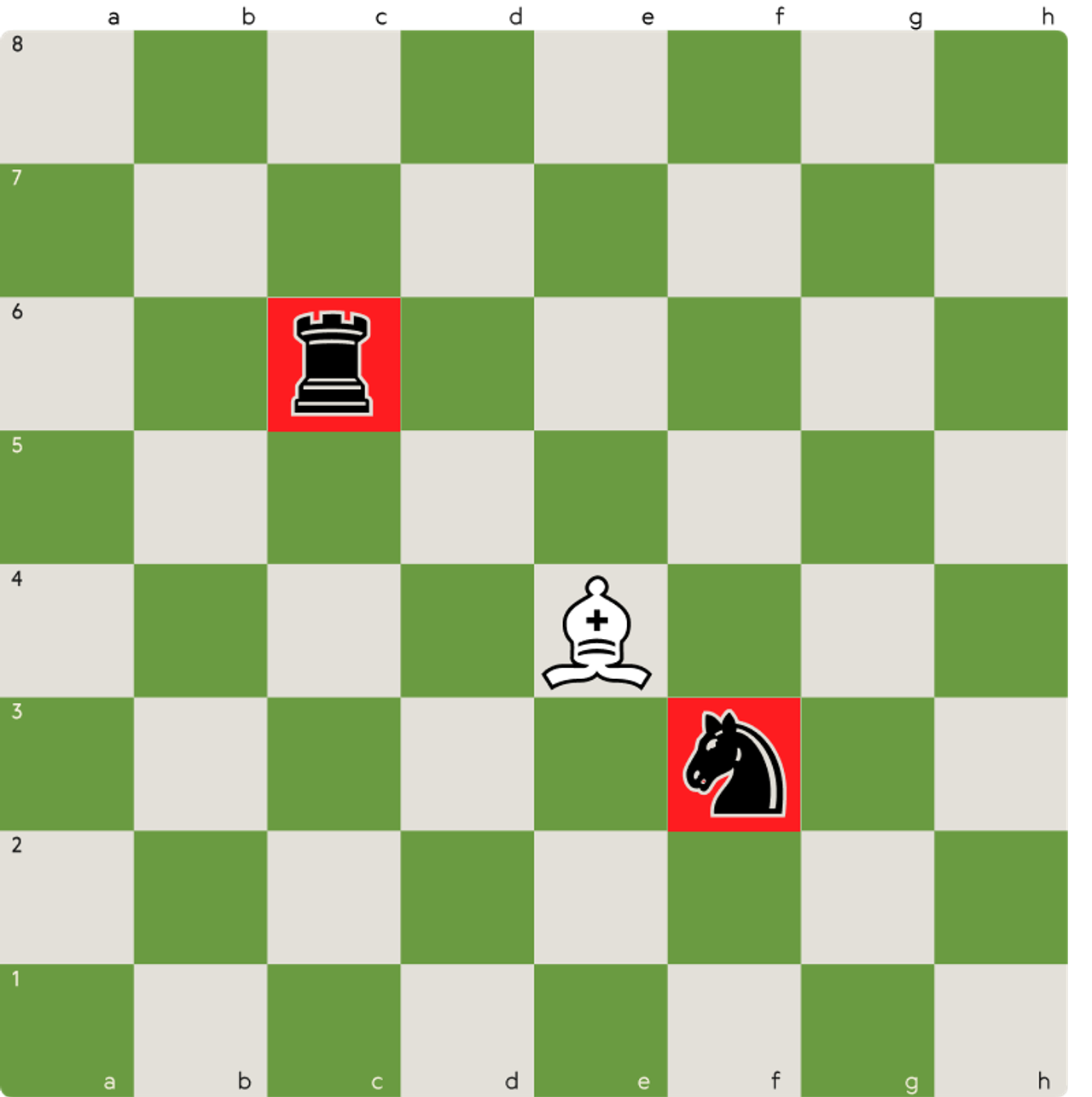
Many strong players enjoy using bishops in long attacks because pressure builds quietly. A piece that looked harmless a few turns earlier can suddenly support checkmate ideas.
That hidden pressure is one reason the bishop in chess matters so much in open positions.
Chess Bishop Piece Value
The section Chess Bishop Piece Value usually compares bishops with knights.
Traditionally, both pieces are valued around three points. In real games, though, the position matters more than the number itself.
Closed positions often favor knights because they can jump over blocked squares. Open positions usually improve bishop activity.
Two bishops together can become especially unpleasant to face. One controls dark squares while the other handles light squares. That partnership allows attacks from both color complexes at once.
Players often call this “the bishop pair.”
Still, bishops are not perfect pieces.
A bishop chess piece only attacks one color group for the whole game. If important squares sit on the opposite color, the bishop may struggle to contribute.
That weakness explains why some endgames favor knights instead.
Small details players notice later
As players improve, they begin paying attention to bishop quality rather than simply counting material.
Questions start changing:
- Is the diagonal open?
- Are pawns blocking the bishop?
- Does the bishop defend important squares?
- Can the opponent trap it?
These details matter more than beginners usually expect.
A passive bishop can feel almost invisible. An active one can dominate the board quietly for twenty moves straight.
You might also like
Conclusion
The Conclusion becomes fairly clear after a few real games.
The chess bishop is not flashy at first glance, but its influence grows as the position opens. Long diagonals, distant attacks, and quiet pressure make bishops extremely important in practical play.
Most beginners learn the movement quickly. Understanding when a bishop is strong takes much longer.
See Also
Read more: Knight in Chess, Two Bishops Checkmate, and Fianchetto in Chess.