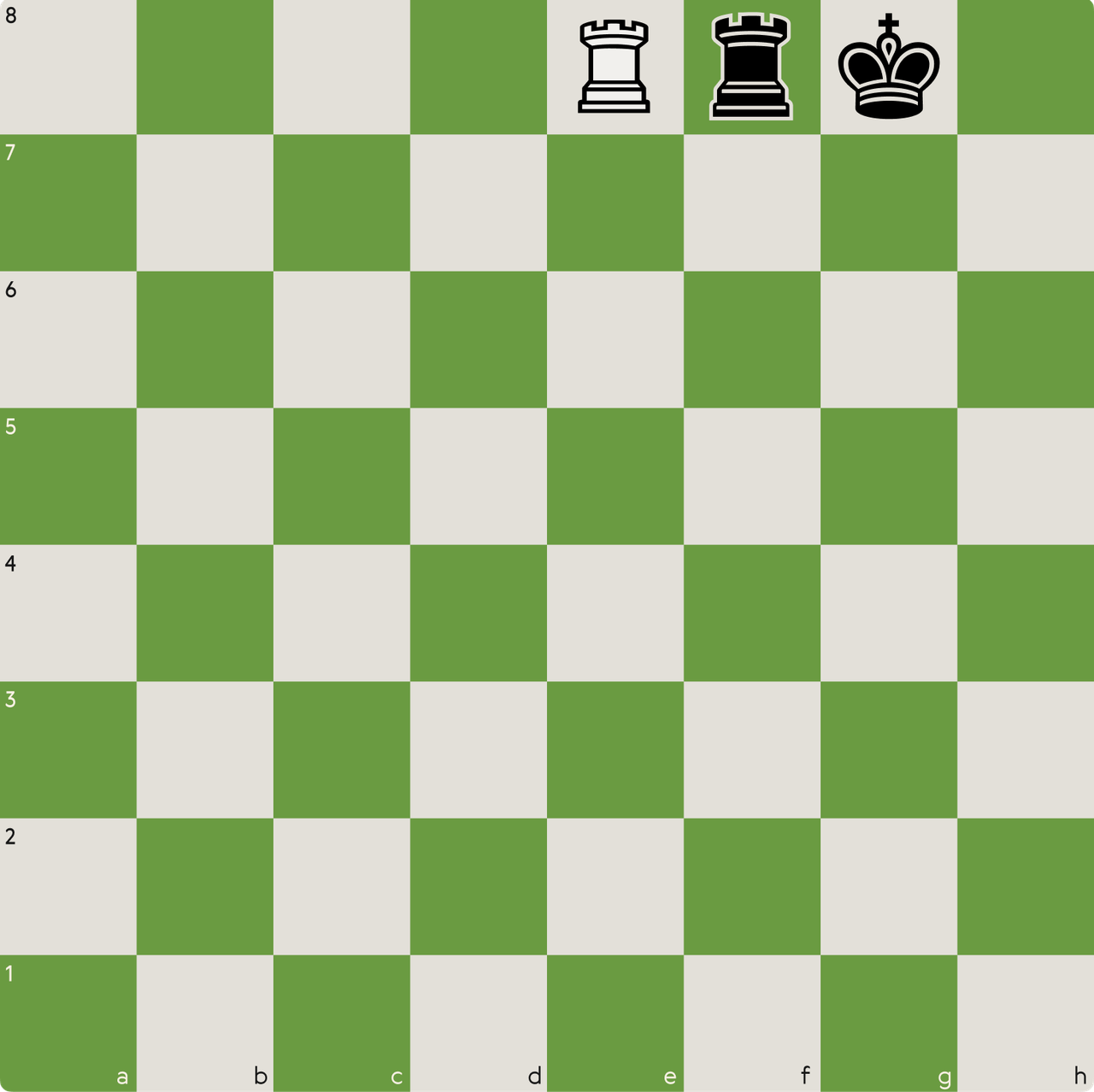
Chess Skewer
The skewer is one of the most reliable tactical patterns in chess. But it wins material cleanly and often decides games on the spot. If you play long enough, you will both benefit from skewers and fall victim to them. The difference comes down to recognition. If you have an understanding of patterns, how they work and where they appear, you are able to see how to utilize them everywhere, most importantly in endgame and opening positions
What Is a Skewer?
This happens when a long-range piece strikes a high-value piece that is placed in front of a low-value piece. The more valuable piece is forced to move. When it moves, the piece behind it becomes exposed and is usually lost.
The tactic depends on alignment. For the skewer, two pieces must be uniform on the same rank, file or diagonal. The bishop, rook or queen (attacking piece) attacks the piece in front. If done correctly, the piece behind is usually lost.
It can be looked at as a reverse pin, instead of the front piece being attacked, movement is forced. As an example for a classic skewer, the king is located on an open file, the rook standing behind. If your rook gives a check along that file, the king must step aside, thereafter the rook is no longer protected and may be claimed.
Skewer vs Pin
They can be frequently mixed up, since both the skewer and pin count on lined up pieces, however, they differ in mechanics.
The piece is of lower value in a pin, unable to move, for doing so would expose the high-value piece behind it, effectively the front piece is immobilized.
In a skewer, the front piece is more valuable. Exposing the less valuable piece behind it so you don't lose the higher value piece under direct attack.
So the difference is about hierarchy. In a pin, the valuable piece is behind. In a skewer, the valuable piece is in front.
The Two Main Types of Skewer
Skewers fall into two categories but follow the same principles, absolute and relative.
Absolute Skewer
An absolute skewer involves the king as the front piece. Since the king must move if checked, there is no flexibility, but it is a forced move.
After the king is forced to move, the piece behind it (usually a queen or rook) is exposed and can fall if not defended.
This skewer is very common at the end of games, as the king moves toward the center and the board opens up.
This is one reason why precise king placement matters in simplified positions. A single careless step can allow a rook or bishop to create a decisive skewer.
Relative Skewer
A relative skewer does not involve the king, but a queen, rook or other valuable pieces instead.
When the front piece is attacked, it usually moves to preserve material. After it moves, the piece behind it is captured.
Unlike an absolute skewer, the defender technically has options. They could choose to sacrifice the front piece instead. Relative skewers often occur on open files controlled by rooks or along long diagonals controlled by bishops. Queens are especially vulnerable to being skewered because of their high value. Players instinctively move them when attacked, sometimes overlooking what stands behind.
Why Long-Range Pieces Matter
Only bishops, rooks, and queens can create skewers. Knights and kings cannot apply pressure through alignment in the same way.
The tactic depends entirely on linear movement. A rook controls ranks and files. A bishop controls diagonals. A queen controls both. When two enemy pieces share one of those lines, the potential exists.
That is why skewers frequently appear after exchanges. When pawns move and pieces are traded, lines open. What was once blocked becomes accessible.Strong players constantly check long lines before finalizing a move. They ask: if this file opens, what aligns? If this diagonal clears, what stands behind the king?
The skewer is less about creativity and more about disciplined scanning.
Typical Situations Where Skewers Appear
Skewers are most common in positions with open geometry, endgames being the most common. Pieces like the rook & bishops gain power with fewer pieces and pawns blocking the way.
Rook endgames, in particular, produce many skewers. Kings and rooks often occupy the same file as they fight for activity. One inaccurate move can allow a checking rook to force the king aside and win material.
Bishops create skewers on long diagonals, especially when fianchetto structures are involved. If a king shelters on g8 or b1 and a rook or queen stands behind it, a diagonal check can immediately expose that piece.
Even in middlegames, skewers arise after tactical exchanges. A capture that opens a file may reveal that two pieces were aligned all along.
How to Spot a Skewer in Your Own Games
During calculation, train yourself to look for alignment patterns. Scan ranks, files and diagonals before making a move to see which positions are controlled by your long-range pieces. If two opposing pieces are in line, examine if the front piece is attacked and whether it would result in forced movement.
After every capture or pawn push that changes the structure, pause briefly. Ask whether any new lines have opened. It is also helpful to review your own games specifically for this pattern. When you lose material, check whether alignment played a role. When you win material, identify whether it came from forcing a piece off a line.
Pattern recognition develops through repetition.
Defending Against the Skewer
Often, once the skewer is on the board, it is too late. Prevention is more realistic than cure.
Avoid placing your king and a major piece on the same open file without necessity. Be cautious about stepping your king onto a diagonal controlled by an opposing bishop when another piece stands behind it.
In some cases, you can block the line before the tactic lands. In others, you may defend the piece behind the front one, reducing the impact. But most successful defenses happen earlier — by not allowing the alignment in the first place.
Final Perspective
The skewer is not complicated. It is geometry combined with piece value. Two pieces stand in line. The more valuable one is attacked. It moves. The less valuable one falls.
Yet this simple idea decides countless games. It appears in beginner tactics and grandmaster endgames alike.
If you discipline yourself to watch open lines and respect alignment, you will start spotting skewers quickly — both for yourself and against you. Once you can recognize patterns consistently, you are less surprised and susceptible to this tactic, and can utilize it instead. The shift from accidental discovery to deliberate is where the true improvement in your game is seen.
See Also
Read more: Chess Pin, Tactics in Chess, and Double Attack in Chess.