Special Moves in Chess
The majority of chess movements are predictable. Bishops move diagonally, rooks straight and knights are able to L jump across the board. But within chess there are also some unusual rules that allow pieces to behave differently. These are usually the first moments that confuse beginners: a king suddenly moving two squares, a pawn capturing sideways without landing on the occupied square, or a pawn unexpectedly turning into a queen. They feel strange initially because they break the normal patterns players spend time learning early on. Still, these exceptions are important. Without them, chess would lose a surprising amount of depth. That’s why understanding the special chess moves matters for every player, even at beginner level.
What Are The Special Moves in Chess?
So, What Are The Special Moves in Chess?
Official chess rules recognize three unique actions that work differently from standard movement.
The 3 special moves in chess are:
- castling
- en passant
- pawn promotion
Each one changes the game in a different way.
Some improve king safety. Others prevent loopholes in pawn movement. One completely transforms a pawn into another piece.
Together, these rules create many of the dramatic moments people associate with real games.
A surprising number of casual players know the moves exist but aren’t completely sure when they are legal.
That uncertainty is common, especially with en passant.
Why special rules exist
The game would technically still function without these rules, but it would become less balanced.
For example:
- castling helps protect the king faster
- promotion rewards pawns reaching the final rank
- en passant prevents unfair pawn escapes
Over centuries, these rules became permanent parts of competitive chess.
Today, they are included in every official ruleset.
Understanding special moves in chess also helps players avoid illegal moves during tournament games.
All Special Chess Moves
The section called All Special Chess Moves covers the three official exceptions separately because each one follows different conditions.
En Passant special move
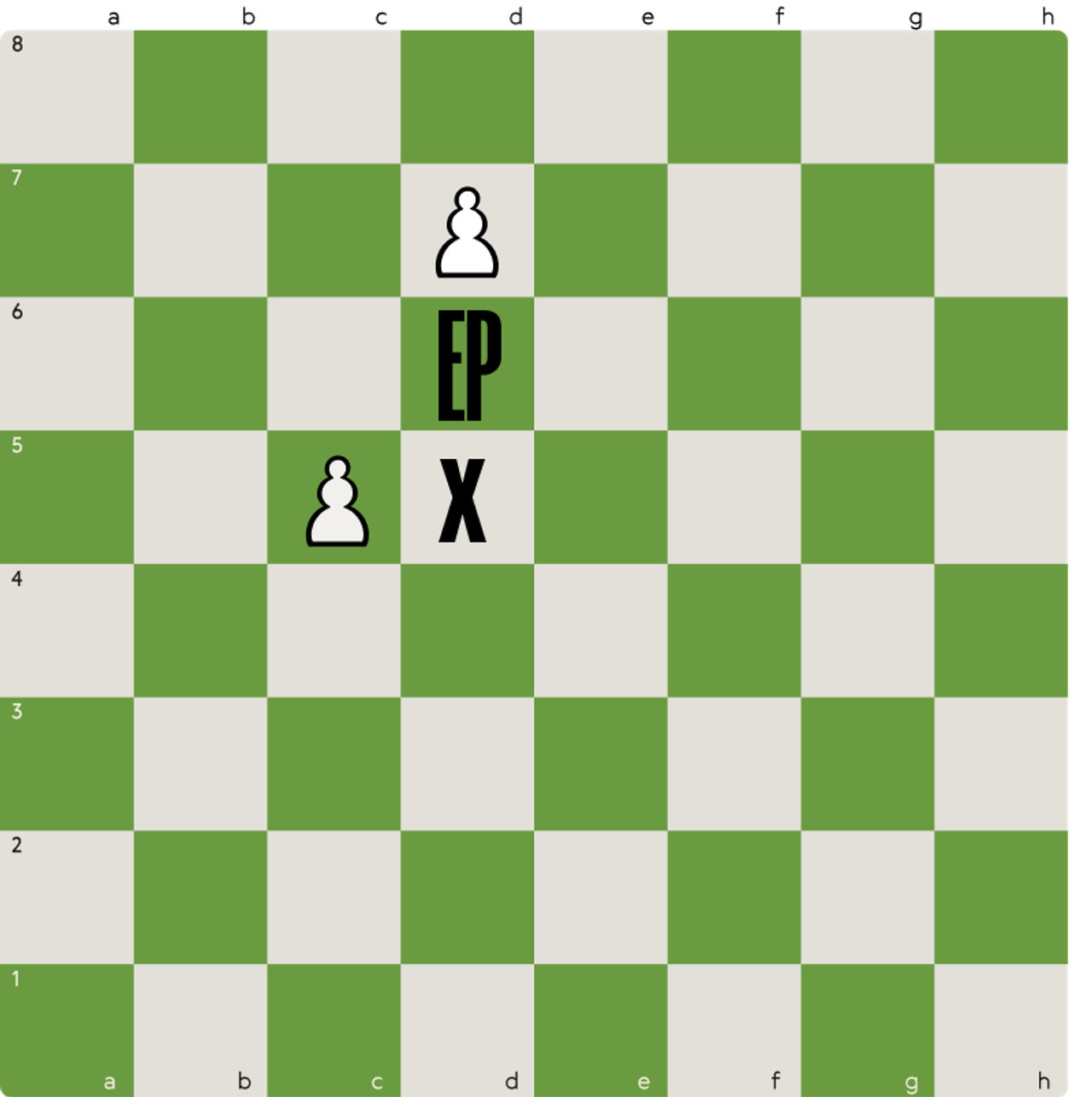
The en passant tends to be the most misunderstood move amount of all the special moves.
It only applies to pawns.
Here’s the idea:
- a pawn advances two squares from its starting position
- an enemy pawn stands beside the square it skipped
- the enemy pawn may capture it immediately as if it had moved only one square
That capture must happen right away. If a move passes first, the opportunity disappears.
The phrase “en passant” comes from French and roughly means “in passing.”
Many beginners forget this rule exists entirely until someone uses it against them unexpectedly.
That tends to make the lesson memorable. This is a key special move for pawns as it alters the pawns interactions during the opening and middle game.
Castling Special Move
Castling involves a king and rook moving together and is the only move where two pieces move simultaneously.
During castling:
- the king moves two squares toward the rook
- the rook jumps to the square beside the king
There are two versions:
- kingside castling
- queenside castling
The move helps solve a major problem early in the game: king safety.
Without castling, many kings would remain exposed near the center for too long.
That’s why this king special move in chess appears in most serious games.
However, castling has restrictions.
A player cannot castle if:
- the king has already moved
- the rook involved has moved
- pieces block the path
- the king is currently in check
- the king would pass through check
Those conditions matter because beginners sometimes try castling illegally without realizing it.
Pawn Promotion Special Move
This move explains what happens once a pawn is able to reach the opposite side of the board. Once a pawn reaches the final rank, it must transform into another piece.
Usually players choose:
- queen
- rook
- bishop
- knight
In practice, promotion to a queen happens most often because queens provide maximum power.
Still, unusual promotions sometimes appear in puzzles or advanced games.
Promotion creates some of the most dramatic endings in chess because even a single surviving pawn can completely change the evaluation of a position
One interesting detail is that players are not limited by captured pieces.
A side may legally have:
- two queens
- three knights
- multiple rooks
after promotion.
That possibility surprises many newer players the first time they see it happen.
Why these moves matter strategically
Learning all special moves in chess is not only about legality.
These moves shape strategy directly.
Examples:
- castling influences opening plans
- en passant affects pawn structure
- promotion defines many endgames
Without understanding them properly, players often miss important tactical opportunities.
A single forgotten en passant or missed promotion can completely change a game result.
Common beginner mistakes
Several errors appear frequently:
- forgetting castling restrictions
- missing en passant captures
- promoting without replacing the pawn correctly
- delaying king safety too long
Most players eventually learn these lessons through experience—usually after one painful game.
Other articles you might like
Conclusion
The special chess moves may look unusual at first, but they are essential parts of how real chess functions. The king is projected by castling, en passant allows the pawn movement to be more balanced, and a pawn promotion acts as a reward system for the pawn surviving the whole board.
All together these special moves allow you to upgrade your game tactically and strategically, giving more flexibility to what couldn't be reached with the standard movements. They can allow players to feel more in control of the game and a more competent player overall.
See Also
Read more: Chess En Passant, Pawn Promotion In Chess, and Touch Move Rule in Chess.