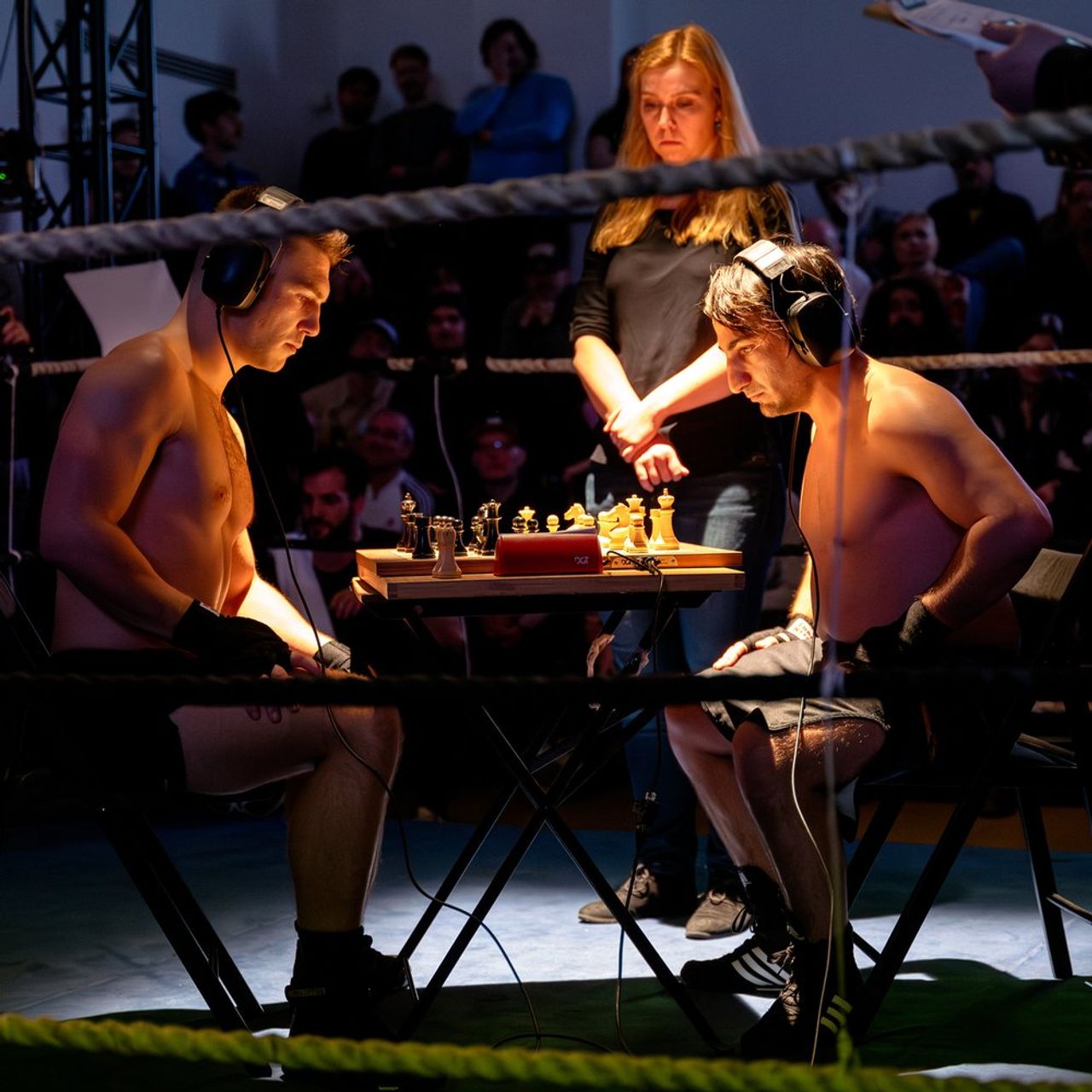
Шахмат боксы
Шахмат боксы – бұл екі қатысушы шахмат пен бокс раундтарын кезектестіріп, мат жеңіске жеткенге дейін (шахматта мат немесе бокста нокаут) жалғасатын гибридті спорт түрі. Матч 11 раундтан тұрады – алты шахмат раунды және бес бокс раунды, шахматпен басталып, шахматпен аяқталады. Бірдей шахмат ойыны барлық раундтар бойы жалғасады, ал бокс күресі барлық бокс раундтарында дамиды. Аман қалу үшін ми да, жұдырық та қажет.
Шахмат боксы дегеніміз не?
Шахмат боксы ақыл-ойды қажет ететін ойын (шахмат) мен физикалық күшті қажет ететін спортты (бокс) біріктіреді. Қатысушылар бокс рингінің ортасындағы шахмат тақтасына отырады, содан кейін тұрып бір-бірін ұруға тырысады, содан кейін қайта отырып, сол шахмат ойынын жалғастырады – мұның бәрі жүрек соғысы шарықтау шегінде болған кезде.
Әрбір шахмат раунды 3-4 минутқа созылады. Әрбір бокс раунды 3 минутқа созылады. Ойыншыларға раундтар арасында қолғаптан фигураларға ауысу үшін бір минуттық үзіліс беріледі. Шахмат раундтары кезінде қатысушылар шу өткізбейтін құлаққап киеді, сондықтан көрермендер кеңес бере алмайды.
Шахмат пен бокстың үйлесуі абсурдты болып көрінеді, бірақ дәл осы идея. Бұл спорт сирек кездесетін қасиетті талап етеді: шаршаған кезде анық ойлау және тақтадағы аяқталмаған позициядан алаңдаған кезде тиімді күресу қабілеті.
Барлық шахмат боксы ережелері
Шахмат боксы спорты екі пәннің стандартты ережелерін ұстанады, бірақ бірнеше қосымшалармен:
Матч шахматта мат, нокаут, техникалық нокаут, шахмат сағатында уақыттың аяқталуы, кез келген пәнде берілу немесе төрешінің тоқтатуы арқылы аяқталуы мүмкін. Егер шахмат ойыны тең аяқталса және нокаут болмаса, жеңімпазды бокс судьяларының бағалары анықтайды. Егер бокс ұпайлары да тең болса, қара шахмат фигураларымен ойнаған ойыншы жеңеді – бұл шахматта бірінші жүріс артықшылығының жоқтығын өтейді.
Әр ойыншының шахмат сағатында барлық алты раунд үшін жалпы 9-12 минут уақыты бар. Бұл оны мәні бойынша блиц шахматына айналдырады, терең есептеуге уақыт жоқ. Кідіртуге қатаң тыйым салынады. Егер төреші ойыншы шахматтан ұтылуды болдырмау үшін әдейі уақытты созып жатыр деп есептесе, ол ескерту және 10 секундтық ультиматум береді. Жүріс жасамасаңыз, матчтан айырыласыз.
Кәсіби деңгейде жарысу үшін қатысушыларға әдетте кемінде 1600-1800 шахмат рейтингі және тиісті бокс дайындығы қажет. Сіз тек бір пәнде жақсы бола алмайсыз – ережелер ешкімнің күшті пәнінде жасырынуына жол бермеу үшін жасалған.
Шахмат боксының тарихы
Шахмат боксының тарихы көпшілік ойлағаннан ертерек басталады. Бұл тұжырымдама алғаш рет Энки Билалдың 1992 жылғы француз комиксінде «Froid Équateur» пайда болды, онда қарсыластар шахматқа отырудан бұрын толық бокс жекпе-жегін өткізді. Формат практикалық емес еді, бірақ идея сақталды.
Голландиялық перформанс суретшісі Иепе Рубинг Билалдың идеясын нақты өмірге әкелді. 2003 жылы ол Берлинде алғашқы ресми шахмат боксы іс-шарасын ұйымдастырып, форматты кезектесетін раундтарға өзгертті. Сол жылы Амстердамда алғашқы әлем чемпионаты өтті. Рубингтің өзі Жан Луи Венстраға қарсы күресіп, 11-раундта қарсыласы шахмат уақытынан асып кеткенде жеңіске жетті. Рубинг алғашқы Әлем чемпионы атанды.
Осыдан кейін спорт Еуропа мен одан тыс жерлерге тарады. Берлинде алғашқы тек шахмат боксына арналған спортзал ашылды, ал іс-шаралар Лондонда, Мәскеуде, Лос-Анджелесте және Үндістанда өткізілді. 2013 жылы Chess Boxing Global Мәскеуде Әлем чемпионатын ұйымдастырды, онда бір түнде үш титулдық жекпе-жек өтті – бұл 1200-ден астам көрерменді тартқан маңызды оқиға болды.
Жақында әлеуметтік медиа әсер етушілері шахмат боксын таза бокс жекпе-жектеріне балама ретінде қабылдап, спортты миллиондаған жаңа көрерменге таныстырды.
Шахмат боксы спортының салмақ дәрежелері
Дәстүрлі бокстағыдай, шахмат боксы әділ бәсекелестікті қамтамасыз ету үшін салмақ дәрежелерін пайдаланады. Chess Boxing Global (CBG) кәсіби іс-шаралар үшін келесі бөлімдерді таниды:
Ерлер салмақ дәрежелері:
- Жеңіл салмақ: 70 кг дейін
- Орта салмақ: 80 кг дейін
- Жеңіл ауыр салмақ: 90 кг дейін
Әйелдер салмақ дәрежелері:
- Жеңіл салмақ: 55 кг дейін
- Орта салмақ: 65 кг дейін
- Жеңіл ауыр салмақ: 75 кг дейін
World Chess Boxing Organisation (WCBO) басқаратын әуесқой және жасөспірімдер жарыстары үшін салмақ дәрежелері 6 килограмдық қадамдармен бөлінеді, бұл қатысушылар арасында дәлірек сәйкестікке мүмкіндік береді.
Танымал шахмат боксы ұйымдары
Халықаралық деңгейде шахмат боксы спортын үш негізгі ұйым басқарады:
World Chess Boxing Organisation (WCBO) – 2003 жылы Берлинде құрылған, WCBO алғашқы басқарушы орган болды және 2013 жылға дейін әлем чемпионаттарын ұйымдастырды. Ол әуесқой және жасөспірімдерді дамытуда белсенді болып қала береді.
World Chess Boxing Association (WCBA) – 2013 жылы құрылған, WCBA спортты жаһандық деңгейде дамытуға бағытталған және өзі де, WCBO да тәж кигізген чемпиондарды таниды.
Chess Boxing Global (CBG) – Сондай-ақ 2013 жылы құрылған, CBG кәсіби лига ретінде жұмыс істейді және өндіріс стандарттарын айтарлықтай арттырды. Олардың 2013 жылғы Мәскеу іс-шарасы спорт үшін жаңа эталондар орнатты, онда Леонид Чернобаев сияқты жекпе-жекшілер болды, ол сегізінші раундта техникалық нокаутпен жеңіл ауыр салмақтағы титулды жеңіп алды.
Сондай-ақ әртүрлі тәуелсіз промоутерлер бүкіл әлемде көрмелерден бастап әуесқой карталарға дейін іс-шаралар ұйымдастырады. Формат ұйымдастырушылар арасында аздап өзгереді, бірақ негізгі принцип – шахмат пен боксты кезектестіру, біреу жеңіске жеткенше – өзгеріссіз қалады.
Шахмат боксы туралы жиі қойылатын сұрақтар
Шахмат боксы дегеніміз не және ол қалай жұмыс істейді?
Шахмат боксы бір матч ішінде шахмат пен бокс раундтарын кезектестіреді.
Ойыншылар шахмат боксы матчында қалай жеңіске жетеді?
Ойыншылар шахматта мат, нокаут, берілу, уақыттың аяқталуы немесе төрешінің тоқтатуы арқылы жеңе алады.
Шахмат боксы нақты спорт ретінде танылған ба?
Иә. Шахмат боксы ресми ұйымдармен басқарылады және халықаралық жарыстарда өткізіледі.
Шахмат боксы спортшыларына шахмат және бокс дайындығы қажет пе?
Иә. Шахмат боксында табысқа жету үшін стратегиялық шахмат шеберлігі де, боксқа дайындық та қажет.