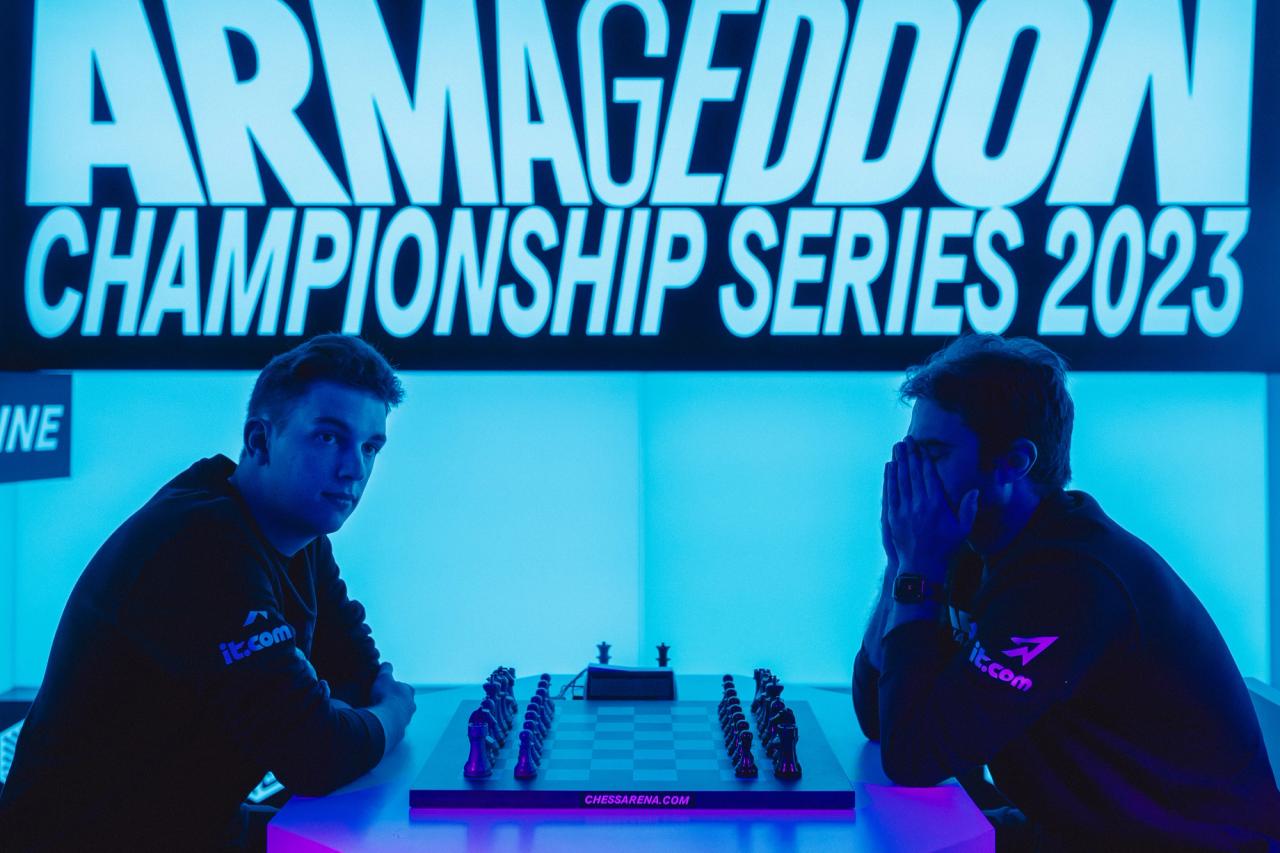
Armageddon Chess
Armageddon in chess is what organizers use when they need a winner, no matter what. If regular games, rapid, or even blitz don’t settle things, this is the final step. It comes down to a single game. No series, no second try. One player goes through, the other doesn’t. The twist is in the setup. It’s not equal. One side gets more time, the other gets draw odds. That imbalance is deliberate—it forces a result. You’ll often see armageddon chess at the end of knockout matches or tied finals.

How Does Armageddon Chess Work
The format looks simple at first, but it changes how both players approach the game.
In most cases:
- White has more time on the clock
- Black has less time but wins if the game is drawn
- There’s only one game to decide everything
That last point matters. There’s no recovery if things go wrong.
Because of these armageddon chess rules, White usually has to take the initiative. Sitting back doesn’t work—you need a win. Black, meanwhile, can afford to be more patient, but not passive. If you defend too much, you can still get squeezed.
So even though it’s just one game, it rarely feels calm.
Armageddon Chess Variations
There isn’t one fixed version used everywhere. Tournaments adjust the details depending on what they want.
A few common setups:
- Different time splits For example, 5 minutes for White and 4 for Black is common, but not universal.
- Time bidding Players may choose how much time they’re willing to take as Black. Whoever accepts less gets the draw odds.
- Increment or none at all Some games add a small increment after each move, others keep it sudden-death.
The structure shifts, but the idea behind chess armageddon doesn’t. It’s there to end things quickly and clearly.
Summary About Armageddon Chess
At its core, armageddon chess is a practical solution. Classical formats can stretch on, especially at high levels where players defend extremely well. This cuts through that.
It’s not perfectly balanced, and it’s not meant to be. Instead, it creates pressure. White has to push. Black has to hold—or take chances at the right moment.
For spectators, it’s usually one of the most tense parts of an event. There’s no long buildup left, just one game where every move matters more than usual.
If you watch enough top-level events, you’ll run into it sooner or later. And once you do, the format makes sense pretty quickly.
See Also
Read more: Chess Time Controls, Blitz in Chess, and Swiss System in Chess.