Discovered Attack
Some chess tactics happen instantly. A fork appears, material drops, and the game changes in one move. A discovered attack feels different. At first glance, the board may even look quiet. One piece stands in front of another, blocking its line completely. Then suddenly the front piece moves away—and an attack appears that wasn’t visible a second earlier. That hidden pressure is what makes the tactic dangerous. For many players, the first successful chess discovered attack feels memorable because the move often creates two threats at once. One piece moves, another piece attacks, and the opponent suddenly has more problems than they expected.
What Is a Discovered Attack in Chess?
So, What Is a Discovered Attack in Chess?
A discovered attack happens when one piece moves aside and reveals an attack from another piece behind it.
Usually the hidden attacking piece is:
- a bishop
- rook
- queen
These long-range pieces work best because their lines can be blocked and then uncovered.
A simple example:
- a bishop sits behind a knight
- the knight moves with tempo
- the bishop suddenly attacks the queen
That is a classic discovered attack in chess.
The tactic becomes even stronger when the moving piece also creates its own threat at the same time.
Players often confuse discovered attacks with discovered checks.
They are related, but not identical.
A discovered check specifically attacks the king after the front piece moves. A standard chess discovered attack can target any valuable piece instead.
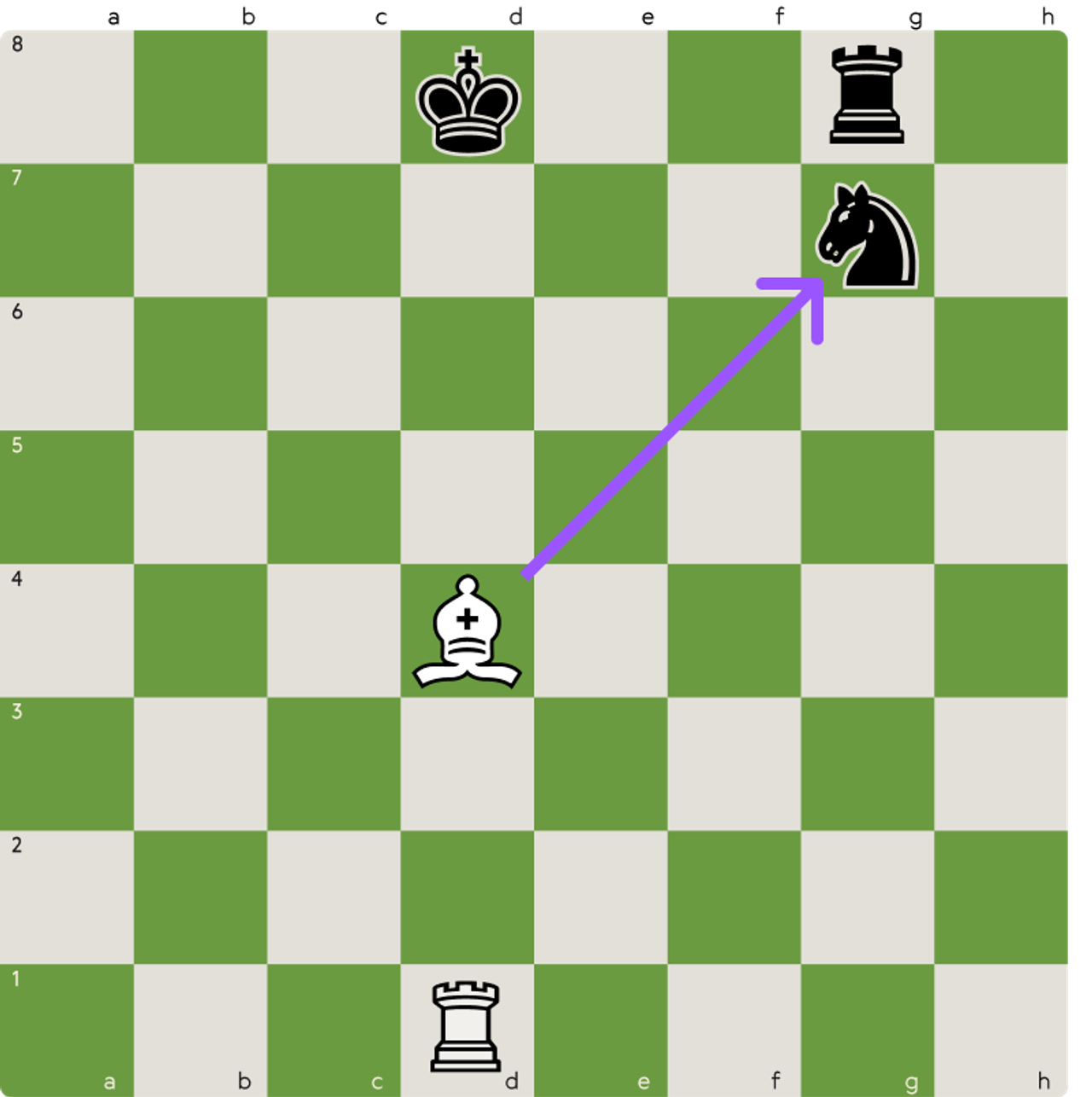
One reason the tactic works so well is psychological.
People naturally focus on visible threats. Hidden lines behind pieces are easier to overlook, especially during fast games.
Why discovered attacks are dangerous
The strongest tactical ideas in chess usually create multiple problems simultaneously.
A discovered attack does exactly that.
When the front piece moves, two things happen:
- the moved piece may attack something directly
- the hidden piece suddenly joins the attack
Defending both threats can become impossible.
This is why many strong players actively search for discovered attack in chess opportunities during tactical sequences.
Sometimes the attack wins material immediately. Other times it forces weaknesses that become important several moves later.
Knights are especially common as the moving piece because they can jump away while creating additional threats elsewhere.
That combination often produces very uncomfortable positions for the defender.
Discovered Attacks Types
The section Discovered Attacks Types includes several variations players encounter regularly.
Standard discovered attack
This is the basic version.
One piece moves away and reveals an attack behind it.
Example:
- knight moves
- rook attacks queen
Simple, direct, effective.
Discovered check
This version targets the king.
After the front piece moves, the hidden piece gives check automatically.
Because responding to check is mandatory, discovered checks are often extremely powerful.
In some positions they lead directly to mate.
Double attack discovered sequence
This happens when:
- the moved piece attacks one target
- the uncovered piece attacks another
Now the defender faces two separate threats simultaneously.
Many famous tactical combinations begin this way.
Discovered attack with sacrifice
Occasionally a player intentionally sacrifices the front piece to open the line behind it.
These positions are harder to calculate but can become devastating if accurate.
Take Advantage Of A Discovered Attack: Examples
The easiest way to understand Take Advantage Of A Discovered Attack: Examples is through practical positions.
Imagine this setup:
- White bishop points toward the black queen
- White knight blocks the bishop’s diagonal
- The knight jumps forward with check
Now:
- the king is attacked
- the queen is attacked
- black likely loses material
That is a classic tactical pattern.
Another common chess discovered attack example appears on open files.
Picture:
- a rook lined up against a queen
- a knight standing between them
- the knight moves while attacking a rook simultaneously
Suddenly both major pieces are threatened.
Even strong players miss ideas like this under time pressure.
One important habit is learning to spot aligned pieces.
Whenever:
- bishop + queen
- rook + queen
- rook + king
sit on the same line, players should immediately ask:
“Can I uncover an attack here?”
That question alone helps identify many tactical opportunities.
Why beginners miss discovered attacks
Most beginners focus only on the piece they plan to move.
Experienced players look at what gets revealed afterward.
That difference matters.
A move that seems harmless may suddenly uncover:
- a bishop diagonal
- a rook file
- a queen attack
Once players begin recognizing hidden lines consistently, tactical awareness improves quickly.
Common mistakes
Several errors appear repeatedly:
- forgetting pieces behind the front piece
- opening lines accidentally for the opponent
- missing discovered checks
- calculating only the first threat
Ironically, players sometimes walk into a chess discovered attack because they concentrate too heavily on one side of the board.
Other pages you might like
Conclusion
The Conclusion is fairly straightforward.
A strong chess discovered attack creates pressure by revealing hidden force at exactly the right moment. Because two threats often appear together, the tactic can win material very quickly or lead directly into larger combinations.
For improving players, the important skill is learning to notice aligned pieces and blocked lines before they open.
Once you start spotting those hidden connections during games, discovered attacks stop feeling surprising—and start becoming weapons you can use yourself.
See Also
Read more: Chess Check, Tactics in Chess, and Chess Pin.