French Defense
Normally the first few moves of a game of chess will decide the type of battle it will be. It may vary from an immediate tactical fight, to a slow and focused long-term plan. The French defense would fall into the latter. Instead of fighting for the centre immediately with pieces, Black challenges White’s position with a strong pawn structure and looks for chances to strike back later. The opening begins with: 1. e4 e6 Black’s idea is simple. The e6 pawn readies itself...d5, attacking the centre of white and generating a solid foundation. It may appear passive at a glance, however the French Defense is designed for patience, counterattacking and knowledge of pawn structures. It is attractive to many as it delivers a clear black to black from the get go. Useful for beginners learning strategy, but also appeals to the more experienced who want a reliable defence against 1.e4.
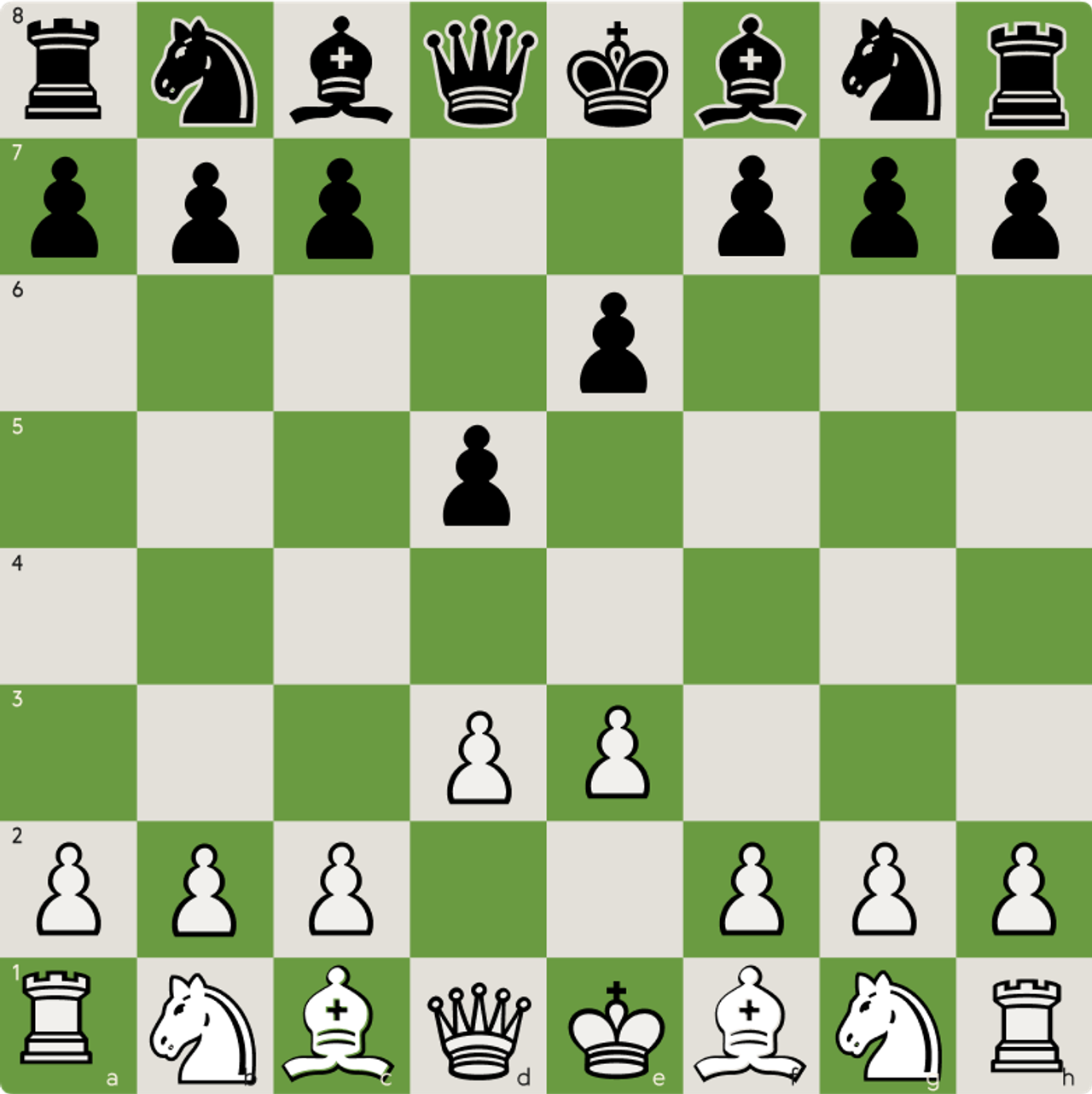
How to Play French Defense
After White starts with 1.e4, Black responds with 1...e6. The next goal is usually to play ...d5 and challenge White’s centre.
A common setup looks like this:
- Black develops the knight to f6
- The dark-squared bishop finds a useful position
- The queen and rooks support future central breaks
- Black prepares attacks against White’s pawn chain
The aim is not to gain space straight away but rather black will allow white to create a strong centre position and then launch their attack.
A key part of this is central tension. White may have more space, but Black has targets to attack. The player using the French Defense must understand when to wait and when to break open the position with moves like ...c5 or ...f6.
The opening can lead to very different types of games. Some positions become tactical battles with attacks on both sides, while others turn into slower strategic games where planning is more important than immediate threats.
Types and Variations of French Defense
There have been many variations of the French defense, all achieving different play styles.
Popular choices include:
Advance Variation
White pushes their pawn to e5, achieving space. Black tends to attack the centre and attempts to undermine White’s pawn chain.
Exchange Variation
White exchanges pawns early with exd5. This creates a simpler structure and is often chosen by players who prefer quieter positions.
Winawer Variation
One of the sharpest options. Black allows structural changes in exchange for active piece play and attacking chances.
Classical Variation
A more traditional approach where Black develops naturally and focuses on controlling important central squares.
Tarrasch Variation
White develops the knight to d2 instead of immediately pushing forward. This creates a flexible setup with many strategic ideas.
Counters for French Defense:
Although the French Defense is a respected opening, there are several ways for white to challenge it.
Common approaches include:
- Building a strong centre with e5
- Developing quickly before Black completes preparation
- Attacking the weakness of Black’s pawn structure
- Using active piece placement to prevent ...c5 breaks
One of the biggest challenges for Black is the light-squared bishop. Since the first move places the e6 pawn on its starting square, this bishop can sometimes become restricted by Black’s own pawns.
However, experienced French Defense players know how to solve this problem. The bishop can often become active later through moves like ...b6 or after exchanges in the centre.
The opening rewards players who understand plans rather than simply memorising moves.
French Defense History
The opening became popular during the nineteenth century and received its name after a famous correspondence match between French and British chess players in 1834. French players used the system successfully, helping establish its reputation.
Since then, the opening has been played by many elite competitors. World champions and top grandmasters have chosen it because it provides a reliable way to fight against White’s first move.
The French opening chess style has changed over time as players discovered new ideas and improvements. Analysis shows that an active counterplay can be created by black while they also are able to maintain a strong defensive structure.
Today,it is still one of the most studied responses to 1.e4.
Tips and Conclusion about French Defense
The French Defense remains to be a great choice for those who aim for strategic positions and counterattacks. Immediate action isn't always achieved, but it grants a clear plan and an opportunity to fight back on a somewhat equal footing.
Ideas to remember:
- Do not defend passively; look for active counterplay.
- Understand your pawn structure before making exchanges.
- Learn the typical breaks, especially ...c5.
- Be prepared for different types of middlegames.
The French defense chess opening is popular because it offers balance. Black accepts a little less space in exchange for a strong position and clear plans.
No matter if you are new to the game looking for a dependable response to 1.e4 or a grandmaster who wishes to understand their opening choices on a deeper level- The french defense is a highly useful and practical weapon.