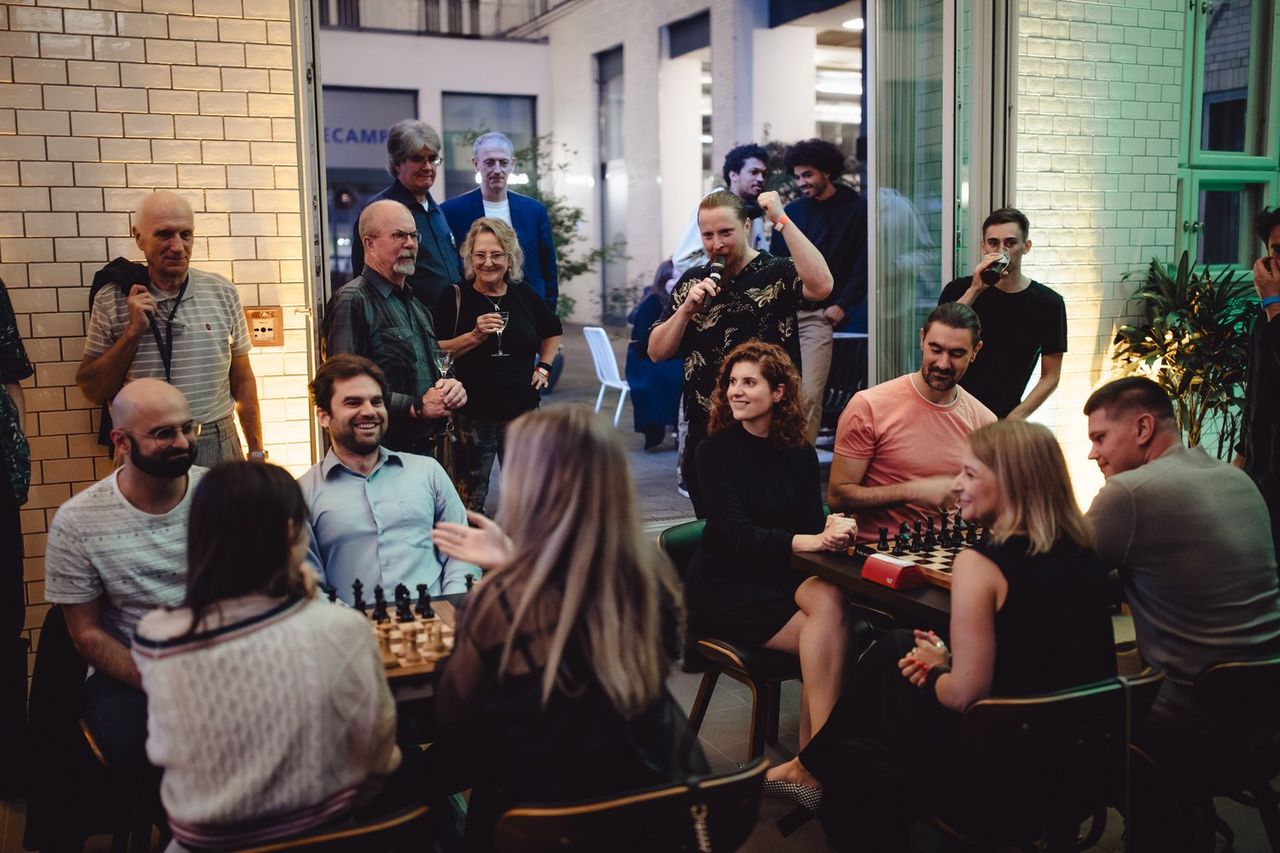
International Сhess Day
If you play chess regularly, you’ve probably noticed that once a year the game suddenly feels more active. There are more people playing either online or casually, as well as more chess media. It's not tied to a certain event or tournament. But it is simply a day where chess media becomes more visible. That day is International chess day, whether you're heavily invoiced in the chess community or a casual fan this is a day for you and you might be celebrating it without even realising it.
What Is International Chess Day
So, what is International Chess Day?
It’s basically a global moment where people engage with chess a little more than usual. Not necessarily in a formal way. Some people play games, others watch, some just revisit the basics after a long break.
What makes international chess day different from tournaments is that there’s no central event controlling it. It’s scattered. One player logs in for blitz, another joins a club event, someone else teaches a friend how the pieces move.
That’s kind of the point—it doesn’t have to be organized to exist.
When Was International Chess Day Started
International Chess Day doesn't necessarily have a starting date, rather it comes from tradition instead of history.
July 20 is the date marking the founding of FIDE in 1924. That part is straightforward.
What’s less straightforward is how it turned into a global day. That happened gradually. It wasn’t like everyone suddenly started celebrating at once. Over time it began to be more recognized by other federations, players and platforms and eventually it stuck.
Recognition of International Chess Day
The Recognition of International Chess Day didn’t stay inside the chess world.
At some point, United Nations officially acknowledged it as world chess day, which gave it a broader reach. That’s when it started appearing outside typical chess spaces.
You’ll see:
- schools running small chess sessions
- online platforms pushing events or challenges
- casual players returning for a few games
- content creators sharing puzzles or quick lessons
The name world chess day gets used a lot now, sometimes interchangeably with the original term. Most people don’t even think about the distinction.
How Celebrate World Chess Day
When it comes to How Celebrate World Chess Day, there isn’t really a fixed way to do it.
Some people go all in—playing dozens of games, joining tournaments, tracking performance. Others keep it simple and just play a couple of matches for fun.
A few common ways it shows up:
- playing faster time controls than usual, just for variety
- revisiting openings or ideas you haven’t used in a while
- watching games instead of playing them
- introducing someone new to chess (this happens more than you’d expect)
Although often it can be less structured. Just an open game with a few moves.
Why the day feels different
There’s a small shift in how people approach chess on this day.
Normally, games can feel serious—even online. Ratings, accuracy, performance. On this day, that pressure drops a bit. People experiment more. They play quicker, take risks, or just don’t worry as much about the result.
That’s probably why more casual players come back to the game around this time.
It feels less like competition and more like participation.
Conclusion
The conclusion is not really about rules or structure.
International chess day works because it doesn’t ask much from you. You don’t need to prepare, study, or compete. You just need to engage with the game in some way.
For some players, that means serious games. For others, it’s just a quick match or even watching from the sidelines.
Either way, the result is the same: for one day, chess becomes a bit more present everywhere—and that’s enough.
See Also
Read more: International Chess Federation(Fide), Grandmaster in Chess, and Chess Variants.