Italian Game
A great place to start for those who are looking to learn classical chess principles, is the italian game. Pieces get developed, there is a fight for the centre and opportunities are creates without immediate complications for the players We begin after the opening 1.e4 e5 2.Nf3 Nc6 3.Bc4. The bishop is developed to an active square by white, gaining access to the vulnerable f7 pawn, also preparing to castle. The italian game is complex enough for grandmasters to keep them interested but also simple enough to learn for beginners as well. Differing from many openings that heavily rely on memorised theory, the italian game primarily focuses on good piece placement and planning.
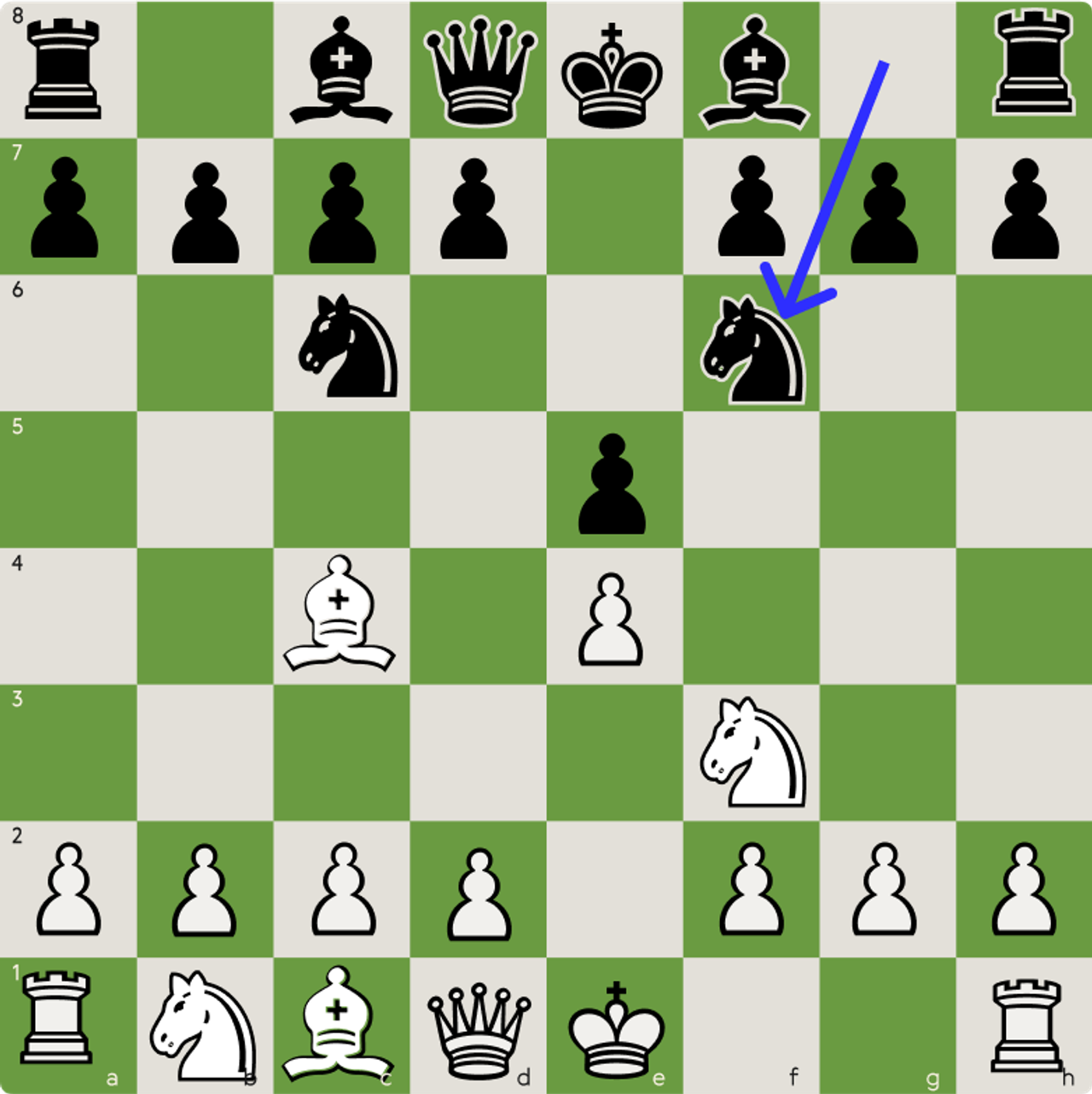
How to Play the Italian Game
The first objective is straightforward: develop quickly while controlling the centre.
A typical setup for White includes:
- placing the bishop on c4
- developing the kingside knight to f3
- castling early
- supporting the centre with c3 and d3 or d4
- connecting the rooks
While the moves can appear natural, it actually leaves white with a few choices. Some may favour slow maneuvers, others may look for an early attack.
| Early Move | Purpose |
| Bc4 | Pressure the f7 square |
| Nf3 | Develop and attack e5 |
| O-O | King safety |
| c3 | Support a future d4 advance |
| d3 | Maintain a flexible centre |
One idea appears in many lines. Instead of launching an immediate assault, White often improves every piece first. Small advantages—better development, safer king, more active bishops—can gradually become something larger.For players learning opening strategy, articles on Development in Chess and Tempo in Chess provide useful background before exploring deeper Italian positions.
Variations of the Italian Game
Even though the variations begin the same, they tend to produce very different middlegames.
Some example of these:
Giuoco Piano
This is the traditional continuation. Both sides develop calmly before deciding where to create play. The positions can remain balanced for quite a while before tactical opportunities appear.
Evans Gambit
White offers the b-pawn to speed up development. In return, White hopes to gain open lines and force Black onto the defensive. It is one of the oldest attacking ideas connected with the Italian.
Two Knights Defense
Instead of quietly developing, Black challenges White immediately. This line contains several tactical possibilities and requires accurate play from both sides.
Modern Italian
Rather than opening the centre immediately, both players improve their pieces first. Patience often matters more than memorising forcing variations.
| Variation | Playing Style | Main Idea |
| Giuoco Piano | Positional | Gradual improvement |
| Evans Gambit | Aggressive | Sacrifice for initiative |
| Two Knights Defense | Tactical | Early counterplay |
| Modern Italian | Flexible | Slow build-up |
One reason the italian opening chess remains popular is that players can choose between quiet strategic games and sharp attacking battles without changing the first few moves.
How to Counter the Italian Game
Black does not need to fear the opening, but passive play usually causes problems.
Several practical ideas work well:
- develop pieces before chasing White's bishop
- fight for the centre instead of defending only
- castle before beginning queenside operations
- avoid creating unnecessary weaknesses around the king
One mistake newer players make is trying to force White's bishop away too early. Spending several moves attacking the bishop often allows White to gain time developing the rest of the pieces.
The Italian usually rewards the player who completes development first rather than the player searching for immediate tactics.
Italian Game History
The Italian Game has a long history as it is one of the oldest recorded openings, dating back to the Renaissance. Italian players such as Gioachino Greco helped popularise many of its attacking ideas, which is where the opening gets its name.
Despite being centuries old, the opening has never disappeared. It has grown throughout the years, today it is regularly used by grandmasters. These games tend to lean more towards slower manoeuvring rather than the all-out attacks.
Grandmasters from Magnus Carlsen to Fabiano Caruana has used the Italian opening. Showcasing that a classic opening can still be highly effective in a computer area of chess.
Summary about the Italian Game
Its popularity continues as it teaches excellent habits from the very beginning. The development is natural, the king remains safe early on and both players have the space to create plans without immediate force.
Some players use it to launch attacks. Others choose it because it produces solid positional games.
For those wanting to learn Italian is a great space to begin. Even those who are well experienced should study it as it teaches excellent habits. There are not many openings who have stayed this relevant for this long and even less are useful for people at every level of chess.