Portable Game Notation
There are a lot of chess players out there who use PGN files before they truly understand them. A player would download a game then would copy the opening preparation from a database or alternatively import the game’s moves into an engine, resulting in a document full of coordinates and symbols. It can look confusingly technical at first but actually it's quite straightforward after you understand it. Modern chess would be difficult to organize without Portable Game Notation. Online analysis boards, chess databases, engines, and training software all depend on it in some form. It can be use by advantaged to casual players when noting down online games. PGN has been utilized for so long because it works almost everywhere. Plain text files made years ago can be easily accessed by today’s technology. For players who study games regularly, understanding pgn notation becomes useful surprisingly quickly.
What is a PGN?
PGN or Portable Game Notation. It is a universal format used to showcase chess moves with text.
A standard pgn file usually contains two things:
- Information about the game
- The moves themselves
The information section may include player names, tournament details, dates, results, opening names, and annotations. Below that comes the actual game notation.
For example:
[Event "Club Championship"]
[White "Anna"]
[Black "David"]
1. e4 c5
2. Nf3 d6
3. d4 cxd4
This short text can relate an entire game to a chess software. A reason why Portable Game Notation is so beloved is because not only software can read it. You can follow along the moves just by reading the text.
Example of PGN Notation
In most chess programs, a PGN file automatically recreates the game move by move while also storing comments and analysis variations.
Chess PGN Notation History
Before chess databases became common, tournament players usually wrote moves by hand on scoresheets. This worked until computers got into the mix.
In the 1980s, chess software advanced. Engines could analyze positions, databases could store games, and online servers slowly appeared. The problem was that different systems often stored games differently.
Programs could not always exchange files cleanly.
Developers needed a shared standard that multiple systems could understand. Over time, Portable Game Notation became that standard.
The format spread quickly because it was lightweight and simple. Instead of requiring complicated software structures, PGN used plain text with clearly organized sections.
The majority of chess software was pgn supported by the 1990s allowing both exports and imports. Nowadays pgn is the standard for almost all online chess.
Why PGN Became Widely Used
- PGN uses a plain text format, making it easy to open, read, and edit
- The files are small, enabling fast sharing and efficient storage
- It’s universal, so most chess programs can read it
- It supports annotations and comments.
- Humans can also read it
That flexibility helped chess pgn become the standard language of digital chess records.
How Does PGN in Chess Work?
A PGN file is usually divided into two main sections.
1. Tag Pair Section
The first section contains game information inside brackets.
Example:
[Event "World Championship"]
[Site "Dubai"]
[Date "2021.11.24"]
[White "Magnus Carlsen"]
[Black "Ian Nepomniachtchi"]
These tags help databases organize games correctly.
Without them, searching through large collections would become much harder.
2. Movetext Section
Below the tags comes the actual notation of the game.
Example:
1. d4 Nf6
2. c4 e6
3. Nc3 Bb4
The moves follow algebraic notation rules.
Common abbreviations:
- K = King
- Q = Queen
- R = Rook
- B = Bishop
- N = Knight
Pawn moves normally appear without a letter.
One useful thing about pgn notation is that comments can also be inserted between moves.
For example:
1. e4 e5 {Black chooses a classical response}
2. Nf3 Nc6
That feature is one reason coaches and streamers rely so heavily on PGN during analysis sessions.
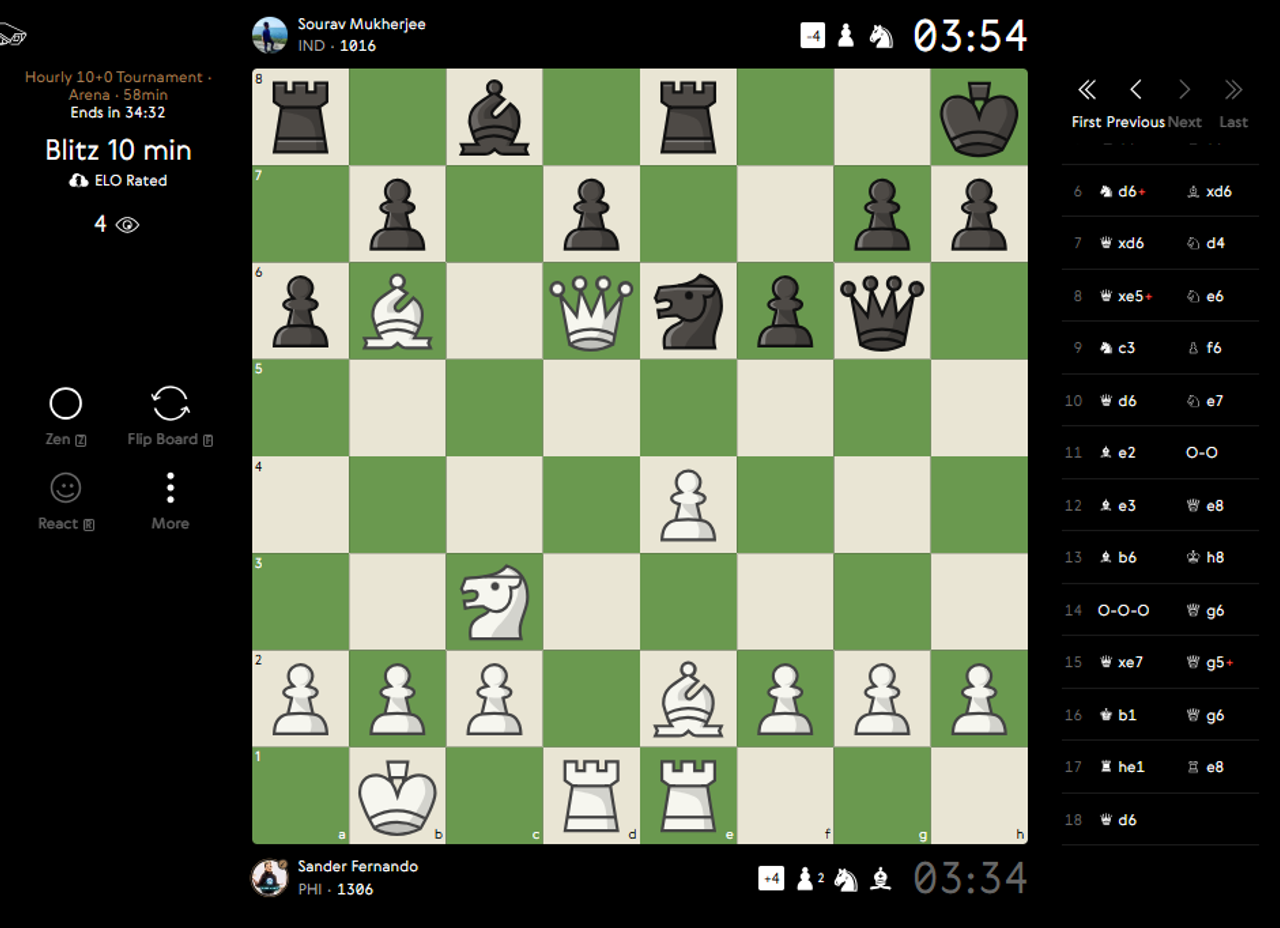
Example of PGN Analysis
Most modern analysis tools replay the moves directly from the PGN file, allowing players to pause, add notes, and examine variations.
PGN Chess Importance
The importance of PGN becomes obvious once players start reviewing their own games seriously.
A saved game is more than a score record. It becomes a training tool.
Players often notice recurring mistakes only after looking through older games. PGN makes it far easily to understand your patterns be them blunders or a lack in strategy.
Engines also rely heavily on pgn compatibility. Imported games can be analyzed move by move, with evaluations and recommended alternatives appearing instantly.
For coaches, the format is especially useful because comments and variations can be added directly into the file itself.
Some common uses include:
- Opening preparation
- Tournament archives
- Engine analysis
- Coaching notes
- Personal improvement tracking
Even professional players maintain enormous collections of PGN files for preparation work.
That is one reason Portable Game Notation remains central to modern chess study.
Players interested in related chess terminology can also explore strategy concepts and notation systems on World Chess.
PGN and FEN Difference
PGN and FEN are connected, but they serve different purposes.
PGN stores an entire game from beginning to end. FEN, or Forsyth–Edwards Notation, relates to a singular board position.
The difference is important since the 2 systems solve different problems.
PNG:
- Stores full games
- Stores full games
- Includes move history
- Supports annotations
- Used for replay and study
FEN
- Stores one position
- No move history
- Focuses on board setup
- Used for exact positions
A player preparing an opening repertoire may save complete games using pgn format, while a tactics trainer may only need a single FEN position.
Example of a FEN Position
Differing from PGN, FEN strings only document the exact placement during moments in the game.
Conclusion
PGN is an important standard in modern day chess as it fixes a practical problem simply. A shared system was created for players and developers instead of trying to understand incompatible software formats.. Decades later, the format still works across databases, engines, websites, and training platforms.
Learning pgn notation also helps players improve their study habits. Reviewing games becomes easier, mistakes become easier to track, and long-term preparation becomes more organized.
For casual players, PGN may just look like a text file full of moves. For serious players, it is one of the foundations of modern chess analysis.
See Also
Read more: FEN notation, Chess Notation Sheet, and Chess Engine.