King's Indian Defense
While it may appear that Black is giving White a little too much freedom in the beginning, a few moves later, the position changes completely and the game switches to a fight on very sharp terms. This is where the attraction to this opening lies. Black’s aim is not to meet white directly head on, mirroring their moves. But instead, has a flexible development that waits for the right moments and then launches a powerful counterattack. The Indian defense has produced some of the most entertaining and exciting attacking games.
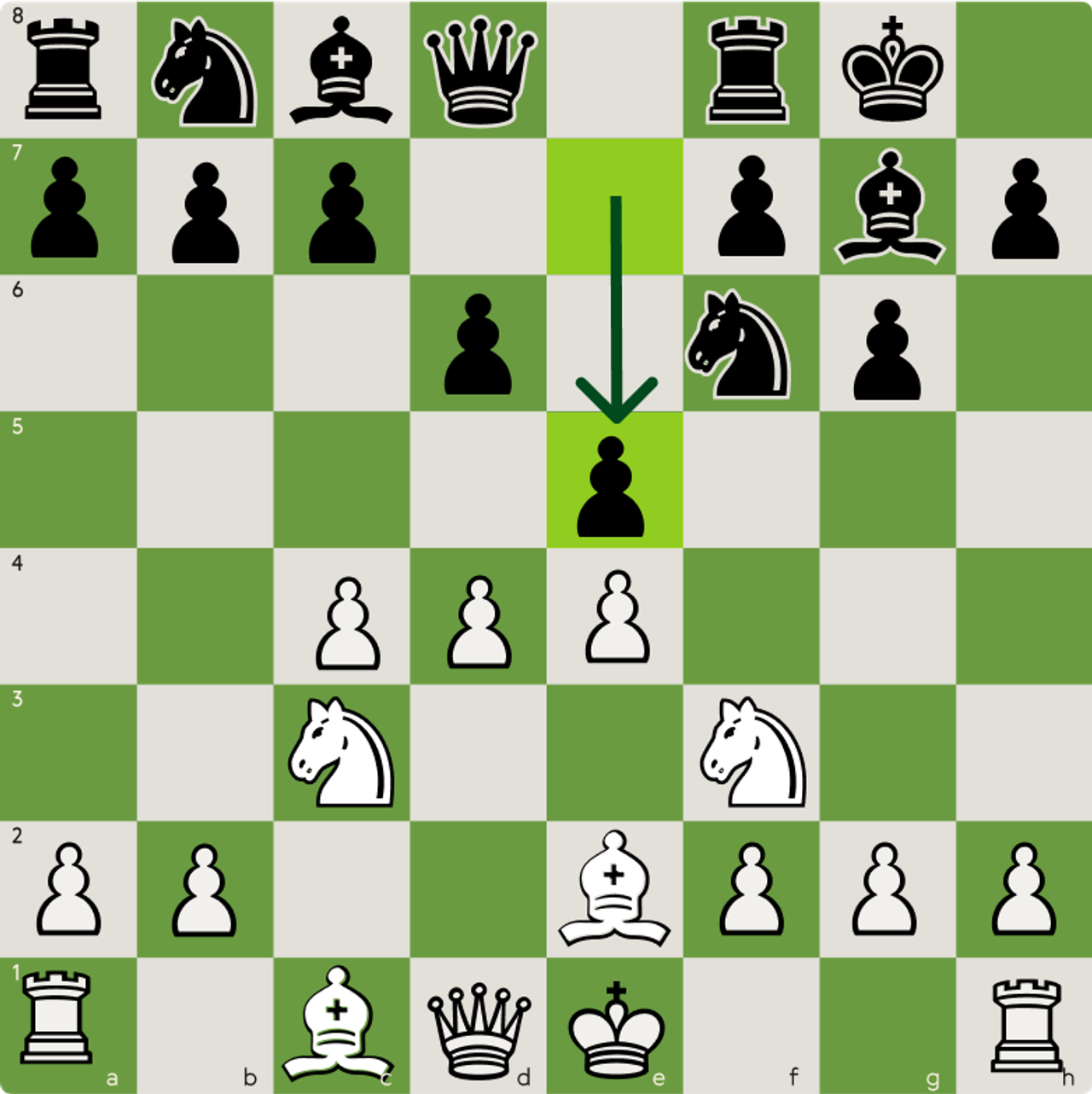
How to Play Kings Indian Defense
Usually the setup begins with ...Nf6, ...g6, ...Bg7 and a castling plan kingside. White is allowed to occupy the centre with pawns while black prepares for the challenge ahead.
Common move:
| Move | Idea |
| 1...Nf6 | Develop and avoid committing the central pawns too early |
| ...g6 | Prepare the kingside fianchetto |
| ...Bg7 | Place the bishop on the long diagonal |
| ...O-O | Keep the king safe |
| ...d6 or ...e5 | Begin the central counterplay |
The kings indian opening is not about equalising in a quiet way. It is about setting a trap for White's sense of comfort. There may be more space given to white, space with no coordination can be more of a liability than a gain. And if black gets the right breaks in the centre or kingside it can be all over.
Variants of King's Indian Defense
One reason this opening has lasted so long is that it does not lead to a single type of game. The plans change depending on White's setup and Black's preferred style.
Some of the main variations include:
- Classical Variation – White builds a large centre, Black attempts to undermine them via active piece play.
- Fianchetto Variation – White fianchettoes the bishop, advancing to a more positional struggle.
- Samisch Variation – White expands aggressively with f3 and g4 ideas.
- Four Pawns Attack – White takes a lot of space very quickly, creating a highly theoretical battle.
- Averbakh Variation – White develops the bishop to g5 and tries to reduce Black’s counterplay.
| Variation | Style | Typical feature |
| Classical | Sharp and strategic | Strong central tension |
| Fianchetto | Positional | Slower manoeuvring |
| Samisch | Aggressive | Direct kingside ambitions |
| Four Pawns | Very sharp | Huge central space |
| Averbakh | Flexible | Piece pressure on the centre |
The practical beauty of kings indian play is that Black can choose a structure that matches the position rather than forcing one shape every time. Some lines become tactical very quickly. Others feel slower, but only until the central breaks finally arrive.
How to Counter King's Indian Defense
White has several ways to challenge the opening, and each one asks different questions of Black.
The most common counterplans include:
- building a strong centre and keeping it flexible
- using the fianchetto setup to reduce Black's kingside pressure
- launching a direct kingside attack before Black's counterplay starts
- keeping the centre closed when White wants to attack on the other side
A key strategic point is that Black usually wishes for a locked centre, while White can aim to open the position. If the centre is opened to early by White, Black’s bishop on g7 can become a quite dangerous piece. If White waits too long, the pressure can build to the point where Black’s counterattack arrives with force.
That is what makes the opening so lively. In kings indian opening positions, timing matters more than material count. One side is trying to use space to build an attack; the other is waiting for the right moment to strike back in the centre.
King's Indian Defense History
The opening lends itself to a modern concept in chess: Aim to not take over the centre right away, but instead black allows white to build and then launches their attack from a distance. Previously this could be seen as bold and wasn't trusted.
However it didn't stay like this for long, it was chosen by strong attackers due to the rich and flexible positioning. It has been used by Mikhail Tal, Bobby Fischer, and Garry Kasparov in important games. Growing its popularity and giving it a reputation of fighting rather than passive defence.
It shows up in every level, grandmasters favour it as the middlegame can be beautifully complex, while amateurs enjoy the clear plan and direction it supplies.
Summary about King's Indian Defense
The King's Indian Defense requires the patience and later activity of black. White is granted space in the beginning, however that can be more of a hindrance than a help, as it can be targeted when black breaks into the centre.
Some ideas to remember:
- Don’t rush the attack, if your pieces aren't ready.
- Know when to keep the centre closed.
- Learn the pawn breaks that make the defence work.
- Expect the game to change quickly once the centre opens.
For those who favour sharp positions and can be patient, the king's Indian defense is a highly rewarding. It usually doesn't stay quiet for long, and that is a big part of why so many players still choose it.