Opposition In Chess
Usually chess games reach a point where the majority of material has been exchanged, left only with the kings and pawns. These final positions can be viewed as simple at first. In reality, they often require precise technique. Opposition being an important concept in king and pawn endgames. This is when the king restricts the movement of the opposing king. Protecting key squares and forcing the king away, you are able to create a pathway for your pawns to gain access to key parts of the board. By understanding this concept your endgame can greatly improve.
What Does Opposition Mean?
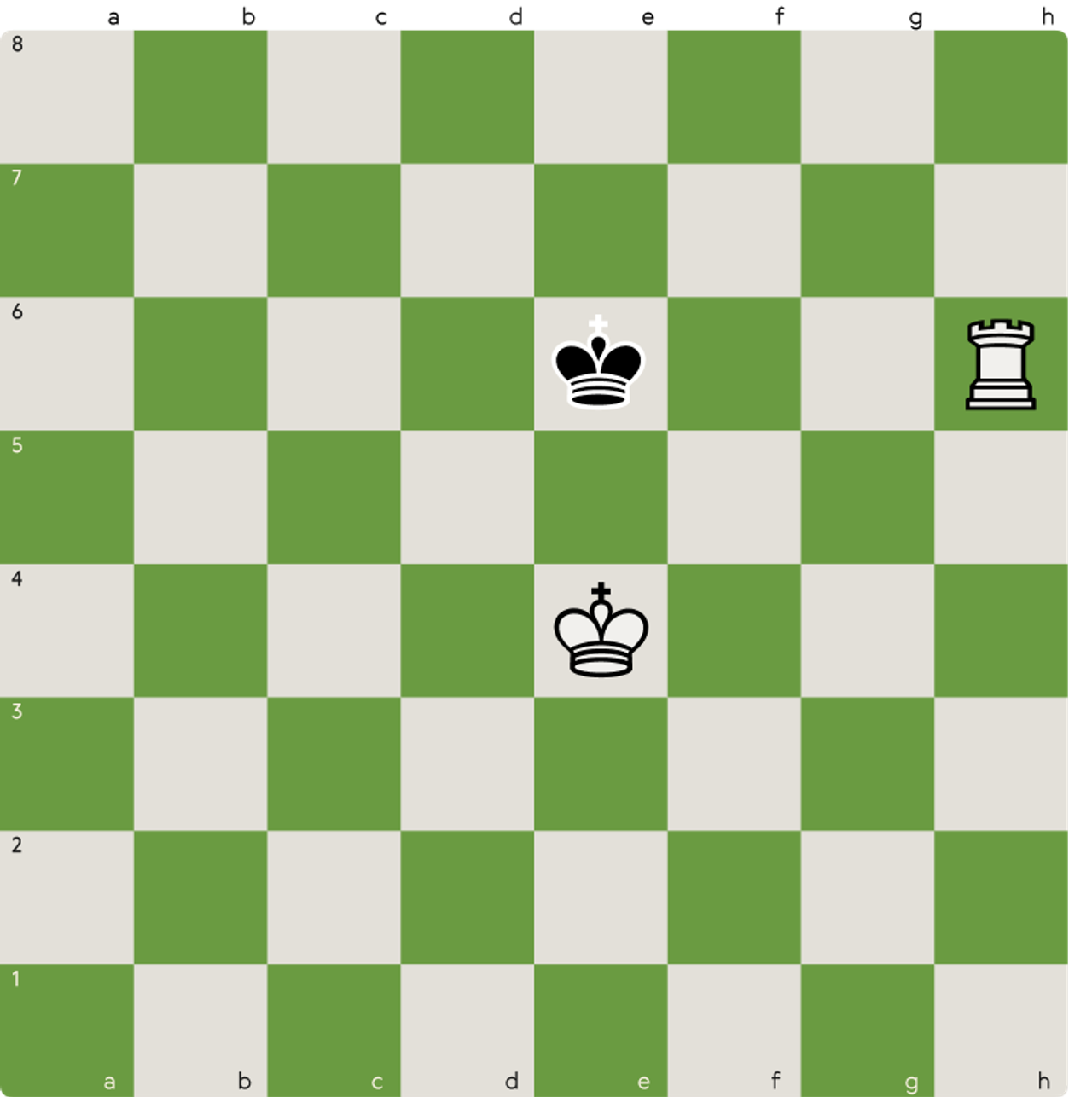
Simply put, opposition occurs when two kings face each other with a square between them. Since a king cannot sit next to one another, whoever’s turn it is must move away. It can appear as a small and insignificant detail but it can impact the entire endgame.
Picture, both kings located on the same file with one square separating them. The player who doesn't have to move is referred to as the opposition. Forcing the opponent to give ground to the stronger king who can advance.
Key characteristics of opposition:
- Kings controlling important squares
- Forcing the opposing king to move first
- Creating access to critical areas of the board
- Supporting pawn advancement
For many, the king who gains the opposition in the endgame is the difference between a win or a draw.
In many king and pawn endings, gaining opposition in chess is the difference between winning and drawing.
Types of Chess Opposition
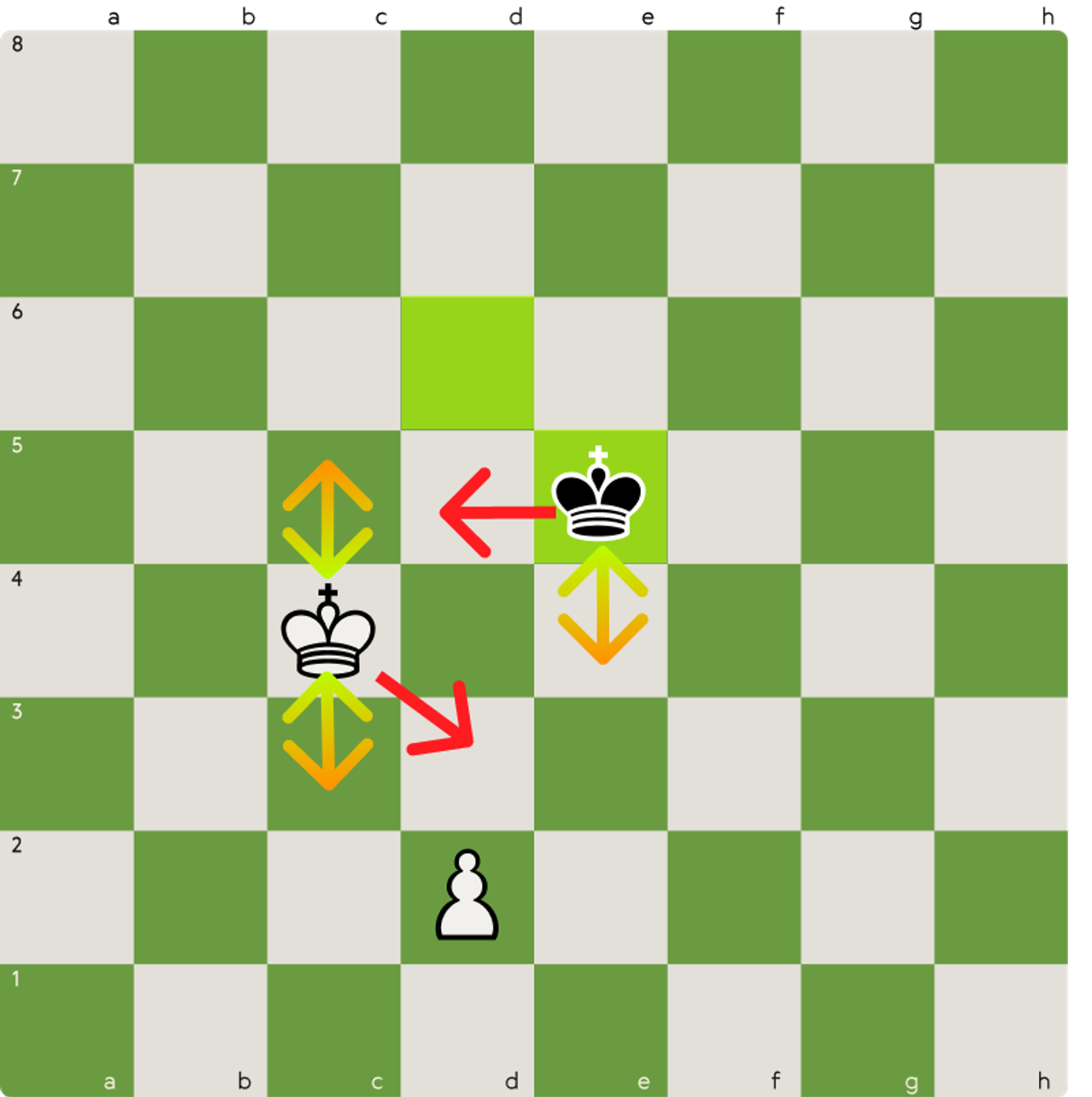
There are several forms of opposition. The fundamentals remain the same, but the king doesn't always need to face each other directly.
Direct opposition
Direct opposition is the most common form. This is when the kings face one another on the same rank or file with a square between one and the other.
Example:
- White King on e4
- Black King on e6
The kings are directly opposite one another. The player not required to move usually holds the advantage.
Diagonal opposition
This occurs when the kings face one other but diagonally opposite, with a square in between them. The same principle applies, a king limits the other king’s movement. Eventually reaching a better positioning. This most often occurs in the endgame when maneuvering around pawns.
Distant opposition
Distant opposition involves kings separated by several squares rather than one. While there may be more distance, the concept is the same. One of the players has more favorable moves forcing the other into opposition. Distant opposition is frequently used in strong endgames, in order to prepare the king for the future activity.
Chess Opposition Importance
The value of chess opposition becomes clear when studying king and pawn endgames.
A player who understands opposition can:
- Force the opposing king backward
- Gain access to key squares
- Escort passed pawns toward promotion
- Convert winning positions more consistently
- Defend difficult endings more effectively
Without this knowledge, many favorable positions can slip away.
For example, two players may reach the same king and pawn ending. One understands chess opposition, while the other does not. The first player often finds the winning path, while the second may unknowingly allow a draw.
This is why endgame coaches place so much emphasis on learning opposition early.
For related concepts, readers may also explore:
- Passed Pawn
- Rule of the Square
Conclusion
At first, chess opposition can appear surprisingly simple. After all, it often involves nothing more than two kings facing each other. Yet this basic idea forms the foundation of many important endgame techniques.
No matter if the opposition is direct, diagonal or distant, the aim is the same. Forcing the opponent's king into an unfavorable position as well as taking control over key squares. By understanding how opposition works in chess endgames, you can improve your chess techniques and gain the upper hand.
See Also
Read more: King in Chess, Strategy in Chess, and Stalemate.