Pirc Defense
There are some openings in chess that start the fight straight away, others allow the enemy to occupy space before attacking back. The Pirc defense is the latter. Rather than replying to 1.e4 with a challenge to the centre. Black replies 1.d6 with the aim to develop before choosing where to attack. It can appear passive at first when compared to more classic openings. But rather the pirc defense is built to focus on flexibility. Black holds back and waits on white’s plan before moving forward. It can be described as a hypermodern opening. But simply put Black’s plan is to control the centre instead of filling it up with pawns at the get go. The usual starting moves are: 1.e4 d6 2.d4 Nf6 3.Nc3 g6 This creates the kingside fianchetto and readies the bishop for long distance influence. If you are looking to avoid heavily analysed symmetrical positions with an e4 d6 opening, the Pirc may be for you.
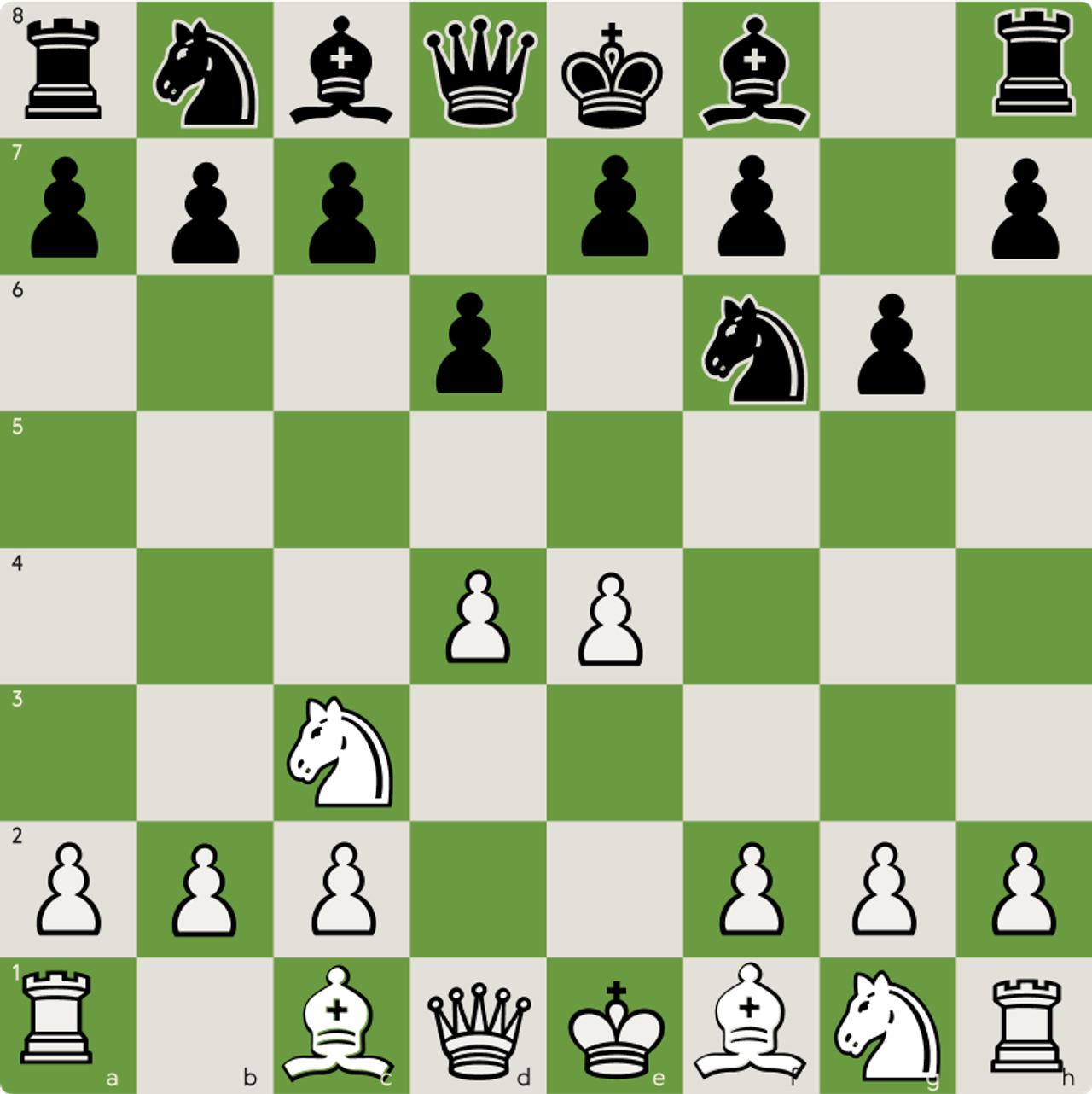
How to Play the Pirc Defense
It is less about memorising exact moves and more about understanding development.
Black usually follows a simple development plan:
- Knight develops to f6.
- Fianchetto the bishop with ...g6 and ...Bg7.
- Castle kingside early.
- Wait for the right moment to challenge White's centre with ...e5 or ...c5.
Since white tends to gain more central space in the start of the game, patience is key or black as attacking too soon can open up weak points. However waiting too long can allow white to develop too well and build a strong position that can be hard to come back from.
Typical ideas for Black include:
- Pressure the pawn on d4.
- Use the bishop on g7 to influence the long diagonal.
- Look for central pawn breaks after completing development.
- Create active piece play instead of defending passively.
The pirc is also popular with players as the opening’s plans can appear in numerous different White setups. This usually makes it easier to know different strategic ideas rather than memorising lists of moves.
Pirc Defense Variants
Although the opening starts with the same basic moves, White has several different ways to continue. That has led to a number of well-known variations.
Classical System
The white’s knight and bishops develop naturally before moving to expand. This tends to be balanced and allow plenty of strategic choices for both sides.
Austrian Attack
White's most aggressive response, after a large pawn centre is built with f4. White attempts to quickly seize space and attack before Black’s plan has finished developing. Black must react carefully and look for timely counterplay against the centre.
Byrne Variation
In this line, White develops quietly while keeping options open. Usually the game leans more positional, manoeuvring comes from both sides before committing to pawn breaks.
A quick comparison
| Variation | White's Plan | Black's Main Idea |
| Classical | Natural development | Counter the centre later |
| Austrian Attack | Space and kingside attack | Strike at the pawn centre |
| Byrne Variation | Flexible setup | Complete development before counterplay |
How to Play Against Pirc Defense
Facing the Pirc can feel unusual because Black often appears to give White plenty of room. The challenge is deciding how to use that space without overextending.
A few practical ideas help:
- Develop your pieces before starting an attack.
- Don't assume extra space guarantees an advantage.
- Watch for pawn breaks such as ...e5 and ...c5.
- Keep an eye on the long diagonal once Black's bishop reaches g7.
Many players rush forward with every central pawn they can move. Sometimes that works, but just as often those advanced pawns become targets later.
The strongest approach is usually a balanced one. Build your position, complete development, and only then begin looking for active plans.
One interesting feature of the Pirc is that both sides often have chances. White usually enjoys more territory, while Black often has more flexible counterattacking ideas. Games rarely stay quiet for very long.
Pirc Defense History
The name originates from a Slovenian grandmaster Vasja Pirc, who popularised the openings in the 20th century. While similar positions were seen previously, Pirc’s tournaments and game analysis lead to its modern identity.
As hypermodern chess grew so did the Pirc, gaining it respect and popularity. Showcasing that there are other options than controlling and occupying the centre, but controlling from a distance can be just as effective.
Grandmasters like Viktor Korchnoi, Alexander Beliavsky, and Lev Alburt have used the opening throughout their careers. While it can be uncommon for the majority of chess players, it is a reliable choice for players who enjoy dynamic positions.
Nowadays, there are many variations of the opening through computer analysis, the base of the openings is unchanged. Well-planned counterattacks with good timing and flexible development.
Pirc Defense Conclusion
Black must be patient, not passive. The aim is not to fight for the center straight away but to develop smoothly, while preparing a kingside fianchetto and waiting for your right opportunity.
That approach creates games that are rarely identical. Some games are more tactical, while others develop into slower strategic concepts.
The pirc is a fine opening to include in your repertoire for any player looking to upgrade your skills. Focus not on memorising long theoretical lines but understanding the opening. Learning when to challenge and when to hold back is more important than remembering a particular sequence of moves.