Chess Now Has a Patron Saint. A Company Made It Happen. Is That... Allowed?
World Chess petitioned the Catholic Church and won. Now a publicly traded company has given a 1,500-year-old game its first official divine backing. For a billion players worldwide, this is either a gift or the strangest corporate overreach in sports history.
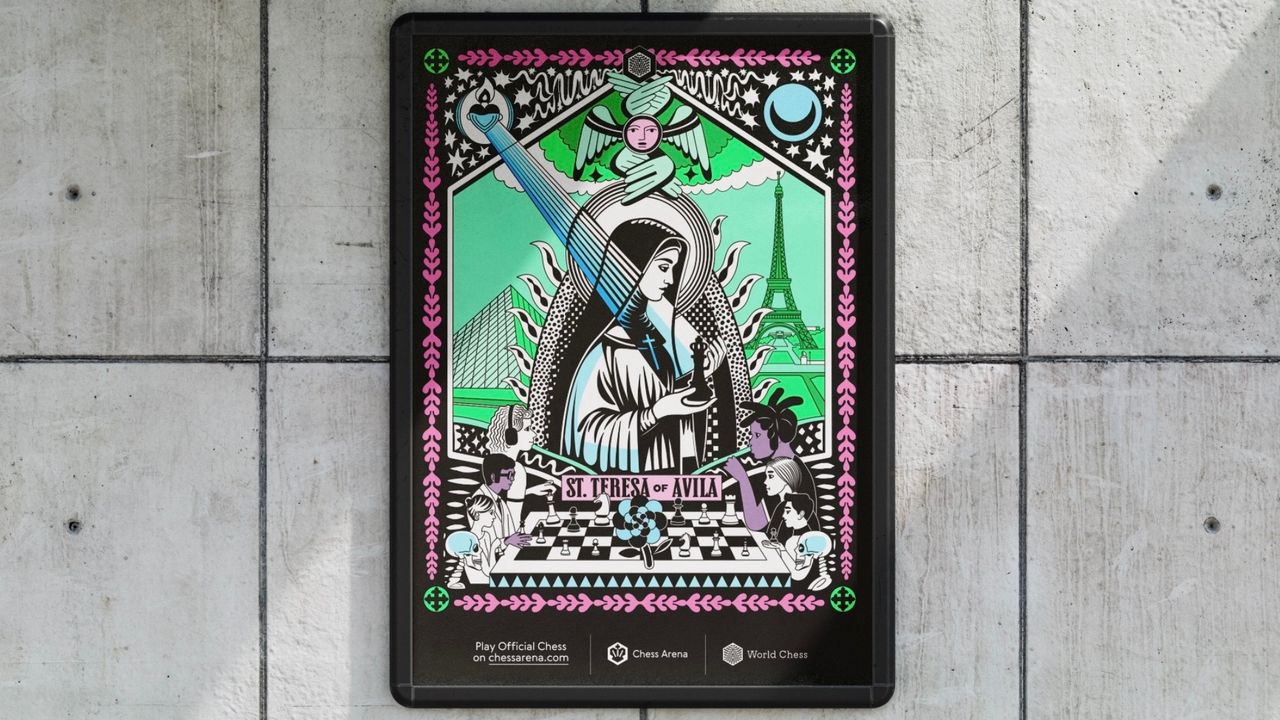
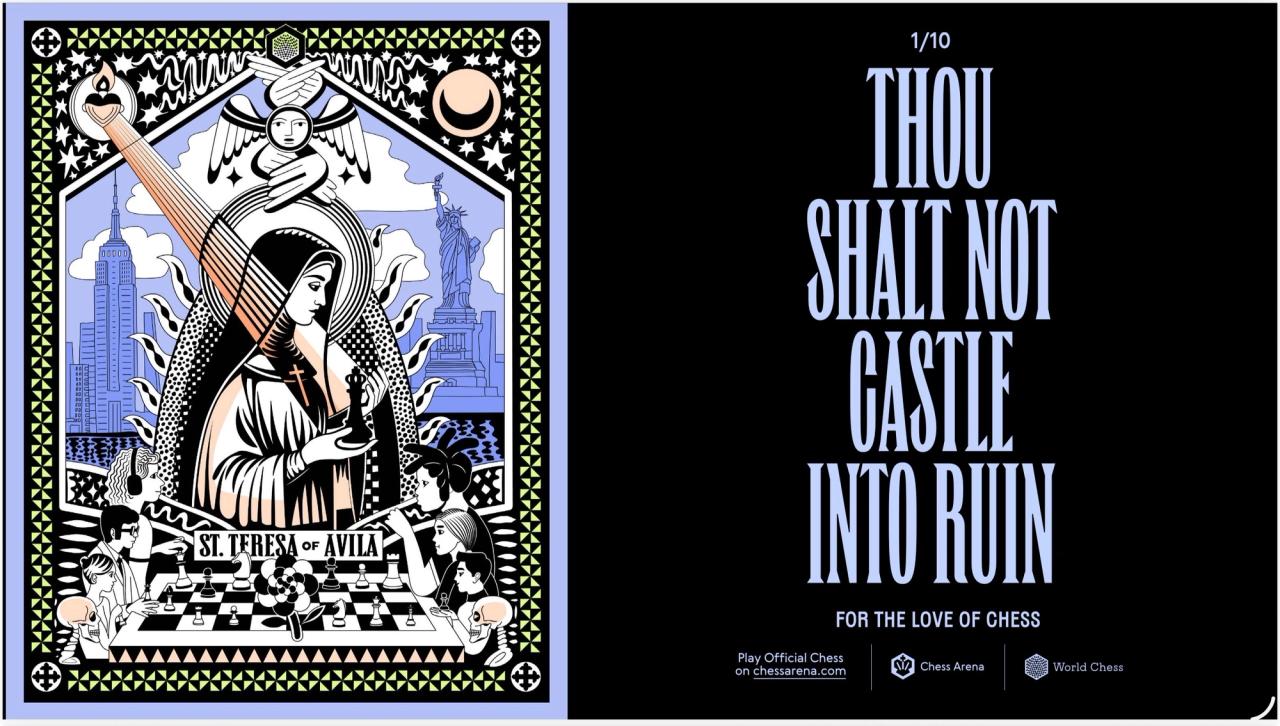
This year, World Chess—a London-listed company that operates the official FIDE gaming platform (and runs this website)—announced that it had worked with the Catholic Church to "re-recognize" Saint Teresa of Ávila as the patron saint of chess. They commissioned an icon. They got sign-off from the Liturgical Commission of the British Catholic Church. The documentation is real.
This is not a stunt. Or rather—it's not only a stunt.
Chess is played by a billion people. A billion. More than tennis, more than golf, more than most things that call themselves global sports. It's played in prisons and palaces, by children in Chennai and retirees in Copenhagen, by people who will never meet but share the same sixty-four squares.
And now, this game has an official patron saint.
The entity that made it happen wasn't a federation, a government, or a religious body.
It was a chess company.
Wait, Can You Just... Do That?
Apparently, yes.
The Catholic Church has a long tradition of patron saints for professions and pursuits—Saint Francis de Sales for journalists, Saint Isidore of Seville for the internet (yes, really, since 2002). These designations typically bubble up organically over centuries, or get formalized by papal decree.
What doesn't usually happen is a commercial enterprise initiating the process.
But that's exactly what World Chess did. CEO Ilya Merenzon and his team discovered that Saint Teresa of Ávila—a 16th-century Spanish Carmelite nun and mystic—had actually been recognized as chess's patron by the Bishop of Madrid back in 1944. It was a historical footnote that the chess world had completely forgotten.
Teresa had written about chess in her manuscripts, comparing the spiritual journey to a game where different pieces carry different weight, where the soul navigates toward the Divine King. She wasn't a casual observer. She understood the game.
World Chess took this forgotten recognition, brought it to the Liturgical Commission of the British Catholic Church, and asked: can we make this official again? Can we commission an icon?
The Church said yes.
The Icon
The image is striking. Saint Teresa stands beside a chess board where children play, holding a king piece in her hand. It's traditional iconography—gold leaf, religious symbolism—but unmistakably about chess. It comes with a motto that reads like it was written by a grandmaster with a sense of humor: "Thou shalt not castle into ruin."
It's sacred art. Commissioned by a PLC.
The Billion-Player Question
Here's where it gets genuinely strange.
Chess isn't like other sports. It doesn't belong to anyone. There's no founding country, no original language, no single tradition. It migrated from India to Persia to the Arab world to Europe to everywhere. It belongs to humanity in a way that almost nothing else does.
A billion people play this game. The vast majority are not Catholic. Many are Hindu, Muslim, Orthodox Christian, Buddhist, atheist, or none of the above. They play chess because chess is universal—the one game that requires no translation.
And now a company that sells subscriptions and is publicly traded on the London Stock Exchange has, in collaboration with one specific religious institution, given this universal game a patron saint.
For the roughly 1.3 billion Catholics in the world, this might feel meaningful. A real saint who really understood the game, officially watching over it.
For everyone else? It's... complicated.
"We're not claiming a monopoly," Merenzon told Kommersant, the Russian paper that broke the story. "People have different beliefs. We're not saying everyone must venerate a Catholic saint. But the more patrons, the better."
The Mythology It Replaces
Chess already had a patron figure: Caissa, a nymph from Greek mythology—actually invented by an Italian poet in the 1500s as a literary device. FIDE, the International Chess Federation, has used Caissa's imagery for decades. Tournaments are named after her. She's the muse of the 64 squares.
Caissa is a fiction. A beautiful, neutral fiction that belonged to no religion and therefore could belong to everyone.
Saint Teresa was a real woman. A Spanish Catholic mystic who lived and died and wrote about chess with genuine affection. The Church blessed an icon in her honor.
When Kommersant asked FIDE for comment, a senior official replied: "I don't have a clear position on this yet."
Translation: nobody saw this coming.
So What Is This, Really?
In his upcoming book This Is Not a Book About Chess, Merenzon writes about the challenge of transforming chess into a modern entertainment property. His thesis is counterintuitive: chess doesn't need to dumb itself down. It needs to become more of what it is—deeper, richer, more connected to culture and meaning.
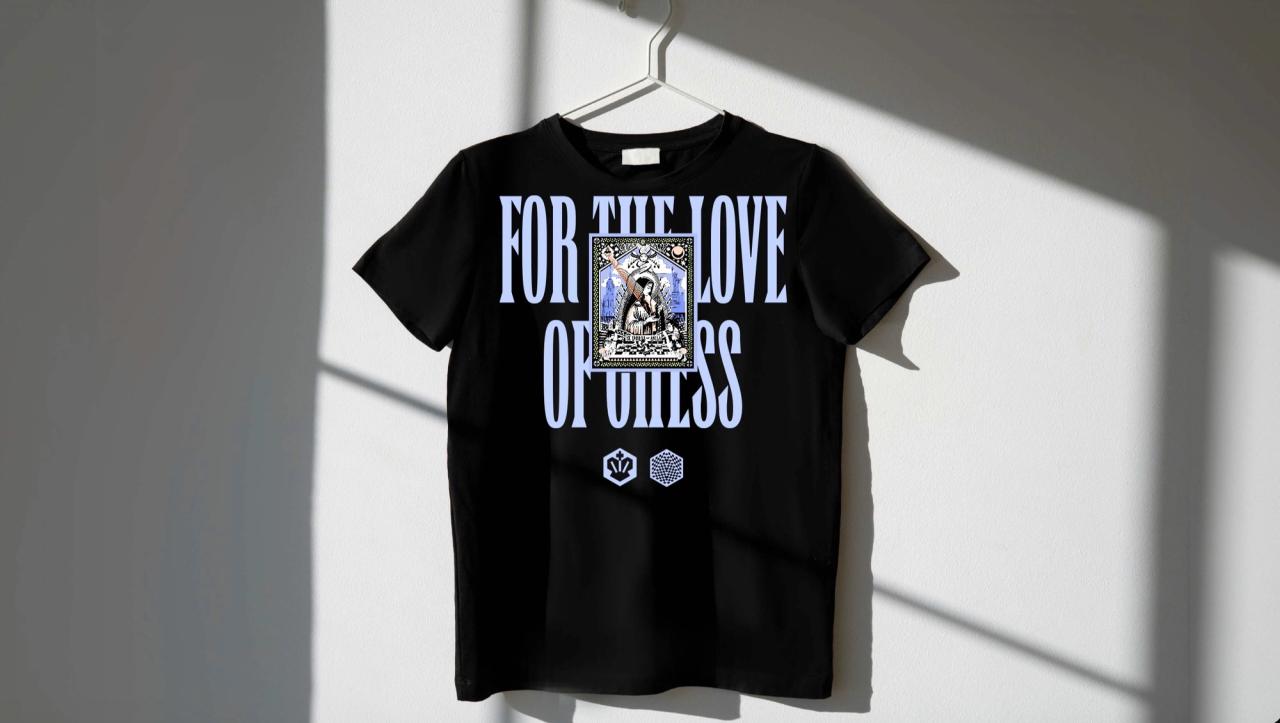
Is it also a branding exercise? Obviously. The icon will appear on merchandise. World Chess is a business.
But here's the thing: the two aren't mutually exclusive.
The medieval cathedrals were funded by merchants. The Sistine Chapel was a commission. Sacred art and commercial interests have been intertwined for centuries. What World Chess has done is unusual not because it mixes faith and money—that's ancient—but because it's a chess company doing it. In 2025. For a game played by a billion people who never asked for divine intercession.
They got it anyway.
What Happens Now
National federations are requesting the icon—Poland, Italy, Portugal, the Philippines. At least one grandmaster has reportedly stuck it on his laptop. "Any support helps before a tough game."
FIDE remains silent.
And somewhere in the world right now, a chess player who has never set foot in a church is staring at an image of a 16th-century Spanish nun, wondering if she might—just might—help them see one move deeper.
Chess has survived 1,500 years without a saint.
Now it has one.
Whether it wanted one or not.