Chess Olympiad 2026: Everything You Need To Know
The 2026 Chess Olympiad is over—and Uzbekistan and China are the champions. A record 400 teams descended on Samarkand for 11 rounds of extraordinary chess, controversy, politics and drama. Here is everything that happened.
LATEST: UZBEKISTAN AND CHINA WIN CHESS OLYMPIAD GOLD
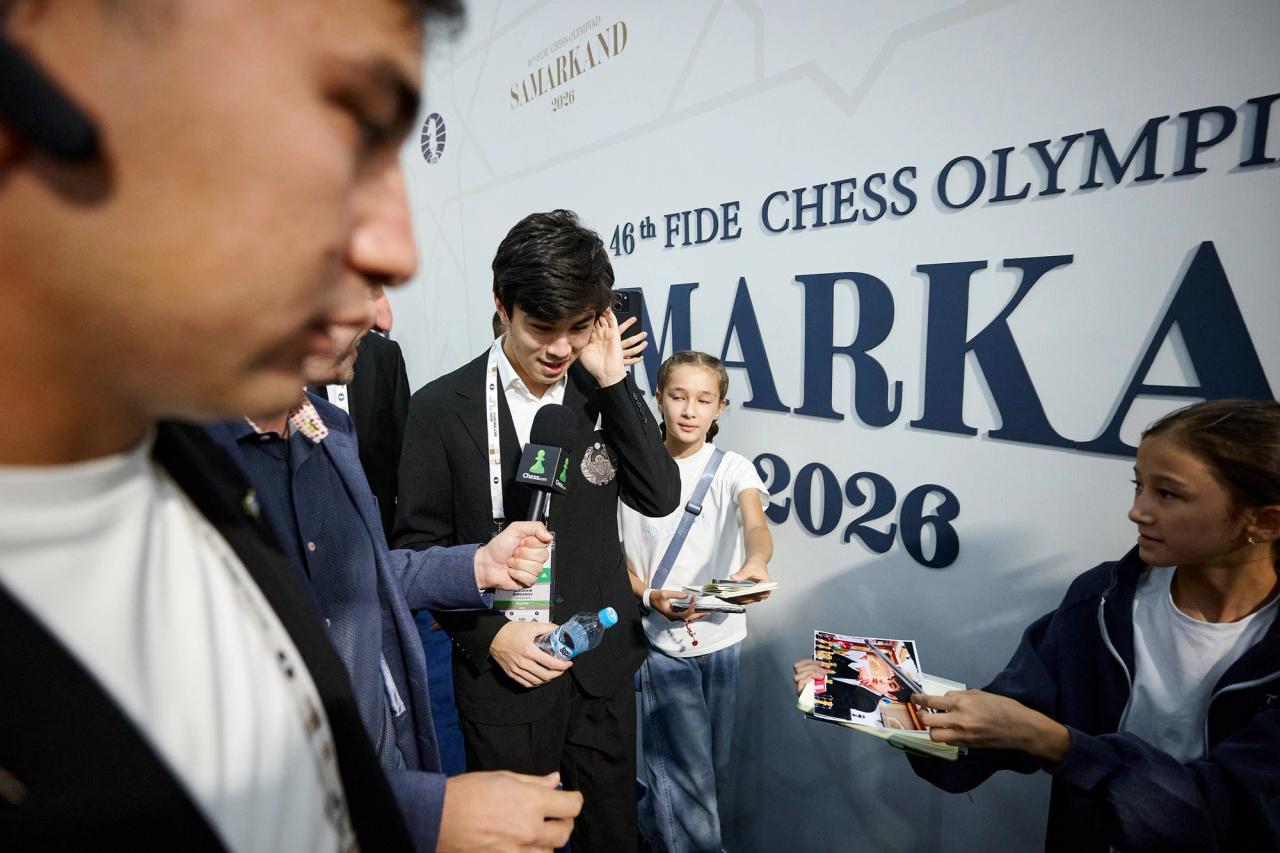
Uzbekistan have won the 2026 Chess Olympiad on home soil in Samarkand, reclaiming the Open title they first won in 2022.
The hosts defeated Ukraine 2.5-1.5 in Sunday's final round to finish on 20/22 match points, two clear of defending champions India and Germany.
India took silver on tiebreaks after drawing 2-2 with Hungary, while Germany beat the Netherlands 2.5-1.5 to claim bronze.
In the Women's Olympiad, China won their seventh gold medal after a 3-1 final-round victory over Vietnam. Kazakhstan took silver and defending champions India bronze.
For Uzbekistan, the victory caps a remarkable four-year Olympiad run: gold in Chennai in 2022, bronze in Budapest in 2024 and now gold again—this time in front of their home crowd.
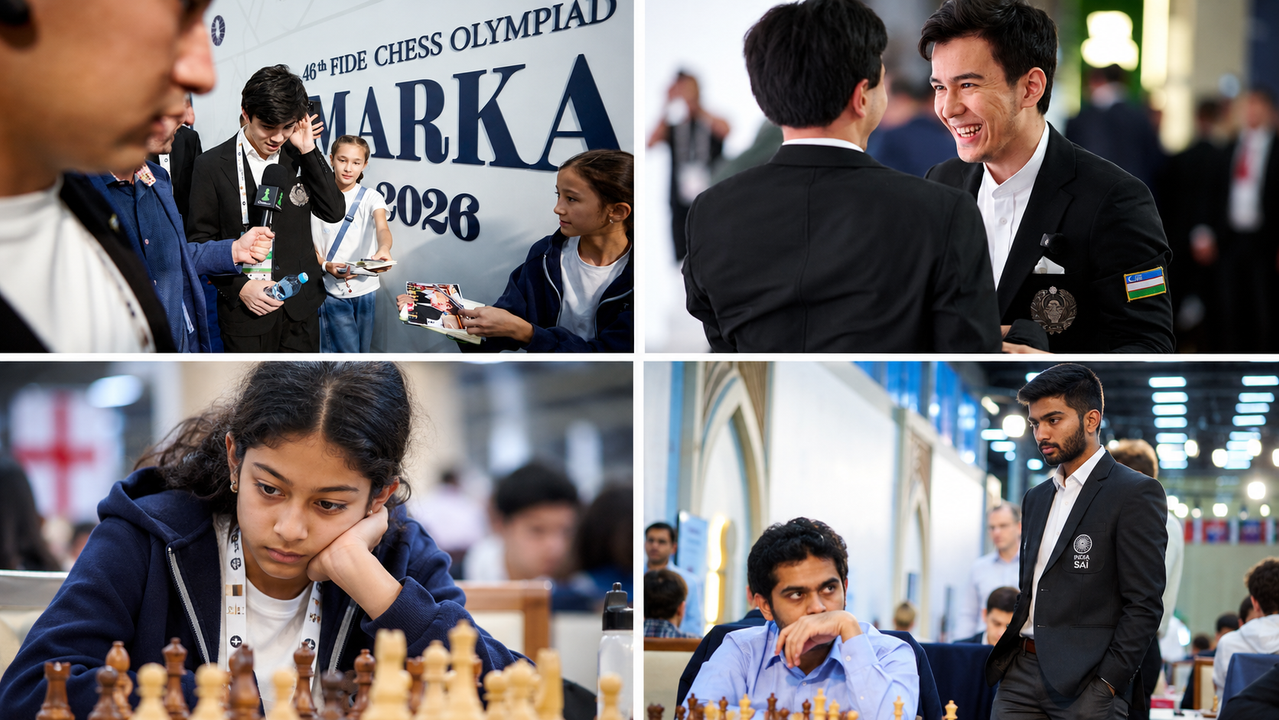
World Championship challenger GM Javokhir Sindarov finished unbeaten with 6.5/10 and a 2816 performance rating, while GM Nodirbek Abdusattorov scored 8/11 with a 2900 performance.
World Champion GM Gukesh D scored 8.5/11 for India with a 2797 performance, although his tournament ended with defeat to Hungary's GM Gleb Dudin.
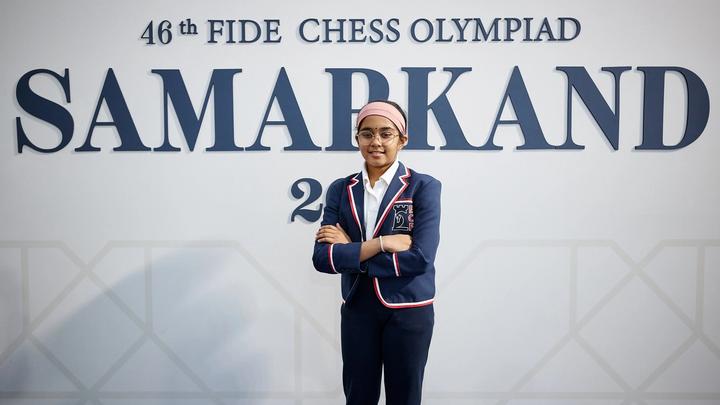
England's 11-year-old FM Bodhana Sivanandan also made history, completing the requirements for the Woman Grandmaster title and securing her second International Master norm while scoring 8/11 on board one.
READ MORE: 11 Years Old, England's Top Board: Bodhana Sivanandan's Extraordinary Chess Olympiad
2026 Chess Olympiad at a glance
Where: Samarkand, Uzbekistan
Dates: September 15-27, 2026
Rounds: 11
Teams: Record 400
Open champions: Uzbekistan
Open silver: India
Open bronze: Germany
Women's champions: China
Women's silver: Kazakhstan
Women's bronze: India
FIDE President elected: Timur Turlov
Next Chess Olympiad: 2028
It's been two years, but finally the biggest, brightest, most spectacular chess tournament on Earth came back.
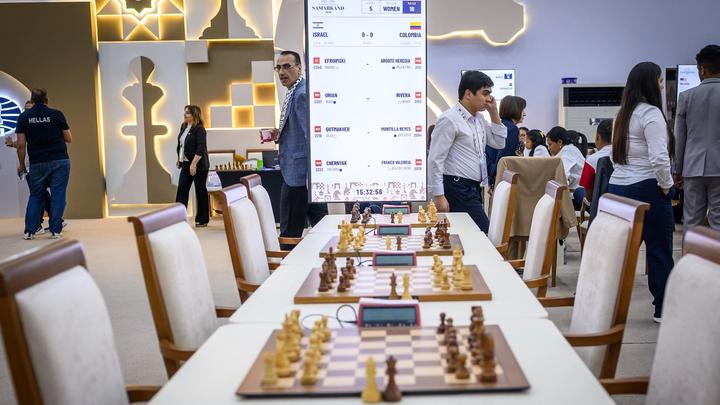
The 46th FIDE Chess Olympiad brought a record 400 teams to Samarkand, Uzbekistan, from September 15 to 27—and it didn't disappoint.
For nearly two weeks, more than 1,500 players competed under one roof. World champions, grandmasters, amateurs, prodigies and players from some of the smallest chess nations on Earth all sat down in the same hall.
There was drama on the boards and plenty away from them.
Pakistan refused to play Israel. Israel later forfeited two matches during Yom Kippur. Defending champions India arrived to hotel chaos. Germany ended Uzbekistan's perfect start. An 11-year-old played board one for England and made history. And while all that was happening, delegates gathered in the same city to elect a new FIDE President.
At the centre of it all was the host nation.
Uzbekistan, champions in 2022 and bronze medallists in 2024, won gold again—this time in Samarkand.
China won the Women's title, while defending champions India went home with silver in the Open and bronze in the Women's event.
Here is everything that happened at the 2026 Chess Olympiad.
What is the Chess Olympiad?
The Chess Olympiad is the biggest international team event in chess.
Held every two years, it brings together national teams from across the world for an 11-round competition often described as chess's equivalent of the Olympic Games.
There are two competitions: the Open Olympiad and the Women's Olympiad.
Each country can select a team of five players, with four playing in each match and one reserve. Unlike most elite chess tournaments, players are not competing primarily for themselves but for their country.
And the scale is enormous.
World champions and elite grandmasters compete in the same playing hall as amateurs representing some of the smallest chess nations on Earth. Almost every FIDE member federation can enter a team, which is why the Olympiad produces match-ups that simply don't happen anywhere else in top-level chess.
The Open winners receive the historic Hamilton-Russell Cup, while medals are also awarded in the Women's competition and for individual board performances.
The first official Chess Olympiad was held in London in 1927.
The 2026 edition in Samarkand was the 46th FIDE Chess Olympiad—and, with a record 400 teams taking part, the largest in history.
Who won the 2026 Chess Olympiad?
Uzbekistan won the Open section and China won the Women's Chess Olympiad.
Open
- Uzbekistan — Gold
- India — Silver
- Germany — Bronze
Uzbekistan finished with 20/22 match points after beating Ukraine 2.5-1.5 in the final round.
India and Germany both finished on 18 match points, with defending champions India taking silver on tiebreaks and Germany bronze.
Women
- China — Gold
- Kazakhstan — Silver
- India — Bronze
China defeated Vietnam 3-1 in the final round to finish on 20 match points and claim a record-extending seventh Women's Olympiad title.
Kazakhstan took silver on 18 match points, while India secured bronze after a 2-2 final-round draw with Georgia.
When and where was the 2026 Chess Olympiad?
The 46th FIDE Chess Olympiad took place in Samarkand, Uzbekistan, from September 15 to 27, 2026.
The opening ceremony was held on September 15, followed by 11 rounds of competition from September 16 to 27, with a rest day on September 22.
It was the first time Uzbekistan had hosted the Chess Olympiad—and the hosts celebrated by winning Open gold.
Uzbekistan has undergone an extraordinary rise in world chess and arrives at its home Olympiad as one of the favourites.
Its young team stunned the chess world by winning gold at Chennai 2022 and followed that with bronze at Budapest 2024.
Then it got to play at home.
Samarkand has also become increasingly important to FIDE. It hosted the 2023 World Rapid and Blitz Championships and will simultaneously become the centre of chess politics during the Olympiad, with the FIDE Congress and the 2026 presidential election taking place around the event.
Who played in the 2026 Chess Olympiad?
Almost every major chess nation was there to compete.
The Open starting list had the U.S. as the number-one seed, ahead of defending champion India and host nation Uzbekistan.
The leading teams by average rating were:
- United States — 2751
- India — 2733
- Uzbekistan — 2720
- China — 2706
- Germany — 2686
- Netherlands — 2683
- Azerbaijan — 2665
- Hungary — 2658
- Armenia — 2639
Ratings aren't everything at an Olympiad.
In fact, that is rather the point.
If you had to pick one team for gold, who would it be? 👀🏆
— International Chess Federation (@FIDE_chess) August 30, 2026
Here are the Top 16 teams for the FIDE Women's Chess Olympiad in Samarkand.
♟ FIDE Chess Olympiad 2026
📍 Samarkand 🇺🇿
🗓 Game days: September 16-27#ChessOlympiad pic.twitter.com/I7S1yhsJPU
A single mistake on board four can be worth as much to the match result as a victory by a superstar on board one. Lower-rated teams routinely upset favourites and the Swiss system creates increasingly brutal pairings as the tournament progresses.
The strongest team on paper does not always win.
India demonstrated exactly how to do it in Budapest two years ago.
Who were the favourites to win the Chess Olympiad?
The pre-tournament favourites included defending champions India, top seeds the United States and hosts Uzbekistan.
In the end it was Uzbekistan who delivered.
The hosts won gold with 20/22 match points, India took silver and Germany bronze. The United States missed the medals.
United States
The Americans were the provisional number-one seeds and, on pure rating strength, the team to beat.
The United States has boasted incredible depth for much of the past decade built on investment in the team chiefly by the St. Louis-based multi-millionaire Rex Sinquefield. The team, bolstered by players bought in by Sinquefield, won Olympiad gold in 2016 when GMs Wesley So and Fabiano Caruana were in their pomp. The U.S. is always among the favourites.
But the Olympiad rewards consistency rather than star power. One bad match can transform the standings.
The USA was expecting to fight for gold in Samarkand. Anything less than a medal was seen as a potential disappointment.
India
India was the defending champion—and what a defence it had to make.
Its performance in Budapest in 2024 was extraordinary. India dominated the Open Olympiad, taking 21 match points from a possible 22, and also won the Women's event.
Gukesh, the World Champion and team talisman, had been shaky since gaining the crown, particularly this year. His difficult run continued when a Round 2 draw against Indonesia's IM Satria Duta Cahaya sent his live rating below 2700 for the first time in four years. But he responded immediately, beating GM Sabino Brunello and then former World Championship challenger GM Alexei Shirov in successive rounds to climb back above the barrier.
India's enviable depth, however, meant that it could absorb the inevitable fluctuations in individual form that occur over an 11-round team event. GMs Praggnanandhaa R and co were also there to back him up. Also, India are a famously tight team who support each other.
India remained firmly in contention throughout but missed a major opportunity in Round 8. With Uzbekistan losing to Germany, victory over Azerbaijan would have taken the defending champions back to the top. Instead all four games were drawn, leaving India one match point behind the leaders ahead of a crucial Round 9 meeting with Germany.
Uzbekistan
And then there were the hosts.
Uzbekistan won the Olympiad in Chennai in 2022 with an extraordinarily young side. Two years later it took bronze.
Going into 2026, the same generation had matured. Its players had accumulated considerably more elite experience and Uzbekistan got to play in front of a home crowd.
GM Nodirbek Abdusattorov, the 2021 World Rapid Champion, was already established among the world's elite having won the London Chess Classic, Tata Steel and then the Prague Masters at the back end of 2025 and the start of 2026.
And then there was Sindarov.
Sindarov had gone from prodigy to World Cup winner last year and then World Championship challenger this year after his emphatic victory at the FIDE Candidates tournament in Cyprus. He had been in imperious, almost Carlsen-like, form and will face Gukesh for the classical world title in Geneva beginning in November.
The possibility that Gukesh and Sindarov could meet during an India–Uzbekistan match added another layer of intrigue to an already fascinating rivalry that had been nicely bubbling for some time.
Samarkand was seen as a potential sighter for Geneva, and the chess world was fascinated by it. In the end, that didn't happen.
Uzbekistan emerged from the first seven rounds with a perfect 14/14 match points, beating Hungary 4-0, defending champions India 2.5-1.5 and China 3-1 in successive rounds.
But Uzbekistan's perfect run finally ended in Round 8 when Germany beat the hosts 2.5-1.5. Sindarov maintained his excellent individual form by beating Bluebaum, but defeats for Yakubboev and Vokhidov on the bottom two boards cost Uzbekistan the match.
The defeat wiped out Uzbekistan's two-point advantage and left them sharing the lead with Germany going into the final three rounds.
Who won the 2026 Chess Olympiad?
Uzbekistan won the Open section and China won the Women's Chess Olympiad.
Open
Gold: Uzbekistan — 20 match points
Silver: India — 18 match points
Bronze: Germany — 18 match points
Uzbekistan sealed gold by beating Ukraine 2.5-1.5 in the final round.
India and Germany both finished on 18 match points, with defending champions India taking silver on tiebreaks and Germany bronze.
Women
Gold: China — 20 match points
Silver: Kazakhstan — 18 match points
Bronze: India — 17 match points
China defeated Vietnam 3-1 in the final round to finish two match points clear and claim their seventh Women's Olympiad title.
Kazakhstan took silver, while defending champions India finished with bronze.
Did Magnus Carlsen play in the 2026 Chess Olympiad?
No.
The great player of our time, Carlsen, the 35-year-old five-time World Chess Champion did not play for Norway at the 2026 Chess Olympiad.
His absence was one of the biggest stories surrounding the event.
Carlsen remains the highest-rated player in chess and has represented Norway repeatedly at Olympiads, including playing board one at Budapest 2024.
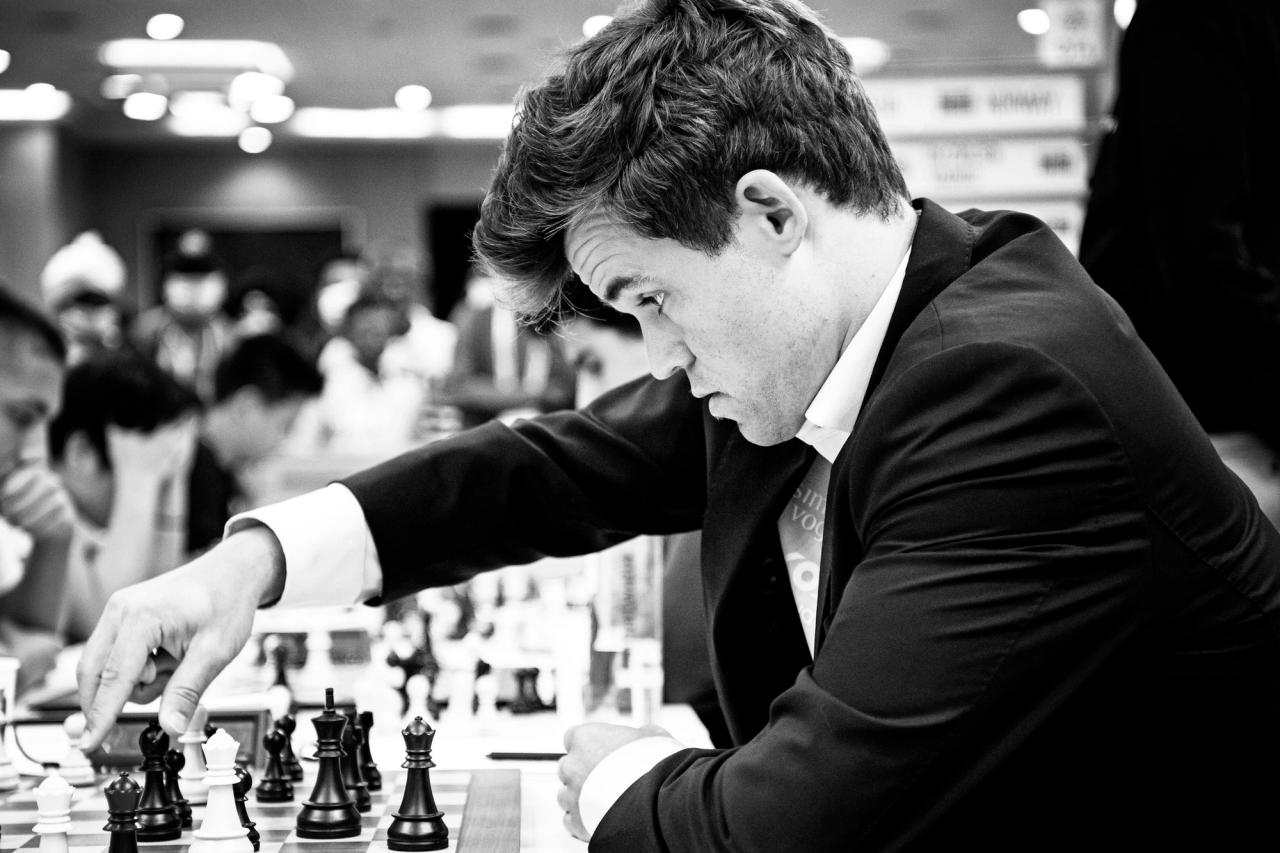
It was certainly a blow for Norway, which arrived without the player who normally transforms it from a strong chess nation into a team capable of threatening almost anyone.
It also meant the biggest individual star in chess was be absent from its biggest team competition.
For an Olympiad already missing another major chess nation entirely, Carlsen's absence was (as always) significant.
Did Russia play in the 2026 Chess Olympiad?
No.
Russia did not compete as a team at the 2026 Chess Olympiad.
The issue became one of the major political stories in chess in the build-up to Samarkand.
Russian and Belarusian teams were barred from FIDE team competitions following Russia's full-scale invasion of Ukraine in 2022.
The situation appeared to be changing after the FIDE General Assembly voted in late 2025 to ease some restrictions, leading to fierce opposition from Ukraine and several European federations.
Russia's chess federation was then itself suspended by FIDE in 2026 over its activities in occupied Ukrainian territories.
As the Olympiad approached, Russian players and media were still discussing the possibility of participation.
But FIDE Council ultimately determined that federations whose membership was suspended could not enter teams.
That kept Russia out of Samarkand.
Individual Russian players remain able to compete internationally under the conditions imposed by FIDE, but there was no Russian team fighting for the Hamilton-Russell Cup.
Given Russia's extraordinary history in the Olympiad, that was no small absence.
Did Pakistan boycott Israel at the Chess Olympiad?
Yes. Pakistan was paired against Israel in the opening round of the 2026 Olympiad but did not play the match, giving Israel a 4-0 walkover.
Chess Federation of Pakistan president Syed Zeeshan Naqvi confirmed the boycott was deliberate and said it reflected Pakistan's policy towards Israel and solidarity with the Palestinian people.
Pakistan remains in the Olympiad. It forfeited the Israel match rather than withdrawing from the competition.
Pakistan and Israel were not paired at the previous Olympiad in Budapest in 2024. Pakistan did, however, withdraw completely from the 2022 Chennai Olympiad in a separate political dispute after objecting to the torch relay passing through Kashmir.
Read more: Pakistan Boycotts Israel Match As Chess Olympiad Opens In Controversy.
What happened at the last Chess Olympiad?
India dominated.
The 45th Chess Olympiad was held in Budapest, Hungary, in September 2024 and became one of the greatest tournaments in Indian chess history.
India won the Open and Women's gold medals, completing an unprecedented double for the country.
The Open team was almost unstoppable.
India finished on 21 match points out of a possible 22, four points clear of the United States and Uzbekistan.
Gukesh was sensational on board one, scoring nine points from ten games with a performance rating above 3000.
GM Arjun Erigaisi was similarly devastating on board three.
In the Women's Olympiad, India recovered from a difficult middle section to take gold ahead of Kazakhstan, with the United States claiming bronze.
So Samarkand is not simply another Olympiad for India.
It is a title defence — twice over.
How does the Chess Olympiad work?
The Olympiad is a team competition played using the Swiss system over 11 rounds.
Each country can register five players.
Four play in each match, with one reserve.
A team match therefore consists of four games.
Winning the match earns two match points.
A 2-2 draw earns one match point for each team.
Losing earns zero.
This distinction is important.
The Olympiad is not primarily decided by the total number of individual games won. The objective is to win each four-board match.
A 4-0 victory is worth the same two match points as a 2.5-1.5 victory.
That creates a fascinating strategic element.
Sometimes the crucial player in an Olympiad isn't the superstar on board one.
It's the player who keeps saving horrible positions on board four.
What happens if teams finish level on points?
Tiebreaks decide the final order if teams finish level on match points.
This can become extremely important in the final rounds, when several leading nations may have identical scores.
FIDE publishes the precise tiebreak regulations for each Olympiad, and teams must therefore pay attention not just to whether they win matches but to how their opponents perform throughout the tournament.
That can produce the peculiar Olympiad experience of a team's medal hopes depending on results elsewhere in the hall.
What is the Women's Chess Olympiad?
The Women's Olympiad runs alongside the Open competition using the same basic national-team format.
India is also the defending champion.
The Women's Olympiad has become increasingly competitive as the strength of women's chess has spread across more countries.
Traditional powers such as China, Georgia and Ukraine have deep Olympiad histories, while India, Kazakhstan, the United States and several European nations have become increasingly formidable.
India's double gold in Budapest means it enters Samarkand with an unusual challenge: defending both major Olympiad titles at once.
One of the individual performances of the Olympiad has come from India's IM Savitha Shri B, who has won all seven games she has played. Her Round 8 victory against Elnaz Kaliakhmet rescued a 2-2 draw against Kazakhstan.
Why is the Chess Olympiad so important?
Because nothing else in chess is quite like it.
Most of elite chess is intensely individual.
At an Olympiad, players who spend the rest of the year competing against each other suddenly become teammates.
World champions share preparation with rivals. Grandmasters sit alongside amateurs representing tiny federations. Players who would never qualify for an elite individual tournament can find themselves paired against the best in the world.
And the scale is enormous.
Hundreds of teams compete simultaneously.
One end of the playing hall contains the world's best grandmasters fighting over medals.
At the other, developing chess nations may be celebrating their first match victory.
For many countries, merely representing their nation at an Olympiad is the pinnacle of a player's chess career.
That is why the tournament matters well beyond the medal positions.
How did Gukesh and Sindarov perform at the Chess Olympiad?
There was another reason to keep a close eye on India and Uzbekistan in Samarkand.
Less than two months after the Olympiad, World Champion GM Gukesh D and GM Javokhir Sindarov will meet in Geneva for the biggest prize in chess.
And it was Sindarov who left Samarkand with gold.
The 20-year-old went through the Olympiad unbeaten for Uzbekistan, scoring 6.5/10 with a performance rating of 2816.
Gukesh scored 8.5/11 with a 2797 performance as India took silver, although his tournament ended with defeat to Hungary's GM Gleb Dudin.
The World Championship opponents even came tantalisingly close to facing each other.
India met Uzbekistan in Round 6, but Sindarov was on board two while India's unusual decision to field their reigning world champion on board four meant Gukesh faced GM Shamsiddin Vokhidov instead.
Both games were drawn.
Uzbekistan won the match 2.5-1.5.
Sindarov therefore leaves Samarkand an Olympiad champion.
The next time he meets India’s world champion, there will be an even bigger title at stake.
READ MORE: Gukesh vs Sindarov: Everything You Need To Know About The 2026 World Chess Championship
Chess Olympiad 2026 schedule
The 2026 Chess Olympiad ran for 11 rounds from September 16 to 27, with one rest day on September 22.
All 11 rounds are now complete.
Key dates
September 15: Opening ceremony
September 16: Round 1
September 17: Round 2
September 18: Round 3
September 19: Round 4
September 20: Round 5
September 21: Round 6
September 22: Rest day
September 23: Round 7
September 24: Round 8
September 25: Round 9
September 26: Round 10
September 27: Round 11 and closing ceremony
Chess Olympiad 2026 final results and standings
After 11 rounds, Uzbekistan were crowned Open champions and China won the Women's Chess Olympiad.
Open final standings
1. Uzbekistan — 20 match points — GOLD
2. India — 18 match points — SILVER
3. Germany — 18 match points — BRONZE
Uzbekistan went into the final round knowing victory against Ukraine would guarantee gold.
They got it.
GM Mukhiddin Madaminov scored the decisive victory against GM Roman Dehtiarov as Uzbekistan won 2.5-1.5 and sparked celebrations in Samarkand.
India needed to beat Hungary to have any chance of catching them but drew 2-2. GM Arjun Erigaisi defeated GM Peter Leko, but World Champion GM Gukesh D lost to GM Gleb Dudin.
Germany completed the podium after beating the Netherlands 2.5-1.5.
Women's final standings
1. China — 20 match points — GOLD
2. Kazakhstan — 18 match points — SILVER
3. India — 17 match points — BRONZE
China went into the final round in control of their own destiny and finished the job with a 3-1 victory over Vietnam.
Kazakhstan drew 2-2 with Poland to secure silver, while India drew 2-2 with Georgia to take bronze.
India also retained the Nona Gaprindashvili Cup for the best combined performance across the Open and Women's competitions.
How the Olympiad unfolded: Watch the Chess Olympiad 2026 round recaps
Missed the action? FIDE published daily video recaps from Samarkand throughout the 2026 Chess Olympiad. Watch the rounds below.
Round 1 recap: https://www.youtube.com/watch?v=78oSXkc4JR4
Round 2 recap: https://www.youtube.com/watch?v=MhtPjtpJ-ew
Round 3 recap: https://www.youtube.com/watch?v=DYMLCjCigvk
Round 4 recap: https://www.youtube.com/watch?v=nm16KefRFVo
Round 5 recap: https://www.youtube.com/watch?v=HKna8NCkyR4
Round 6 recap: https://www.youtube.com/watch?v=SQDSjw2jluA
Round 7 recap: https://www.youtube.com/watch?v=vuTnnG2bm_w
Round 8 recap: https://www.youtube.com/watch?v=BtEbgNdrz_k
Round 9 recap: https://www.youtube.com/watch?v=Y2kkU3F-Zrk
Round 10 recap: https://www.youtube.com/watch?v=DBbuRMZzzBw
How can I watch the 2026 Chess Olympiad?
The Olympiad was broadcast online, with live games available digitally throughout the competition.
With hundreds of games taking place simultaneously, the early rounds were particularly chaotic. As the leading teams rose through the Swiss-system standings, attention increasingly concentrated on the top matches and the medal race.
World Chess covered the biggest stories from Samarkand throughout the event.
Watch Chess Olympiad 2026 live
Round 11, the final round, of the 2026 Chess Olympiad took place in Samarkand on Sunday, September 27.
Watch the official live broadcast below:
World Chess updated the broadcast here throughout the Olympiad.
Controversies at the 2026 Chess Olympiad
The tournament has already generated controversy away from the board. Belarusian GM Denis Lazavik attracted criticism after making extraordinary comments about women in chess and attacking fellow GMs Hikaru Nakamura and Abhimanyu Mishra during an interview in Samarkand.
READ MORE: Lazavik Goes Too Far With Extraordinary Attack On Women, Nakamura And Mishra
Bodhana Sivanandan makes history at 11
One of the stories of the Olympiad belonged to someone who wasn't even born when Viswanathan Anand lost his world title.
FM Bodhana Sivanandan played all 11 rounds on board one for England.
She is 11.
Two years earlier, Sivanandan had made her Olympiad debut aged nine on board four. In Samarkand, England put her at the front of the team.
She responded with 8/11—six wins, four draws and just one defeat.
Along the way Sivanandan secured her third and final Woman Grandmaster norm, becoming the youngest player ever to fulfil the requirements for the WGM title.
She also secured her second International Master norm, putting her well on the way towards an even bigger title.
READ MORE: 11 Years Old, England's Top Board: Bodhana Sivanandan's Extraordinary Chess Olympiad
And there was an election going on
As if an Olympiad involving 400 teams wasn't enough, FIDE also chose its new president in Samarkand. See our 2026 FIDE presidential election guide.
Timur Turlov was elected FIDE President on September 26, defeating Wadim Rosenstein 110-85 in the second round of voting.
Turlov had fallen just one vote short of winning outright in the first ballot, receiving 96 votes to Rosenstein's 76 and Jan Henric Buettner's 20.
Buettner was eliminated and Turlov increased his support in the second ballot to secure the presidency.
Former World Champion GM Viswanathan Anand becomes Deputy President as Turlov's running mate.As though nearly 200 countries playing thousands of games of chess weren't enough, another contest will be taking place in Samarkand.
What were the biggest stories to watch at the start?
India is trying to defend an extraordinary double.
The United States wants to turn its rating advantage into gold.
Uzbekistan wants to win an Olympiad on home soil.
Gukesh and Sindarov are preparing for a World Championship and could find themselves facing each other first.
Carlsen is staying home.
Russia cannot play.
And while all of that is happening, chess is choosing its next president.
The Olympiad has always been gloriously unpredictable.
Samarkand looks particularly difficult to predict.
World Chess will be following it all.