Chess World Left In Limbo As FIDE's Russia Vote Ends In Chaos And Confusion
We knew there'd be a bunfight—there always is. But we didn't expect it to end like this.
What a mess—there's no other way of putting it.
FIDE's General Assembly descended into farce on Sunday night as delegates grappled with the highly-sensitive issue of whether Russian and Belarusian teams should be re-admitted to international team competition, together with their nations' flags and anthems.
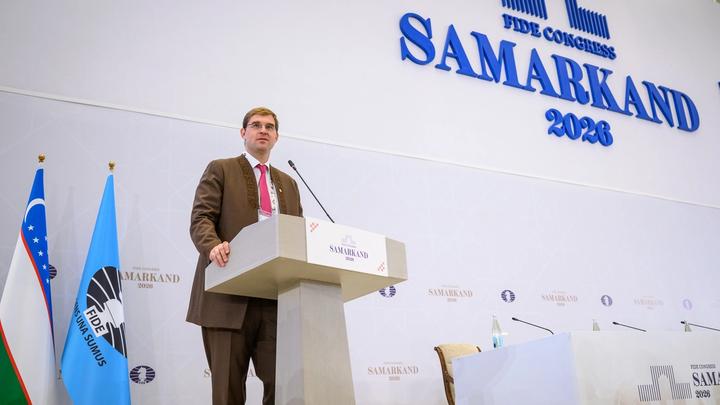
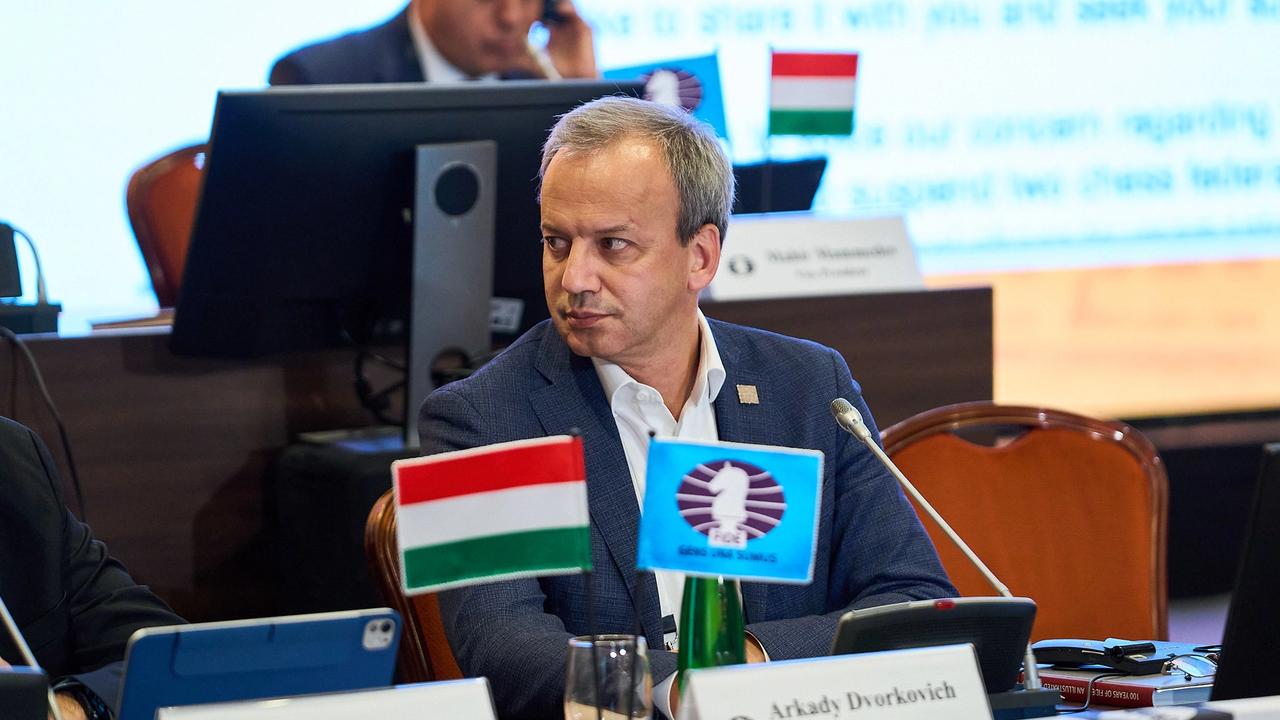
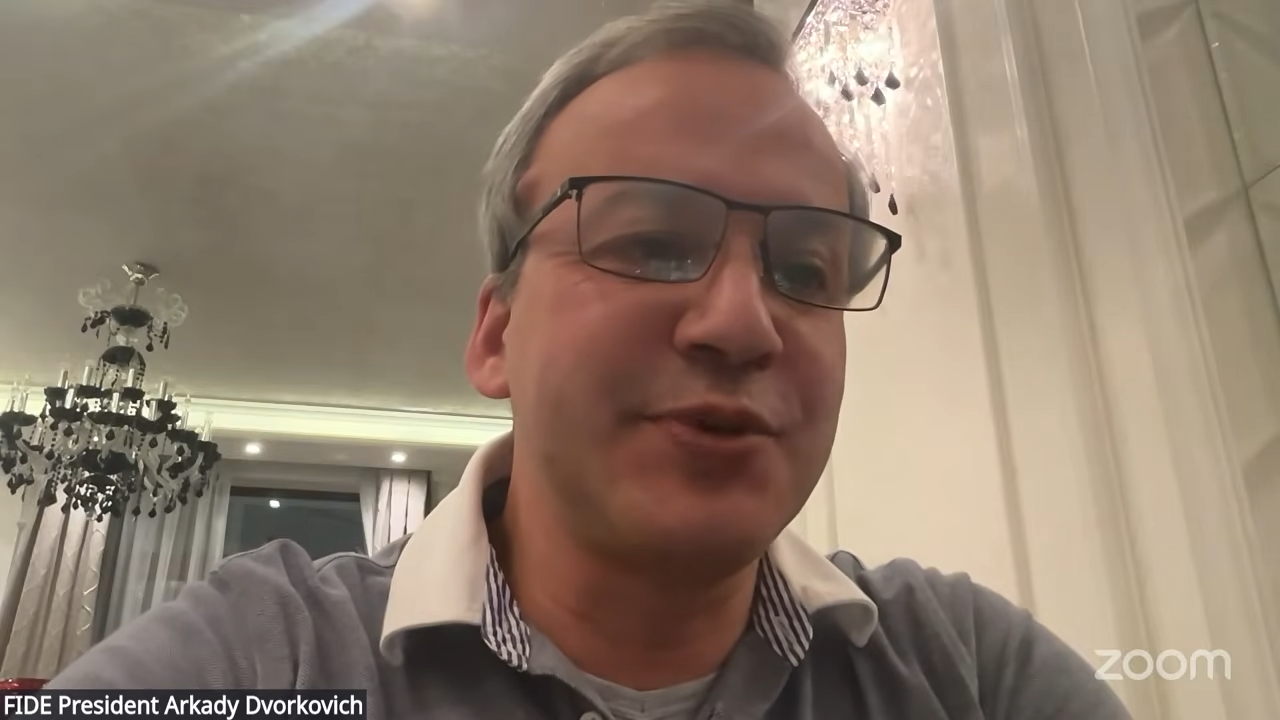
Russian and Belarusian participation was the hot topic going into the annual meeting, chaired by FIDE's Russian president Arkady Dvorkovich, that brings together FIDE's 200 member nations.
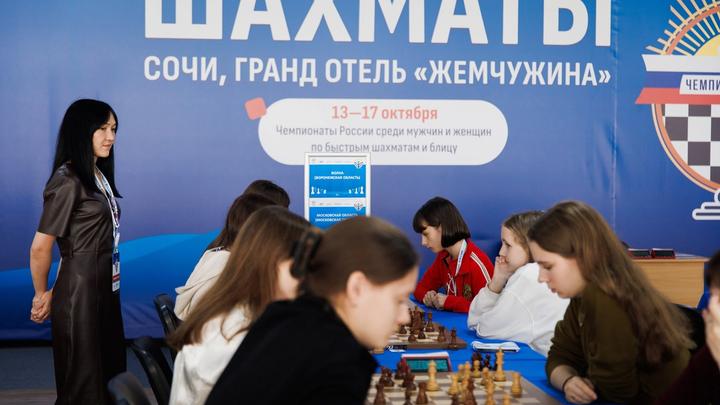
The Russia/Belarus question has been bitterly dividing the chess world since, in the aftermath of Russia's full-scale invasion of Ukraine, the two countries were banned from international team competitions. As a result, they have been excluded from a series of high-profile events, such as the FIDE Olympiad.
The Chess Federation of Russia, one of the world's biggest and most powerful national chess organisations, has been pushing hard to overturn that.
A previous attempt to lift the ban was rejected at the 2024 FIDE General Assembly in Budapest. Delegates did, however, agree to a compromise allowing participation by so-called “vulnerable groups”, permitting children under 18 and players with disabilities to compete as part of Russian or Belarusian teams.
After that decision, officials eyed an opening. It was further prised open when a team of Russians were allowed to compete under the "Team FIDE" name at the recent Women's World Team Chess Championships in Spain.
The CFR’s latest attempt to get FIDE's ban binned was a motion calling for the full lifting of restrictions in FIDE's highest decision-making body.
"We ask the General Assembly to restore our men’s team's equal status within our chess family in accordance with article 4.4 of the FIDE statutes,” CFR delegate Dmitry Oleinikov told the meeting.
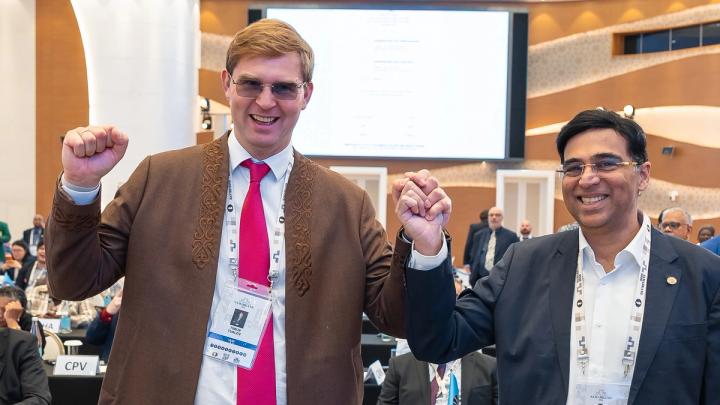
He was given vocal support by, among others, the distinguished five-time World Champion GM Viswanathan Anand, now a FIDE deputy president.
But the motion also drew strong criticism and was opposed by a series of influential federations headed by England, Ireland, the Netherlands and the U.S. Protests were also made online over the Russian stance and how the meeting was conducted.
#chess #FIDE Dvorkovich claimed in the beginning of his speech that he will remain neutral but has turned his speech into hardcore Kremlin propaganda. And he implies that secret voting will be applied if "delegates vote for it" (which is against the FIDE statutes article 17.15 as…
— George Mastrokoukos (@GMastrokoukos) December 14, 2025
Before the meeting even started, FIDE had been accused of misleading delegates after circulating at the last minute legal advice it had received.
Legal Wrangling
Ahead of Sunday’s vote, delegates were sent were a short memorandum drafted by the Swiss law firm Libra Law for the attention of FIDE’s legal director, Alexandr Martinov.
The document claimed that admitting Russian and Belarusian teams as neutrals was "consistent with the latest guidance from the International Olympic and Paralympic Committees," and warned that continued exclusion could be deemed discriminatory.
The memo was presented as an independent legal opinion, but FIDE did not disclose that its author, Swiss lawyer Claude Ramoni, has represented the currently suspended Russian Olympic Committee since at least 2019.
Today the FIDE Council is recommending to remove sanctions on Russian 🇷🇺 teams, even if it contradicts IOC recommendations.
— Peter Heine Nielsen (@PHChess) December 14, 2025
It is a result of a targeted Kremlin campaign, here a @FIDE_chess Council member gets rewarded by Putin 🇷🇺 personally. pic.twitter.com/20U9tg1YYI
When it came to the vote, Russia’s controversial motion passed by 61 in favour, to 51 against. Was it a victory?
What followed only served to muddy the waters.
A second motion proposed by the FIDE Council also passed by 69 votes to 40. It had different wording and was more watered-down. One was a full reintroduction, the other required FIDE to consult with the International Olympic Committee (IOC) over the exact protocols and for the relevant teams to only compete as neutrals.
This became a sticking point. It was later pointed out the two changes of policy were contradictory and it wasn't clear which motion should take precedence.
Did the Russian delegation and its supporters in FIDE make a strategic mistake here?
A Win For Russia?
Right now, those in favour of re-admitting Russian and Belarus teams to international competition are claiming a win, and are hoping to see their flags flying at next year's events. FIDE's website claims the General Assembly has mandated the return of all teams, although acknowledges points of difference.
It states: "The FIDE Council will proceed immediately with the points of consensus found in both resolutions, in accordance with IOC recommendations and the most recent guidance from the Olympic Summit on access to sport and political neutrality."
FIDE General Assembly mandates the return of all teams and fully restores the rights of youth players in line with IOC recommendations; FIDE Council to finalise protocols for adult teams following IOC consultation.
— International Chess Federation (@FIDE_chess) December 14, 2025
Read more: https://t.co/3ExvH9M1VB pic.twitter.com/rNLoRb8bVh
Russian and Belarusian flags and anthems will now certainly start appearing at junior events. FIDE also states that restrictions on holding official FIDE events in Belarus are lifted.
The prima facie outcome was appreciated in Moscow too. Vladimir Putin’s press secretary Dmitry Peskov, chair of the Chess Federation of Russia’s Board of Trustees, issued a statement publicly welcoming the outcome.
But our reading of the meeting is that it wasn’t that simple. Under the terms of the second resolution, FIDE will have to return to the matter and clarify with the IOC whether teams from the two outcast federations will be allowed to use their flags and anthems.
Questions were also raised—and may be returned to—over the validity of the two votes after the CFR proposed they were carried out in secret. They were, after a preliminary vote was held, but it was later suggested FIDE statutes prohibit that.
Was It Binding?
In the meeting, delegates appeared confused about the way forward and eventually left it unresolved.
When asked what his opinion was by Dvorkovich, Greek delegate Georgios Makropoulos said: "For me, Mr President, it's clear that the recommendation of FIDE has got more votes than the other one, so it is clear that it is this which passed."
But Shaun Press, the Papua New Guinean delegate, then intervened to say that both votes were, in fact, invalid, because the FIDE Charter (FIDE's rulebook, in effect) states votes must be open, not secret, unless a 75 per cent majority for the decision to hold a secret ballot is achieved.
Press said: "At this point here, I believe the risk is that because these votes were held in secret that under the FIDE Charter they are actually invalid at the moment."
Roberto Rivello, chair of the Constitutional Commission which interprets the FIDE Charter, said the votes were not binding and just a "general political address." He said the proposal that receives the most votes is the one that has to be approved.
Despite being asked to respond, Rivello did not directly address Press's point about both votes potentially being invalid.
Malcolm Pein, the English Chess Federation delegate, added: "I just want to make this basic point that we have 141 delegates voting on both of these resolutions and we haven't managed to get 50 per cent on either of them. 69 is not even 50 per cent."
David Hater, the U.S. Chess Federation delegate, agreed, calling the two resolutions contradictory and "mutually-exclusive."
The latest FIDE decision is both illegal and absolutely immoral. I wish my own federation will become more functional and bring the case to the CAS. Meanwhile, I appreciate the constant support of @PHChess @TelegraphChess @GMastrokoukos in the battle vs Kremlin influence.
— Pavel Eljanov (@Eljanov) December 15, 2025
It appears there was no plan for what happened if both resolutions passed. The meeting was forced to take a break while legal advice was sought on what to do next.
When it returned to the issue, the meeting found itself again bogged down in procedure.
Dvorkovich tabled a new vote asking delegates to decide between adopting the FIDE Council's vote or call a second vote between the two resolutions.
However, Dvorkovich then faced opposition as Pein intervened to stop the vote.
England's representative told the meeting: "Even the most popular resolution received 69 votes out of what is nearly 200 member nations and this whole process feels like absolute chaos, very unsatisfactory and I'm not sure it's constitutional. Accordingly, myself and many other colleagues will not vote at all on this next option."
By this time, the meeting had been going on for five hours and delegates were dropping out—making it impossible to hold another vote. Dvorkovich appeared frustrated.
The president said: "My suggestion is, maybe it will sound completely stupid and strange, but I think the only legal way at this point is to consider that most both votes were completely legal and valid. So there are two different decisions taken with majority."
He said FIDE would have to return to the matter.
"We will have to consult with IOC for the final decision on the conditions of the participation of Russia and Belarus," he added.
So has the issue got any closer to being resolved? It appears so, but in reality there is still the looming question of whether flags and anthems will be allowed.
Then, how will the federations opposed to this react? Will they take a hard-line stance when Russian and Belarusian symbols start appearing at tournaments? Will boycotts follow?
One thing is certain, however: we have not heard the last of this issue.