Your Brain Peaks at 30. Chess Proves It.
A study of nearly 2,000 Grandmasters pinpoints the age when strategic thinking, memory, and mental stamina converge — and what happens after
When does the human mind reach its peak?
Not raw processing speed — that fades after your early twenties. Not vocabulary or emotional wisdom — those keep growing into your sixties. The question is about something more specific and more elusive: the age at which your ability to make complex decisions under pressure, balancing calculation with intuition, pattern recognition with creativity, is at its absolute best.
A new study published in Scientific Reports offers an unusually precise answer, and it comes from the one field that has been measuring human cognitive performance with mathematical rigour for over a century: chess.
The number is 30.65.
Why Chess?
Chess has long been called the "drosophila of cognitive psychology" — the fruit fly of brain science. The reason is simple: it is one of the only human activities where performance can be tracked precisely, across decades, using a single numerical scale.
The Elo rating system, maintained by the World Chess Federation (FIDE), assigns every competitive player a number that reflects their results against other rated opponents. It is updated monthly. It goes back to the 1960s. And it covers hundreds of thousands of players worldwide.
This makes chess the closest thing science has to a continuous, lifelong brain scan — not of what your brain looks like, but of what it can actually do under competitive pressure. Researchers Necati Alp Erilli and Ali Zafer Dalar, from Sivas Cumhuriyet University and Giresun University in Türkiye, analysed data on all 1,814 living Grandmasters to build their models.
What Peaks at 30
The finding is not that you get smarter until 30 and then fall off a cliff. It is subtler and more interesting than that.
Chess at the Grandmaster level requires the simultaneous coordination of several cognitive abilities that peak at different ages. Calculation speed and working memory — the ability to hold and manipulate complex variations in your head — tend to peak in the early to mid-twenties, according to research from Hartshorne and Germine. Pattern recognition and positional intuition grow with experience and can improve well into the thirties and forties. Psychological resilience — the capacity to maintain concentration over a seven-hour game and a two-week tournament — requires a kind of seasoned composure that youth rarely possesses.
Around 30, these curves intersect. You are still fast enough to calculate deeply, experienced enough to know where to look, and tough enough to sustain it over long competitive stretches. It is the moment of maximum cognitive balance.
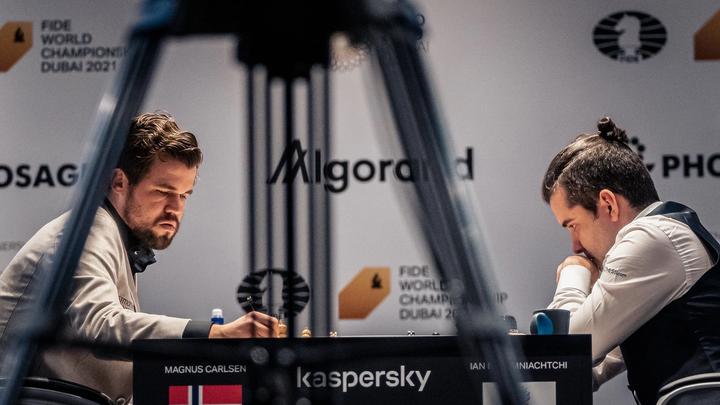
Consider Magnus Carlsen. He became a Grandmaster at 13 and reached his all-time peak rating of 2,882 — the highest in history — in May 2014, at age 23. The study's models, applied to someone who earned the GM title that young, predict a peak around that exact age. Carlsen's extraordinary early development compressed his timeline, but the underlying biology didn't change. He reached his ceiling faster because he climbed faster, arriving at what the data suggests is a natural cognitive optimum.
A 2020 study in PNAS that evaluated 125 years of chess moves against engine recommendations found something complementary: when you measure the quality of individual moves rather than competitive results, the peak extends to around 35. You can be a better thinker at 35 and still post a lower Elo than you did at 25, because the young players around you have gotten sharper. The distinction matters — and helps explain how Carlsen, at 35, remains the world's top-rated player even though his peak number is a decade behind him.
The 30 Club
This resonates far beyond the 64 squares.
In mathematics, the median age for major breakthroughs falls in the early to mid-thirties. Andrew Wiles proved Fermat's Last Theorem at 41, but he's the exception — the Fields Medal is restricted to those under 40 for a reason. In sport, the picture varies by discipline: sprinters peak around 25, footballers around 27, golfers in their early thirties, ultra-marathon runners in their forties. The pattern is consistent: the more a discipline relies on strategy and endurance rather than pure explosiveness, the later the peak.
Chess sits precisely at that intersection — a cognitive sprint inside a strategic marathon. The study's finding of ~30 places it exactly where you'd expect: later than activities that reward raw speed, earlier than those that reward accumulated wisdom alone.
The Prodigy Question
The study's most forward-looking data concerns young players — and here, specific names tell the story better than averages.
Players who earn the GM title before age 15 peak around 22, according to the models. And 58% of them eventually cross the 2,700 "super-GM" threshold. Becoming a very young Grandmaster is not merely a biographical curiosity — it is the single strongest statistical predictor of future elite status.
Gukesh Dommaraju, the reigning World Champion, became a GM at 12 years and 7 months. He crossed 2,700 at 16, became the youngest player ever to reach 2,750 at 17 — breaking Carlsen's record — and won the World Championship at 18. His peak classical rating stands at 2,794. He turns 20 this May. By the study's projections, his optimal cognitive window is just opening. His strongest chess may be two or three years away.
He is not alone. The study tracked 18 "prodigy" players and estimated their timelines for reaching 2,700. Among them: Abhimanyu Mishra, the American who holds the record for youngest GM ever at 12 years and 4 months. Pranav V and Nihal Sarin from India. Volodar Murzin of Russia. Marc'Andria Maurizzi of France. And two Turkish prodigies — Yagiz Kaan Erdogmus, born in 2011, and Ediz Gürel, born in 2008 — whom the models project to cross 2,700 by 2027 to 2029.
The researchers estimate that a prodigy who takes roughly 100 days to climb from 2,400 to 2,500 Elo and 200 days from 2,500 to 2,600 will need approximately three years to reach 2,700. For those who became GM before 15, the timeline is even shorter.
This generation — Gukesh at the top, with a constellation of teenage super-talents rising behind him — is arriving at the elite level earlier than any in history. And the data says they will peak earlier too.
The Compression
The study reveals an acceleration. Grandmasters who earned their title in the 1970s peaked at an average of 37.6. Those titled between 2019 and 2024 peaked at just 23.1 — a compression of nearly fifteen years in half a century.
This doesn't mean the brain itself has changed. What changed is the speed of development. Chess engines, online play from childhood, coaching via video call with Grandmasters in other countries — the tools of the 2020s let a 14-year-old accumulate the chess knowledge that took a player in the 1970s until 25 to build. They arrive at their cognitive ceiling earlier because they climb faster.
Research published in the British Journal of Psychology has shown that the quality of play among world champions improved markedly in the mid-1990s, precisely when engines became widely accessible. The effect has only accelerated since. Today's prodigies arrive with opening preparation that would have been world-class a generation ago.
The ceiling hasn't moved. The escalator has gotten faster.
After the Peak
ChessBase's research on age-related decline shows that the post-peak trajectory is not a cliff but a long, gentle slope. More talented players tend to decline a bit faster after their peak but stabilise earlier. And regular competitive play slows the descent.
No one illustrates this better than Viktor Korchnoi, who was ranked 16th in the world at 68 — only 20 points below his all-time high of 2,695. Or Boris Gelfand, who played in a World Championship match at 43. Or Anand, who remained in the top 10 into his late forties.
Carlsen himself may be writing the next chapter of this story. At 35 and past his numerical peak by over a decade, he remains the world's top-rated player. The peak is not a deadline — it's a summit, and the view from the slopes can remain extraordinary for years.
What It Means Beyond Chess
You don't need to be a Grandmaster for this to matter. The chess data, because of its precision and scale, tells us something broadly applicable about complex decision-making across a lifetime.
If you are in your twenties, your raw processing power is formidable but your judgment is still forming. If you are in your late thirties or forties, your experience is vast but your speed of thought is gently fading. And if you are around 30 — whether you sit across a chessboard, an operating table, a trading desk, or a courtroom — you may be at the optimal balance point: fast enough to calculate, experienced enough to know where to look, and resilient enough to hold it all together when the pressure builds.
As the study's authors put it: "Youth is characterised by speed and learning capacity, while maturity is balanced by experience and strategic depth."
The peak is where those forces meet. And it is, give or take, your thirtieth birthday.
"Estimating the peak age of chess players through statistical and machine learning techniques," by Necati Alp Erilli and Ali Zafer Dalar, is available open-access in Scientific Reports. The full dataset is drawn from the FIDE ratings database.