Scotch Game
When looking at 1.e4 openings, you'll probably encounter the Scotch game. Not known for its complexity nor explosiveness similar to the King's gambit, but instead remains a strong but quiet part of elite chess for decades. To the point, and tension building, the openings challenge black to solve practical problems immediately. This directness is appealing to many players as it tends to result in open positions in which active pieces are more important than long-term manoeuvring. The opening begins with: 1.e4 e5 2.Nf3 Nc6 3.d4 Rather than defending the e4 pawn or having other pieces developed, Black’s centre is struck by white. A knight is usually captured by white, moving a piece into the centre while also opening the lines for the bishops. The scotch openings is the choice for many as it is a logical plan. There is a natural development with pieces easily finding active squares as well as tactical opportunities, all beginning in the early part of the game Many players choose the scotch opening because the plans are logical. Development comes naturally, pieces find active squares, and tactical opportunities often appear much earlier than they do in slower openings.
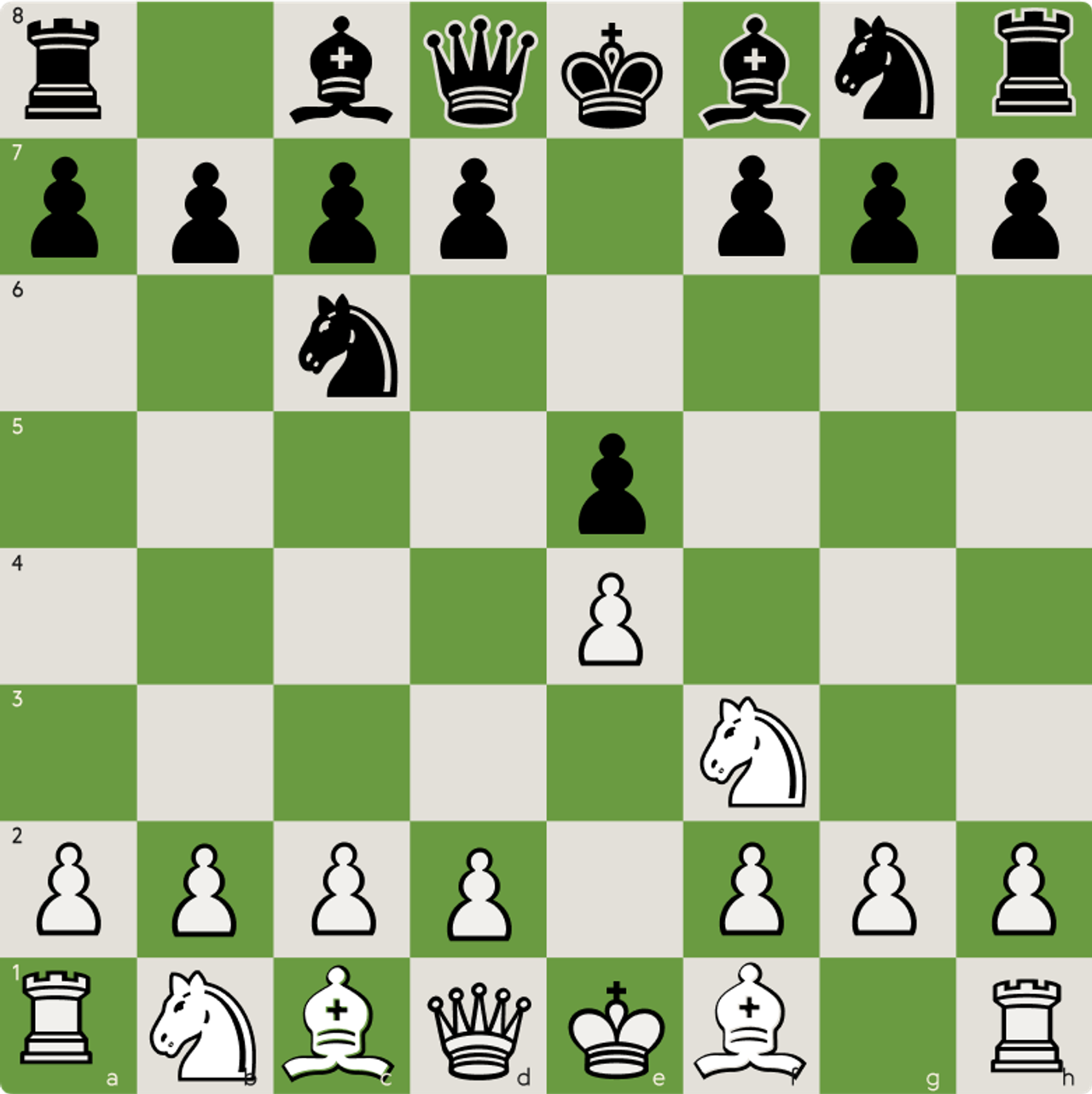
How to Play the Scotch Game
The first objective is to challenge Black’s e5 pawn, before the position has been settled.
The most common continuation:
- 1.e4 e5
- 2.Nf3 Nc6
- 3.d4 exd4
- 4.Nxd4
The white knight is now in the centre, there are now open diagonals available for the bishops as well as room to develop.
After that the aim is now to gain activity rather than material. There is usually development from both sides before the game advances.
Typical plans for White include:
- Castle kingside early.
- Develop the bishop to c4 or b5.
- Bring the queen to f3 or d2 when appropriate.
- Place rooks on open or semi-open files.
- Keep pressure on Black's central pawns.
Black, meanwhile, wants to complete development without falling behind in activity. Equalising usually depends on accurate piece placement rather than immediate tactical ideas.
| White's priorities | Black's priorities |
| Fast development | Complete development safely |
| Active central knight | Challenge White's centre |
| King safety | Avoid losing time |
| Piece activity | Prepare counterplay |
A thing that can surprise newcomers is the pace in which the position can become tactical. Since the files in the centre are open in the early stage of the game, pieces like the queen and bishop are active faster than a lot of other openings.
Scotch Game Variants
Although the opening starts with only a few moves, there are several well-known branches.
Classical Scotch
Players usually learn this line first. Development by black is natural with c5, with white aiming on rapid development as well as control to the centre. Attacking is something that neither side commits to immediately, usually leading to a balanced but lively position.
Schmidt Variation
Black’s knight develops to f6 before the decision of how other pieces are arranged. This usually results in a fast development and careful tactical game.
Mieses Variation
An older system where Black chooses active piece play instead of immediate simplification.
These positions can become sharp if either player falls behind in development.
Scotch Gambit
While it may technically be a separate opening, it tends to go hand in hand with the scotch opening.
Instead of recovering the d4 pawn immediately, White develops rapidly with Bc4, inviting open play and attacking chances.
Göring Gambit
A pawn is sacrificed by white for opening up the lines and rapid development.
It isn't viewed as a high level gambit today, but it is highly popular with players who favour attacking openings.
| Variation | Playing style | Typical idea |
| Classical | Balanced | Healthy development |
| Schmidt | Flexible | Quick piece activity |
| Mieses | Dynamic | Active counterplay |
| Scotch Gambit | Aggressive | Fast attack |
| Göring Gambit | Tactical | Sacrifice for initiative |
An appeal to the scotch game is that the openings are never completely unchanged by these systems. The aim of white is still active pieces and open lines even if there are differing moves. .
White Scotch Game Best Scoring Lines
Players with White generally score well when they focus on activity instead of trying to force tactics too early.
Some practical ideas include:
- Develop every piece before launching an attack.
- Castle early whenever possible.
- Put rooks on central files.
- Look for pins against the c6 knight.
- Keep the initiative by making useful developing moves.
Many experienced players recommend learning the typical middlegame plans rather than memorising dozens of theoretical variations.
A knight posted on d4 often becomes the centre of White's play. From there it influences several important squares while supporting future attacks.
Games are frequently decided because White simply develops more smoothly and reaches the middlegame with slightly more active pieces.
Black Scotch Game Best Scoring Lines
Black has several reliable ways to meet the opening.
One common approach is to finish development quickly and avoid unnecessary pawn weaknesses.
Useful principles include:
- Develop the kingside pieces first.
- Castle before starting counterplay.
- Challenge White's central knight.
- Don't move the queen unless necessary.
- Look for exchanges that reduce White's initiative.
Many successful Black players are happy to simplify the position if they can complete development comfortably.
The opening rewards patience. Trying to win the game immediately often creates more problems than it solves.
Against inexperienced opponents, simply reaching an equal middlegame with healthy development is often enough.
Scotch Game History
The name originates from a match between London and Edinburgh in 1820. The scotch game was successfully used as an opening, and eventually the move became known as the Scottish.
It was considered as one of the main openings in the 19th century after 1.e4 e5. The Ruy Lopez was then favoured by grandmasters as it appeared to have a more promising positioning in long term advantage.
It was utilized by Garry Kasparov in a surprise attack against Anatoly Karpov in the 1990s World Championship match bring the opening back into the elite competition circle. At the time is was viewed as an old fashioned opening hence why it caught attention when used by Kasparov.
Since then it has been played by many grandmasters including Carlsen. It has returned to be appreciated for its ability to produce active positions.
Scotch Game Summary
Not the loudest opening, but one that is highly respected by generations of strong chess players. A key strength of the scotch game is it’s clarity, there is natural development from white while also bringing early challenges and achieving an active middlegame.
Some key ideas worth remembering are:
- Fight for the centre immediately.
- Finish development before attacking.
- Castle early.
- Use open files for your rooks.
- Don't memorise moves without understanding the ideas behind them.
If you already enjoy open positions after 1.e4, the Scotch is well worth exploring. It doesn't rely on tricks or surprise alone. Instead, it rewards good development, accurate calculation and sound positional play.