Before the Anal Beads, There Was a Wig. Meet Chess's Original Computer Cheat.
Netflix just made a documentary about the biggest cheating scandal in chess history. It started the story thirty years too late.
If you watched Untold: Chess Mates on Netflix this month — the documentary about Magnus Carlsen, Hans Niemann, and the cheating scandal that nearly broke professional chess — you probably came away thinking this was a new kind of problem. Elite players, insane amounts of money, and the paranoid suspicion that someone, somewhere, has figured out how to feed a grandmaster moves through a hidden device. A very modern mess.
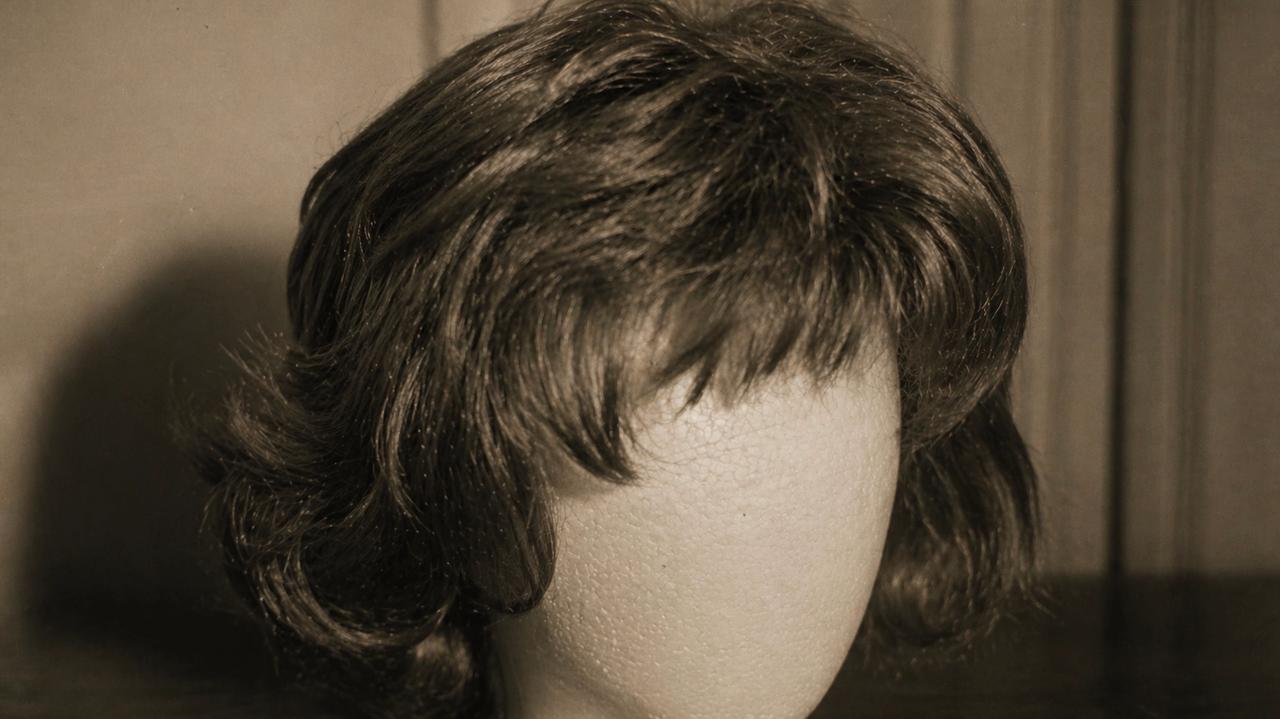
It isn't. The template was written in the summer of 1993 by a pair of Las Vegas gamblers, one of whom wore a fake wig to a chess tournament in Philadelphia. The other one sat in a hotel room.
The man in the wig was named John Wayne. Not the actor — a Black ex-soldier from Los Angeles who went by "the Duke," after his Hollywood namesake, and whose actual talents ran toward blackjack, poker, and competitive pranks. His best friend was Rob Reitzen, a dyslexic savant who made his living building illegal gadgets for cheating at casinos: wearable computers, hidden cameras in belt buckles, radio transmitters tucked into shoes. The two had met when Wayne posted a flyer challenging strangers to beat him at chess and arm-wrestling. Reitzen showed up. A friendship was born.
In late June 1993, they flew to Philadelphia for the World Open chess tournament with a suitcase full of computer equipment, switches, wires, and buzzers. The plan was straightforward, if not exactly legal: Wayne would sit at the board and relay his opponent's moves to Reitzen via toe switches built into his shoes. Reitzen, running homemade chess software in their hotel room, would calculate the best response and vibrate the answer back to Wayne through a hidden buzzer. Wayne just had to move the piece he was told to move and try to look like he was thinking.
For a disguise, they went with dreadlocks and a fake name. The name Wayne chose, on the entry form, was John von Neumann — the actual name of a prominent 20th-century mathematician and computer scientist, deceased since 1957. "As in … the father of game theory?" the tournament official asked, apparently not ruling anything out. Wayne nodded. He was put into the draw.
In round two, Wayne — in wig, in character, buzzer activated — sat down across from Helgi Ólafsson, a grandmaster from Iceland. What followed was, by all accounts, one of the stranger chess games ever played. Wayne barely moved. He stared at the ceiling. He raised and lowered his toes, sending signals to a man in a hotel room, waiting for vibrations that took minutes to arrive. At one point the radio signal cut out entirely and Wayne had to improvise.
Ólafsson offered a draw. "Von Neumann" accepted. The grandmaster told journalists afterward that he was certain he'd been playing "a complete patzer" who "had no idea about the game" and seemed to possibly be on drugs.
The scheme worked — right up until it didn't. In subsequent rounds, the comms link kept failing. Wayne was disqualified for running out of time. He wandered off to a speed-chess area during breaks and slapped $500 on the table, offering to play anyone with a three-minute move limit. There were no takers.
By the end of the week, tournament officials had grown suspicious. They asked Wayne to show identification, then to prove he wasn't receiving outside assistance by playing a game on the spot. Wayne accused them of racism and stormed out. The brief and glorious chess career of John von Neumann the Second was over.
The Inside Chess magazine headline afterward read: "The Von Neumann Affair Rocks the World Open." The article correctly guessed that someone had been feeding the player moves through a computer. It assumed, wrongly, that the instructions had come through his headphones. Who exactly had done it — that was never established. It became one of chess's most enduring unsolved mysteries. A major chess platform later listed it as "the earliest known case of a potential computer cheater."
This month, a book called Lucky Devils — by award-winning Bloomberg journalist Kit Chellel, published on April 14 — solved it. Chellel found Reitzen, who told him everything. Wayne, the man in the wig, died of cancer in 2018, with his best friend at his side, his name still unknown to chess history. Reitzen, for his part, went on to win a spot in the Blackjack Hall of Fame, a kind of secret Oscars for professional gamblers who beat the house.
The detail that deserves a moment is the buzzer. In 1993, John Wayne received chess moves through a vibrating device hidden on his body — signals from a computer, transmitted remotely, undetectable to the naked eye. When Hans Niemann was kind of accused of cheating at the 2022 Sinquefield Cup, the theory that went most viral — amplified by Elon Musk, laughed about by millions — was that he had received moves through a vibrating anal device. The chess world treated this as a uniquely modern horror. The Niemann documentary treats it as the beginning of something.
It was not the beginning. Rob Reitzen figured out the vibrating device in 1993, concealed it in his friend's clothing, aimed it at a grandmaster, and very nearly pulled it off. The grandmaster offered a draw. Wayne took it. Then Wayne put on his normal clothes, left Philadelphia, and didn't tell anyone for thirty years.
The wig, by all accounts, was not very convincing.