Chess Is a Small Sport. But Everyone Wants to Be FIDE President.
No salary. No kingdom. No enforcement power. The job is, by any rational measure, a ribbon. So why is the line to win it longer than it has ever been?
By ILYA MERENZON
Ilya is the CEO of World Chess. He is not planning to seek election for FIDE President.
Earlier this month, Arkady Dvorkovich — the incumbent president of FIDE, the world chess federation — almost ended up on the European Union's sanctions list. He didn't. But while he was busy not being sanctioned, a line had formed behind him. Quietly, then less quietly, people began letting it be known that, should the chair come open, they would like to take it. The line was longer than I could remember. And it is still growing.
This is for a job that pays nothing.
By every ordinary measure, the FIDE presidency is a terrible gig. No salary. The headcount of a mid-size restaurant. An annual budget smaller than a single weekend of a Saudi golf tournament. No real enforcement power over the actual chess economy, which long ago escaped into apps and online platforms — almost none of it under FIDE's control.
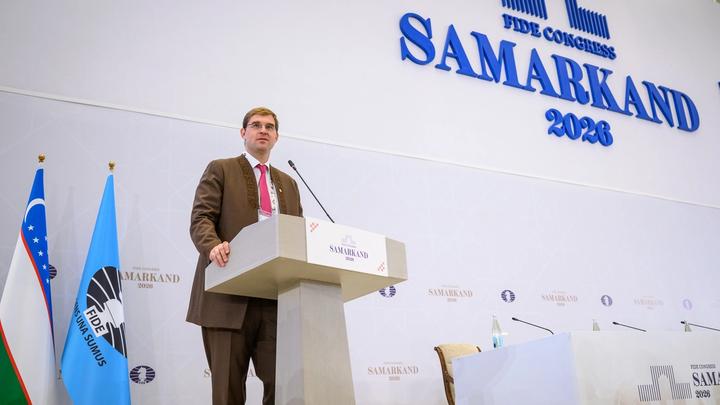
And yet — with the vote for the FIDE president coming this September in Samarkand — grown men are calling the chess secretaries of small island nations to inquire, very pleasantly, about their plans. Tickets are being assembled. Expensive lawyers are hired to read FIDE constitutional amendments.
Everybody wants this job. Let me try to explain why.
Start with the easy part: the FIDE presidency is a passport. The president travels constantly, on official business, to two hundred member countries, including ones that have grown harder for ordinary citizens of certain places to enter. He is met at the airport. He is photographed with the minister of sport. He gives a short speech, opens a tournament, and leaves. The sport's neutrality, such as it is, becomes personal neutrality. The blue FIDE flag becomes a kind of additional citizenship.
That alone would explain a queue. But the queue is much longer than that, which means there is more to the job than just safe travel.
The more interesting part is that chess, alone among small sports, owns its own real estate on the global calendar. The presidents of World Athletics, World Aquatics, World Gymnastics are, with respect, names you have to look up. Their sports live inside the Olympics — fish that swim only in the IOC's aquarium. Between Games, they are invisible. During Games, they are decorations on someone else's cake.
Chess is not in the Olympics. This is sometimes described as a failure. It is the reason the job exists the way it exists. FIDE owns a calendar — Championship, Candidates, Olympiad, rating list — nobody else stages. Every few years a different country bids to host the Chess Olympiad as the main cultural event of its season. A country that could never host the Summer Olympics can absolutely host the Chess one, and for a fortnight it is the center of something genuinely global. The president cuts the ribbon, sits between two ministers, and gets photographed under a banner the size of a building.
FIDE is, essentially, a very small FIFA. Same machinery, one percent of the scale. The FIFA president sits next to emirs. The FIDE president sits next to culture ministers. Both are doing, technically, the same job. One of them just has better catering.
Which is part of why the race is so unusually fun to watch. Chess is small enough that the whole machinery of international sports politics gets compressed into a dollhouse. There are whispered alliances. There are ambassadors-at-large. There are deals worked out between two federation presidents over breakfast in a hotel that used to be a Soviet sanatorium. There are press releases. There are denials. There is, invariably, a rumor about a private plane. For six months every four years, about four hundred people on earth care intensely about the outcome, and the rest of the world has no idea any of this is happening. It looks like the UN General Assembly staged by a regional theater company.
For the people playing, the stakes are not theatrical. They are doing this with their actual time, their actual money, their actual reputations, on the assumption that whatever is at the end of it is worth it.
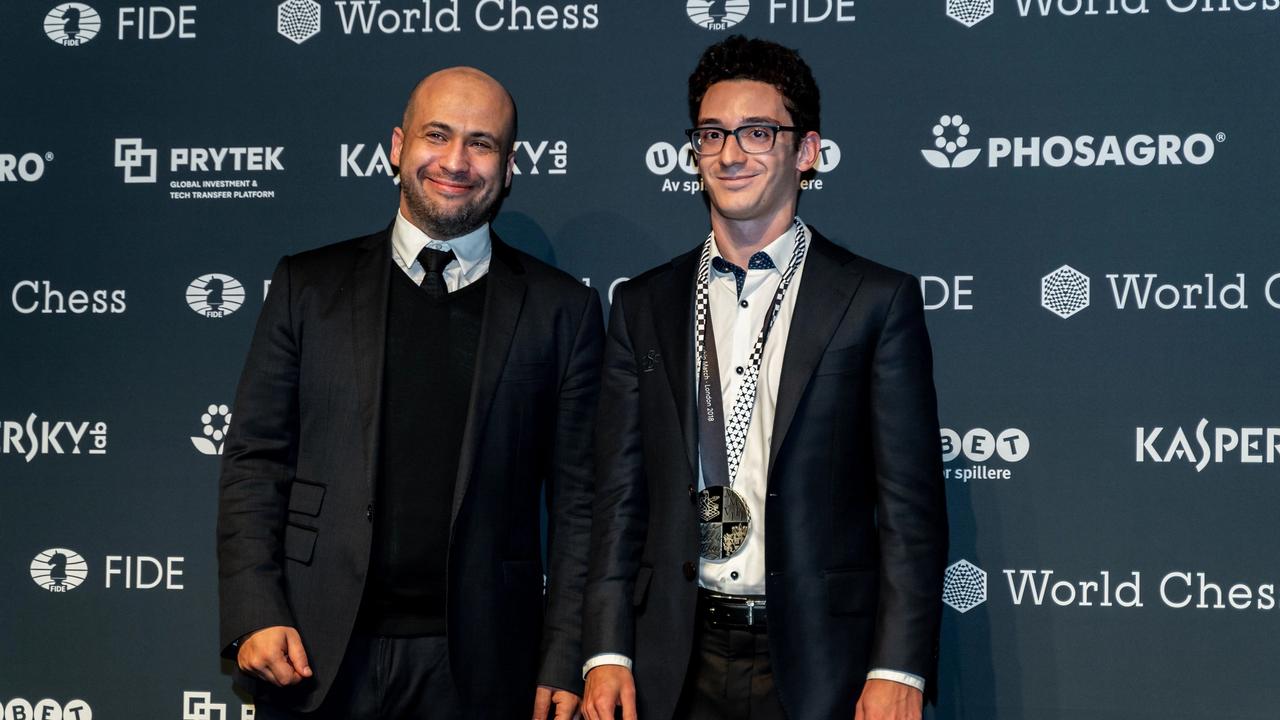
The truth is probably that the FIDE presidency is one of the last small jobs in the world that still feels like a big one. It has a hundred-year history. It has portraits on a wall (at least is should!). It has its own flag. And, crucially, it owns the championship — the title that, every two years, produces exactly one World Chess Champion, whom most of the planet quietly mistakes for the smartest person on Earth. The president is the one who hands over the trophy. Some of the grandeur of the champion rubs off on the man giving him the medal, and four years of that rub-off is, it turns out, worth quite a lot. It is the Birkin of international sport — small, expensive, hard to obtain, immediately recognized by the very specific people who care about that sort of thing, and faintly absurd to everyone else.
Should the job be this attractive? Probably not. A federation presidency that pays nothing and manages little. The job stopped being what it says it is a long time ago.
What it became is harder to name. A seat at the front of a sport that no longer fully belongs to its own federation, given to whoever is best at being convincing and charming to two hundred delegates in a hotel ballroom in Samarkand in September.
The delegates will have grievances. Someone will have overcatered the halva. A winner will emerge, shake hands in front of the blue FIDE flag, and spend four years being flown around the world to open tournaments in countries that in his previous life, he could not have found on a map.
It is a small job. Everyone wants it. That is the whole story.