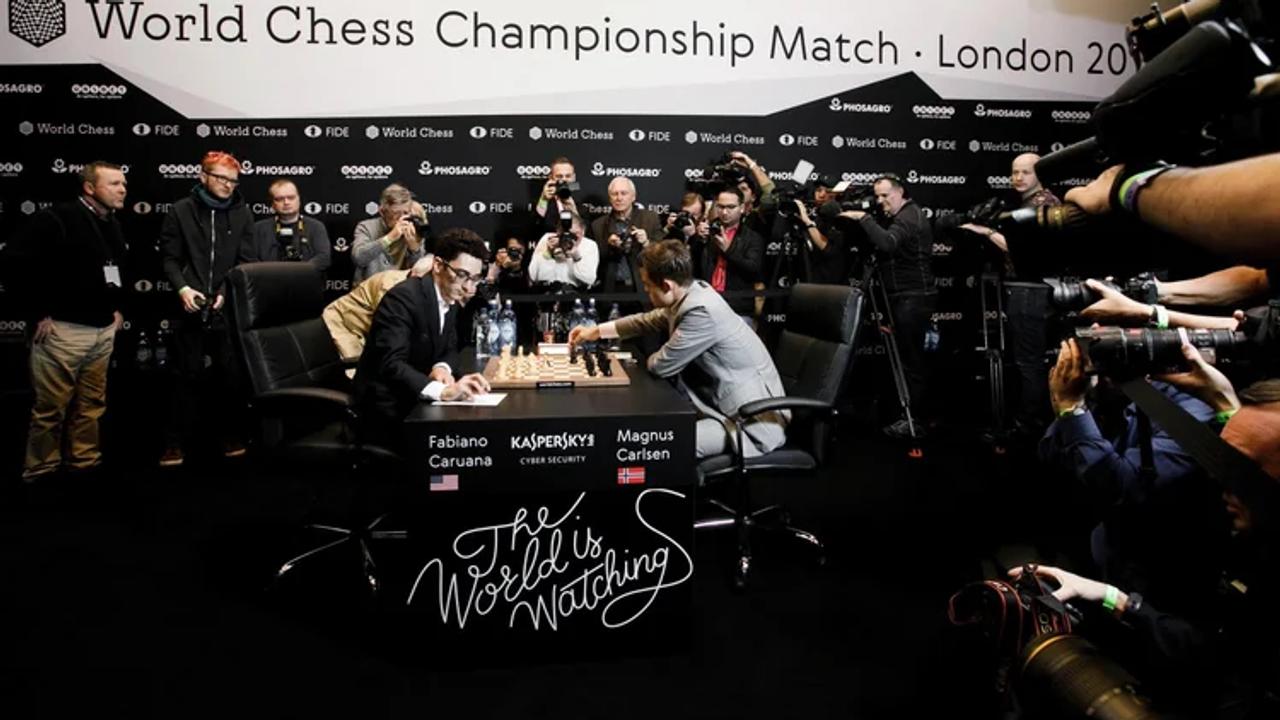
Caruana Bemoans Lack Of State Support For U.S. Chess And Warns Superpower Is Falling Behind Rivals
Speaking ahead of the 2026 Grand Chess Tour, the reigning and five-time U.S. Champion points to how one of game's traditional superpowers is losing ground to Uzbekistan and India.
America, the land of the free, and the great chess superpower that produced Paul Morphy, GM Bobby Fischer and, more recently, the current world numbers two and three GMs Hikaru Nakamura and Fabiano Caruana.
But, according to Caruana, the 2018 World Championship Challenger, chess in the U.S. is falling behind its rivals due to a lack of funding for the U.S. Chess Federation (USCF) received from government.
In a recent interview with the leading Romanian business newspaper Ziarul Financiar ahead of his appearance in Bucharest for the Grand Chess Tour, Caruana said: "The government and companies should invest in chess—it's very beneficial.
#BusinessSportiv Interviu. GM Fabiano Caruana: Ţările care investesc în şah văd rezultate clarehttps://t.co/uVndnV07U9
— Ziarul Financiar (@ZiarulFinanciar) April 26, 2026
"But in the US, the situation is a little different… The government is not involved in chess development, so we rely on companies and private sponsors, such as the Saint Louis Chess Club. In European countries, the situation is better—governments are more involved.
"If you look at countries that have made the most progress over the past two decades, such as Uzbekistan and India, these are precisely the places where governments have invested a lot of effort and resources in chess. And the results are clear.
"Uzbekistan, although not a large country, is capable of producing some of the best players in the world."
Caruana has a point. The USCF, sometimes known as U.S. Chess. is primarily funded through member dues, tournament fees, and the sale of chess merchandise, rather than government support.
Key revenue streams include member subscriptions, sanctioning fees for tournaments, and donations. Major high-level tournaments often rely on private sponsorship, notably from the Saint Louis Chess Club.
Federation-level funding has played a big part in Caruana's career and his rise to stardom.
The 33-year-old, who was born in Miami, Florida, but is of Italian ancestry, grew up in the U.S. but spent a decade playing for Italy before he transferred his chess federation affiliation back to the U.S. in May 2015.
The transfer was heavily funded by the Saint Louis Chess Club, which is backed by the chess benevolence of American multi-millionaire Rex Sinquefield. It brought the world's then-number-two player back to the U.S., allowing him to play for the USCF.
"So they are indeed buying nerds!" world number-one GM Magnus Carlsen quipped when the news broke. His comment quickly entered into chess folklore.
@gmjlh so they are indeed buying nerds!
— Magnus Carlsen (@MagnusCarlsen) May 12, 2015
Caruana's transfer followed GM Wesley So moving from the Philippines and after Caruana came the top GMs Levon Aronian, from Armenia, and Leinier Dominguez, from Cuba.
It built a super-strong U.S. team and made the USCF the top-ranked FIDE federation in the world, which it remains. Team USA also won open gold at the 2016 Chess Olympiad in Baku, Azerbaijan, and have taken three silvers and one bronze since.
America is second on the all-time Olympiad medal table behind only the Soviet Union, which was famously state-backed like no other and dominated elite chess for decades.
For now, the U.S. has Sinquefield's backing. But what if it didn't?