The New Chess Rivalry: How Uzbekistan Has Disrupted India's Chess Ascent
Will everyone please stop talking about how India is going to rule the world of chess? There are other nations on the block—most notably, Uzbekistan.
From the white heat of the 1972 Fischer–Spassky match to the so-called “clash of civilizations” between Garry Kasparov and Anatoly Karpov, chess has always been defined by great rivalries.
These contests have never merely been about moves on a board, but about nations, identities and shifting balances of power.
In modern chess, a new rivalry is quietly—but unmistakably—taking shape. And at its centre stand India and Uzbekistan.
For much of the past decade, India appeared destined to dominate the chess world. Its conveyor belt of prodigies, unmatched depth of elite young grandmasters, and the crowning of GM Gukesh D as World Champion all seemed to point in one direction. The future of chess, many believed, would wear the tricolour.
But at the Dutch seaside town of Wijk aan Zee this weekend, that sense of inevitability suffered a blow.
Nodirbek's Moment
The Tata Steel Chess Tournament 2026—widely regarded as the most prestigious super-tournament outside the World Championship cycle—concluded on Sunday with a result that felt symbolic of a broader shift.
GM Nodirbek Abdusattorov, the 21-year-old grandmaster from Tashkent, finally claimed the title that had eluded him after three consecutive near-misses.

Holding his nerve under immense pressure, Abdusattorov defeated India's GM Arjun Erigaisi in the final round to finish outright first with 9 points from 13 games. Fresh off a victory at the London Chess Classic before Christmas, the Uzbek star confirmed his arrival at the very top of elite chess.
For Abdusattorov, it was vindication. For India, it was a sobering reckoning.
India had sent four players to Wijk aan Zee—Gukesh, GM Praggnanandhaa R, Erigaisi and GM Aravindh Chitambaram—carrying memories of dominance. Just a year earlier, Gukesh and Praggnanandhaa had contested the Tata Steel title in tiebreaks.
This year, the contrast could hardly have been sharper.
Across 52 games, the Indian quartet managed just six wins. Over the three weeks of classical chess, Arjun lost 30 rating points on the live list, Praggnanandhaa dropped 17, Aravindh fell by 16, and even Gukesh slipped by six—a combined loss of 69 rating points. Those losses didn't appear on FIDE's February list released on Monday, but they will in March.
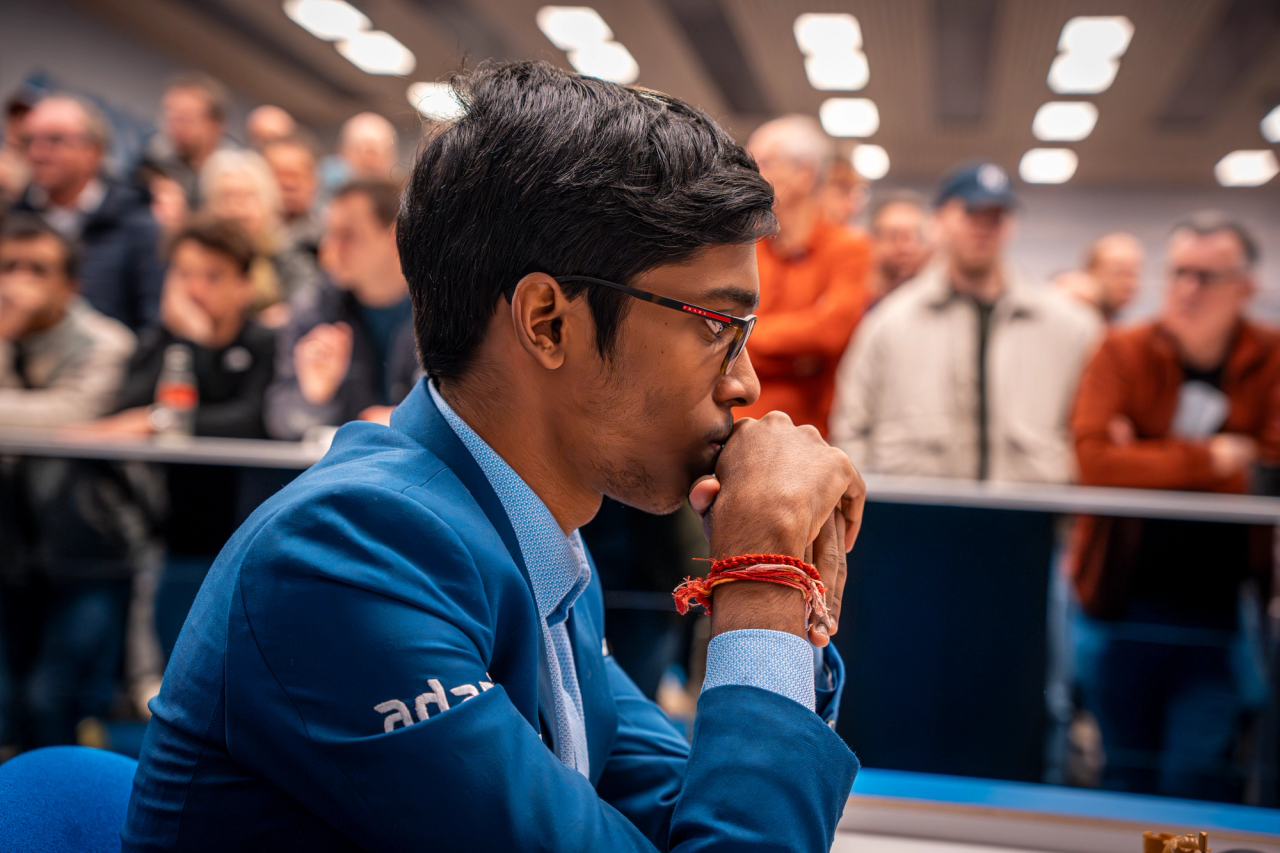
Gukesh finished as the highest-placed Indian in joint eighth with 6.5 points, alongside GMs Anish Giri and Vladimir Fedoseev.
Praggnanandhaa ended on 5.5 points, while Arjun and Aravindh finished on 4.5 each, among the bottom four players. The closest any Indian came to the title was joint eighth—a stark fall from last year’s heights.
The Uzbek One-Two
What sharpened the sense of unease was not merely India's struggles, but a new hint of Uzbekistan's apparent dominance.
This year’s Tata Steel featured one of the youngest fields in the tournament’s history, including precocious Turkish talent 14-year-old IM Yagiz Kaan Erdogmus. Yet youth did not mean inconsistency for the Uzbek contingent. Abdusattorov was joined at the top of the standings by GM Javokhir Sindarov, who finished second with 8.5 points.
Sindarov’s performance followed his FIDE World Cup triumph in Goa just months earlier, reinforcing the idea that Uzbekistan’s golden generation has moved decisively from promise to power.
The pair's rise has been undeniable. They are here to stay.
A Rivalry Years in the Making
This was not an isolated reversal, but the latest chapter in a rivalry that has been simmering for half a decade.
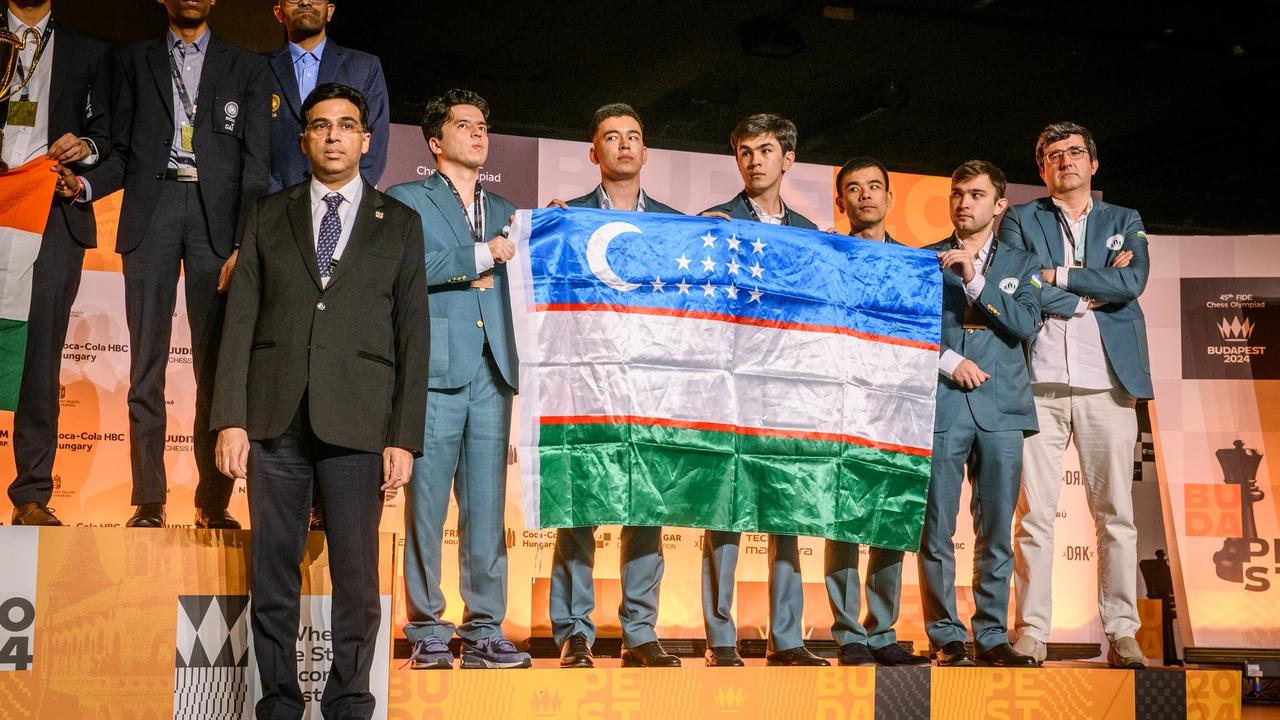
The flashpoint came at the 2022 Chess Olympiad in Chennai, when Uzbekistan stunned the hosts to claim gold, defeating an Indian team featuring Gukesh and Praggnanandhaa in the final round. India responded emphatically two years later in Budapest, reclaiming Olympiad gold and restoring parity.
Later this year, the rivalry enters its third act in Samarkand, where India will defend its Olympiad crown on Uzbek soil—a setting that now carries extra psychological weight.
The live world rankings according to 2700chess.com reflect the tightening contest. After Wijk aan Zee, Gukesh is India’s sole representative in the top 10 at world number-ten while Sindarov has surged nine places to number 11, leapfrogging Arjun (12) and Praggnanandhaa (number 14).
Alarm Bells
The timing of India’s struggles could scarcely be worse. Praggnanandhaa is set to play his second Candidates Tournament in a few months, aiming to earn a shot at the World Championship. Gukesh will defend his world title in November and December. India will also attempt to retain its Olympiad gold later this year.
Context makes the Wijk aan Zee slump even more troubling. Praggnanandhaa arrived after a swashbuckling 2025, having won multiple elite tournaments to secure his Candidates spot. Arjun entered 2026 buoyed by twin bronze medals at the FIDE World Rapid and Blitz Championships.
Gukesh, meanwhile, lost fewer rating points and scored more wins than his compatriots, but his decision-making raised eyebrows. He committed uncharacteristic blunders—including a single-move loss against Abdusattorov—collapsed against Giri, and offered GM Hans Niemann a lifeline with a speculative knight sacrifice. He also allowed winning positions, most notably against Sindarov, to drift into draws.
For a reigning world champion, these are warning signs rather than footnotes.
A Real Rivalry
India remains a chess superpower. But the assumption of inevitability—that India’s dominance was only a matter of time—no longer holds.
Uzbekistan, led by Abdusattorov’s composure and Sindarov’s fearlessness, has emerged not as a plucky challenger, but as a genuine rival.
And after Wijk aan Zee, one thing is clear: the next great rivalry in chess has already begun.