Peru Becomes Unlikely Flashpoint In FIDE Presidential Race
The hunt for votes has started in South America and allegations are flying.
The first major controversy of the race to become FIDE president has erupted with Peru unexpectedly finding itself at the centre of the campaign.
Last week FIDE informed more than 200 member federations that it had withdrawn hosting rights for the World Junior Championship from Lima after, it said, the Chess Federation of Peru failed to meet its contractual financial obligations despite "multiple deadline extensions."
Instead, the governing body announced it is shifting the tournament host status provisionally to Venezuela.
Disputes between FIDE and member federations like this are depressingly normal in chess. In usual circumstances, this would have been a routine change to the international chess calendar. But in an election year, rulings like this get seized upon as political ammunition.
And so it proved.
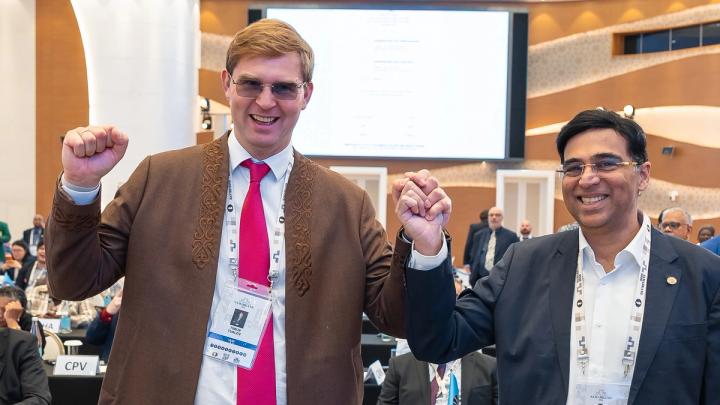
FIDE's decision immediately sparked criticism from one election hopeful, the Germany-based businessman Wadim Rosenstein. FIDE election watchers will realise that the very fact that Rosenstein intervened suggests there's a lot more to it.
Today I woke up and learned about yet another injustice. Of course, many see the decision to move the World Junior Championship to Venezuela as a political move.
— Wadim Rosenstein (@WadimRosenstein) July 2, 2026
Dear Peruvians,
Last week I came to your country to help grow chess, and I will not allow anybody to use our success… pic.twitter.com/9KFP9Nsiht
Only days earlier Rosenstein had launched his campaign to unseat incumbent Arkady Dvorkovich in September's presidential election in Samarkand. Jan Henric Buettner, the sponsor behind the Freestyle Chess series of events, is also contesting the presidency.
The question is, does he have a point - or is this just naked electioneering?
In a statement published on X, Rosenstein alleged Peru had effectively been punished after refusing to align politically with the current FIDE leadership. He argued the decision had little to do with the organisation of the championship and contrasted Peru losing the event with Venezuela being awarded hosting rights, portraying the move as evidence that politics had influenced a sporting decision.
The criticism came just days after Rosenstein visited Lima as part of his campaign across the Americas.
During the trip he attended the 2026 WR Chess Marathon, organised by the Peruvian Chess Federation, where 854 players took part in a successful world record attempt. Over 69.5 hours, players completed 12,445 games across an eight-event festival that included a challenge match between 12-year-old Argentine prodigy IM Faustino Oro and Peru's GM José "Jospem" Martínez.
Rosenstein also announced that Lima will host the second WR Chess Masters Bughouse tournament, saying his partner from the inaugural event, GM Levon Aronian, would travel to Peru to compete.
The visit underlined the importance of the Americas to Rosenstein's campaign.
The Confederation of Chess for the Americas (CCA), which comprises 42 national federations, represents a significant voting bloc in the FIDE presidential election. Rosenstein is also backing a candidate in the CCA's own presidential election later this year, where IM Martha Fierro of Ecuador is challenging incumbent José Antonio Carrillo.
♟I am happy to support Martha Fierro who is heading the wining team for the Confederation of Chess for the Americas (CCA). We have been together over the past weeks and understand the challenges the CCA federations are facing. More importantly, we have proven to them what we can… pic.twitter.com/8rjkZUR9Pr
— Wadim Rosenstein (@WadimRosenstein) June 30, 2026
Peru has become an important battleground because the World Junior Championship was due to be organised jointly by the Peruvian Chess Federation and the CCA. The two organisations successfully hosted the 2025 World Junior Rapid & Blitz Championships in Lima last year, making the loss of the championship particularly notable.
FIDE swiftly rejected any suggestion that politics played any part in the decision.
A spokesperson told World Chess: "We reject any suggestion that this decision was in any way influenced by electoral considerations. It was taken solely on the basis of the circumstances surrounding the organisation of the championship, and only after several failed attempts to find a solution with the Peruvian federation.
"We are very disappointed with this outcome, but our responsibility to the players is for the event of this scale to be organised in line with the publicly stated standards, which are also a legal obligation for the host country.
"FIDE appreciates the commitment of the chess community in Peru and regrets the disappointment this decision causes for anyone.
"Our priority is to ensure that the World Junior Championship is successfully organised for all participants."
Why Peru matters
The dispute has thrust one of FIDE's flagship junior events into the centre of this year's presidential race.
Every national federation has one vote in the presidential election, making support across the Americas strategically important for any candidate. Peru has long been regarded as one of the region's most active federations, regularly staging international events and playing a prominent role in continental chess.
Against that backdrop, the removal of a world championship has inevitably attracted political attention, regardless of the reasons behind FIDE's decision.
For Rosenstein, who is campaigning on a reform platform, the episode reinforces his broader argument that FIDE under its current leadership has become overly political.
His campaign has kicked off calling for greater transparency in how major decisions affecting member federations are made.