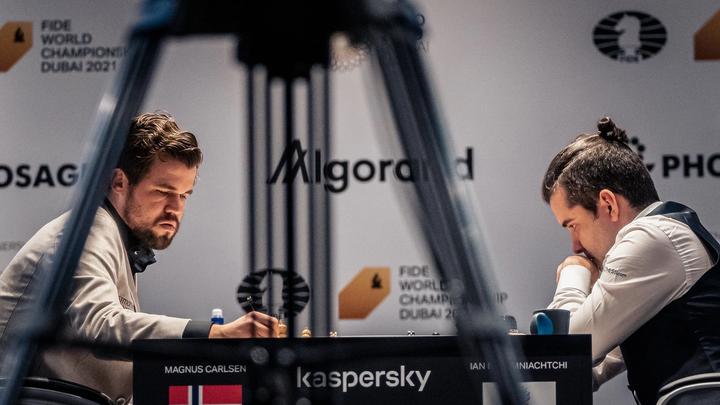
Vladimir Kramnik Publishes Part Two Of His Fair Play Detection Methodology, Today On World Chess
Kramnik's central point is that most anti-cheating systems make one mistake—they average everything together.
GM Vladimir Kramnik, the 14th undisputed World Chess Champion, has set the game alight with his eye-opening investigations into cheating. Now his reports are complete.
Last week World Chess published Part One setting out the premise of his findings: detecting engine use is a benchmarking problem. We're back to finish the job with Part Two, explaining the actual method.
Kramnik's central point is that most anti-cheating systems make one mistake—they average everything together. They look at a player's overall accuracy, or the percentage of moves that match the engine's top choice, across all his games at once.
What Cheaters Do
A sophisticated cheater defeats this easily. He uses the engine only in critical moments or critical games, and plays the rest honestly. His averages stay inside normal human range.
Kramnik compares this to a doctor who reports the average temperature of his patients—half with a fever, half too cold—and concludes the ward is healthy. The average is meaningless when it's hiding two very different things.
His solution is to use a broad set of separate parameters, each with its own benchmark, rather than one combined number. Examples include accuracy in time scrambles (10 seconds or less on the clock), blunder rate, performance in worse positions, and the share of difficult moves a player finds.
A cheater can keep his overall numbers normal, but he can't keep all of these individual measures normal at the same time.
The paper shows two charts. The first is GM Magnus Carlsen's consecutive online blitz games: his two most common accuracy levels sit close together, which is what fair play looks like.
The second is an unnamed player rated below 2600 whose two most common levels are far apart—one at top-ten level, one at weak-grandmaster level. The average between them looks normal. The gap between them is the warning sign.
Kramnik also addresses the main criticism of his approach — that isolating suspicious "blocks" of games is cherry-picking. His answer: cheating detection isn't standard data analysis. Standard analysis assumes clean data; here you can't assume any single game was played fairly, so isolating the suspicious stretches is the only method that works.
Download part 2 of Kramnik's paper on cheating detection.