Total Chess Pilot: Five Things To Watch As Carlsen Tests Chess's New Format
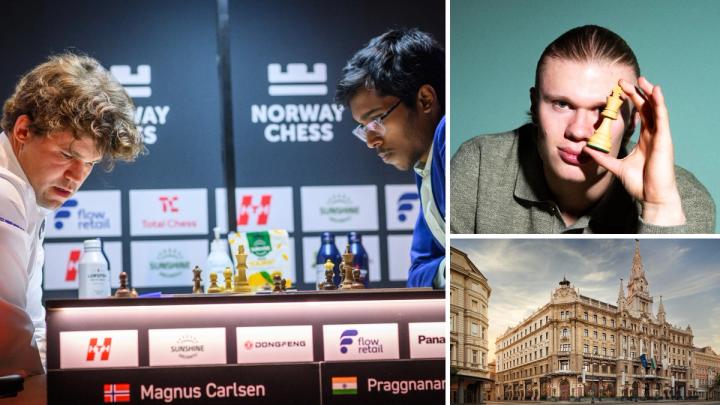
Magnus Carlsen heads a star-studded field in Budapest as Total Chess prepares to test a new format combining classical, rapid and blitz. Here are five questions ahead of Tuesday's opening.
Chess has tried plenty of new formats over the years. We've seen them all and, unfortunately, most have come and gone.
But Total Chess, which begins its inaugural pilot event in Budapest on Tuesday, November 10, has bigger ambitions.
The competition promises to find the game's ultimate all-rounder by combining three disciplines into a single championship—and, eventually, a new unified rating system.
With GM Magnus Carlsen heading a 24-player field, here are five things to watch.
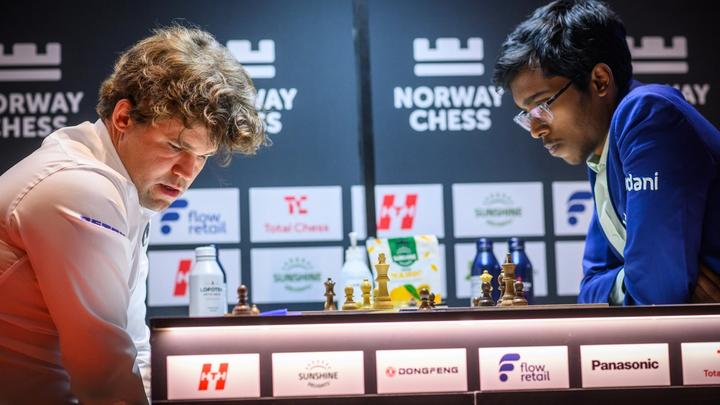
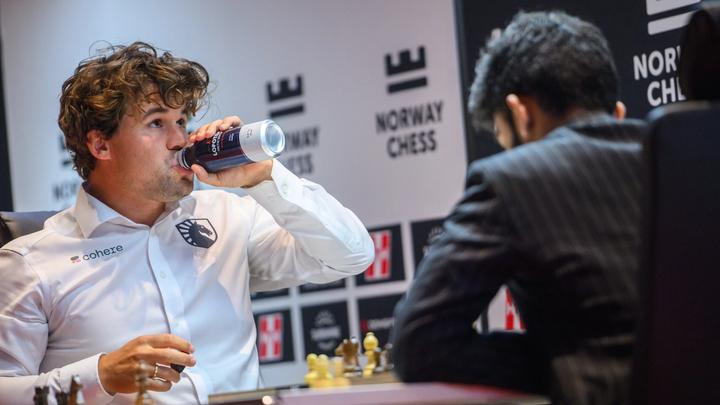
1. Can anyone stop Magnus Carlsen?
The Norwegian world number-one remains the man to beat, particularly in a competition designed to reward versatility.
But his challengers include some of the most dangerous players in modern chess, among them GM Fabiano Caruana, GM Alireza Firouzja, GM Arjun Erigaisi, GM Praggnanandhaa R and GM Nodirbek Abdusattorov.
Indian grandmaster and TEDx speaker GM Akash Ganesan summed up the anticipation:
"What I'm looking forward to is if Magnus can hold off Arjun, Pragg, Nodirbek, Alireza and Fabi (list goes on 😄) and once again show his dominance."
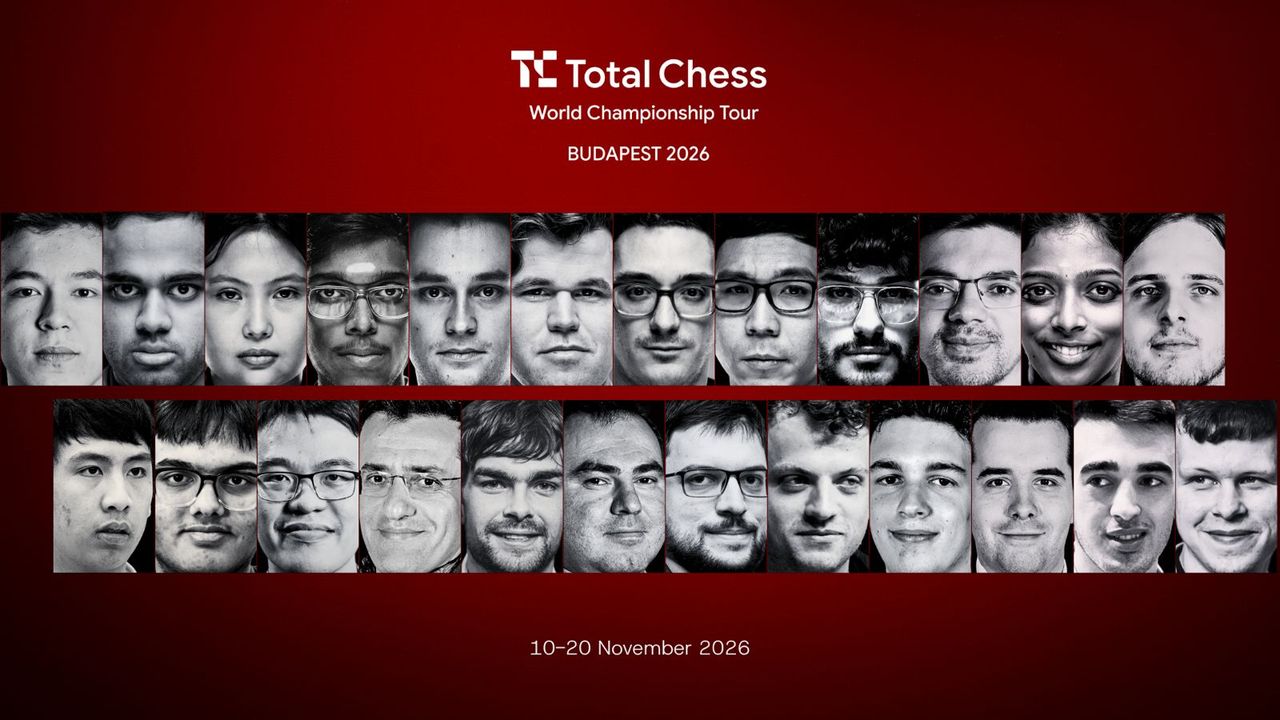
Carlsen has spent years proving himself across different time controls. Total Chess offers another opportunity to demonstrate that his supremacy extends beyond any single format.
2. Will the format actually work?
This is the biggest question facing the organisers.
The group stage uses a new 45-minute-plus-30-second-increment time control dubbed Fast Classic, while the knockout phase introduces classical, rapid and blitz games with weighted scoring.
It is an intriguing idea, but also a potential contradiction: can a tournament claim to identify the best all-round chess player when its opening stage is played entirely at one speed?
Organisers believe the system will produce more exciting chess without sacrificing quality. Budapest will provide the first serious test of that claim.
3. Can Bibisara and Vaishali upset the supergrandmasters?
Two of the most intriguing entrants are GM Bibisara Assaubayeva of Kazakhstan and GM Vaishali Rameshbabu of India.
Both have established themselves as formidable competitors, but facing a field packed with elite players presents a different challenge.
How will they handle the pressure against opponents who are regularly competing at the very highest level?
And could the unfamiliar format help level the playing field?
A strong performance from either would be one of the tournament's most compelling stories.
4. Where are Gukesh and Sindarov?
There is one conspicuous absence from a competition promising to find chess's best all-round player: the reigning classical world champion.
GM Gukesh D and his challenger, GM Javokhir Sindarov, are preparing for their World Chess Championship match in Geneva later this month.
Neither is competing in Budapest. GM Hikaru Nakamura is another notable absentee.
Their absence does not undermine the quality of the field, but it raises a question for Total Chess's longer-term ambitions.
Can a new competition establish itself as the ultimate test of chess excellence without every leading contender taking part?
5. Can Total Chess make chess more entertaining?
Perhaps the biggest test will happen away from the board.
Organisers are promising a broadcast designed to reach a wider audience, with popular chess personality IM Levy Rozman among those involved in presenting the tournament.
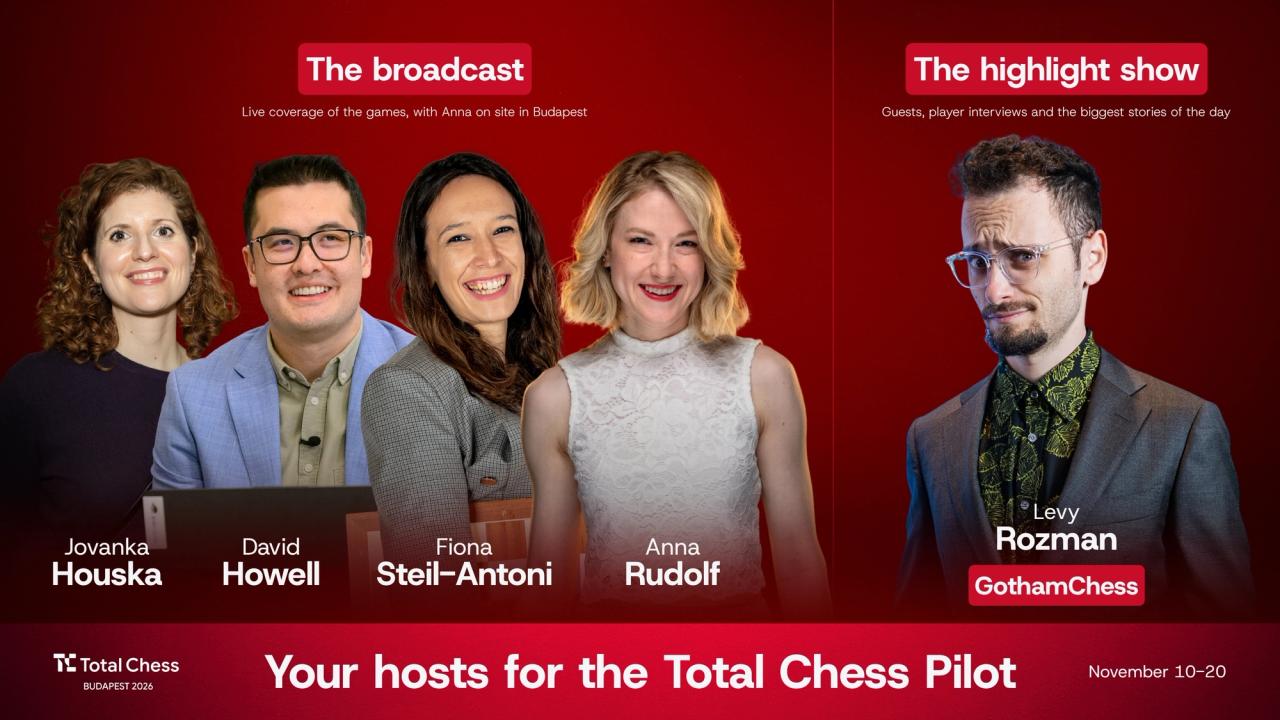
The shorter time controls, combined scoring and knockout format are intended to make elite chess more accessible to spectators.
But will casual fans understand the system? And will traditional followers embrace it?
Chess has seen ambitious innovations before, from Fischer Random to the Grand Chess Tour's experiments with combined scoring.
Some have endured. Others have struggled to establish a lasting identity.
Total Chess is hoping to do something more ambitious: change how the game measures its greatest players.
The pilot begins in Budapest on November 10 and runs until November 20.
For the full schedule, field and format, see our complete guide to Total Chess 2026.