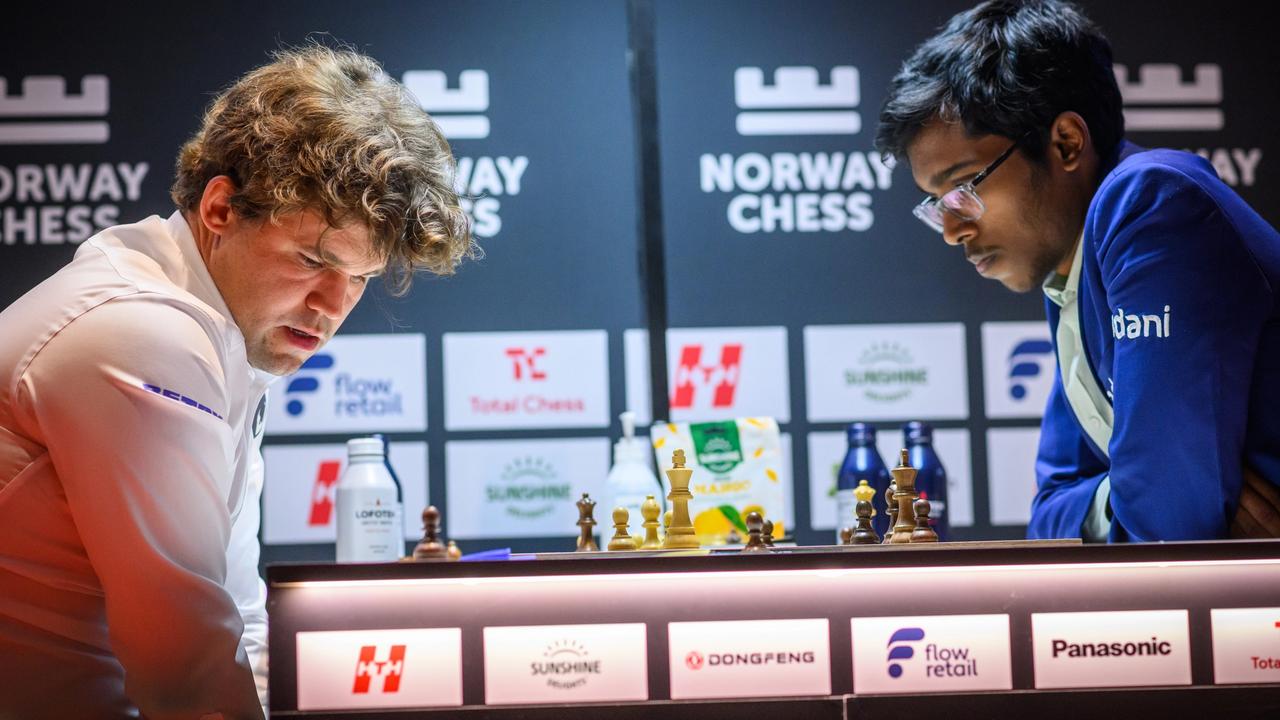
Carlsen's Big Return Awaits—But Is Chess Ready For Another World Champion?
The stage is set. Magnus Carlsen will headline a star-studded field in Budapest as Total Chess tests a radical new format. But after a mixed year in classical chess, can the Norwegian prove he is still the ultimate all-rounder?
It is the return of the king. GM Magnus Carlsen, the biggest name in chess, is preparing for another big return. And, as usual, the game is unlikely to be quite the same when he does.
On November 10, the world number-one will headline a 24-player field in Budapest for the inaugural Total Chess World Championship Tour pilot. Will we see another big flex from Carlsen, showing he's still Magnus the Mighty?
The event is an ambitious experiment combining classical-style chess, rapid and blitz, backed by FIDE and designed to, eventually, produce an entirely new kind of world champion.
Not the World Champion, of course. Chess already has one of those.
But from 2027, the organisers intend to crown the first FIDE World Combined Champion, a player who can demonstrate supremacy across all three disciplines.
And Carlsen, who famously walked away from defending his traditional World Championship title, is the biggest attraction.
The Norwegian has never entirely abandoned classical chess. But after an uneven year at the longer time control, Budapest offers an intriguing opportunity to reassert his authority in a format that appears tailor-made for him.
Carlsen's Classical Conundrum
For all his dominance of faster chess, Carlsen's relationship with the classical game has become increasingly complicated.
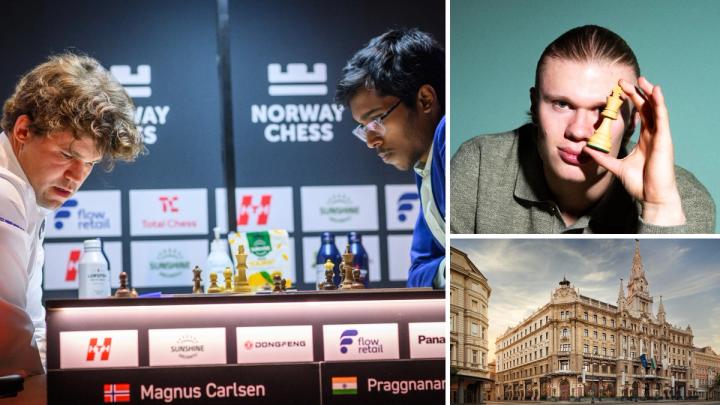
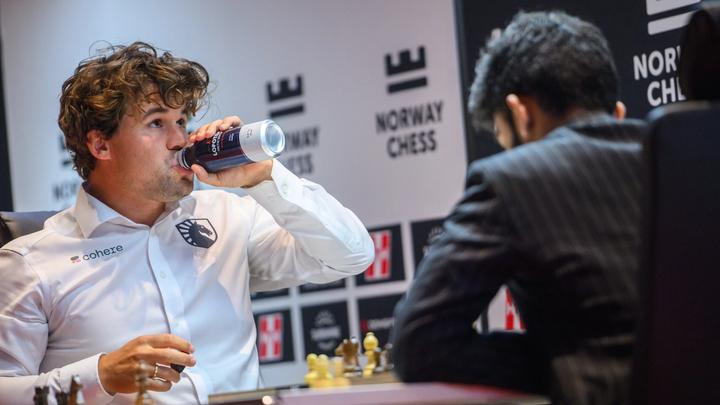
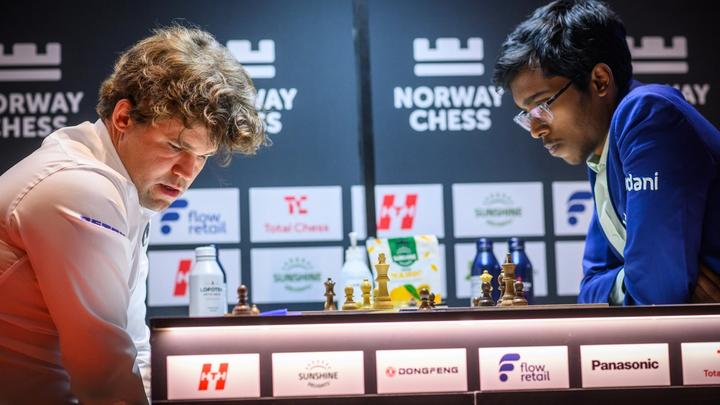
The five-time World Champion has played traditional classical tournaments in 2026, including the TePe Sigeman tournament in Malmö and Norway Chess in Oslo.
In Sweden, he demonstrated that his competitive instincts remained intact, finishing joint first with GM Arjun Erigaisi before taking the title in a blitz tiebreak.
But Norway Chess proved a far less satisfying experience.
Carlsen finished fourth in the six-player tournament, a disappointing result by his extraordinary standards.
The performance added to questions about his motivation for the longest form of the game, particularly after years of expressing frustration with the demands of opening preparation and marathon encounters.
It was a reminder that being the world's highest-rated player does not necessarily mean being unbeatable.
Yet there is an important distinction between Carlsen losing enthusiasm for traditional classical chess and Carlsen losing enthusiasm for chess itself.
Budapest offers something different.
Total Chess's new Fast Classic format gives each player 45 minutes plus a 30-second increment—considerably less time than a conventional elite classical encounter.
And rather than rewarding excellence at one particular speed, the competition combines results across three disciplines.
That should suit a player whose achievements in rapid and blitz have been every bit as remarkable as his classical record.
Carlsen has also been preparing seriously for the event, training in Spain alongside GM Nodirbek Abdusattorov, one of his potential opponents in Budapest, with his long-time coach GM Peter Heine Nielsen and English grandmaster GM David Howell also involved.
The unusual training partnership is a reminder that even the world's best player can find value in preparing with a potential rival.
A Star-Studded Field—With Three Big Absences
Make no mistake, this is a whopper of an event: the full 24-player line-up is absolutely formidable.
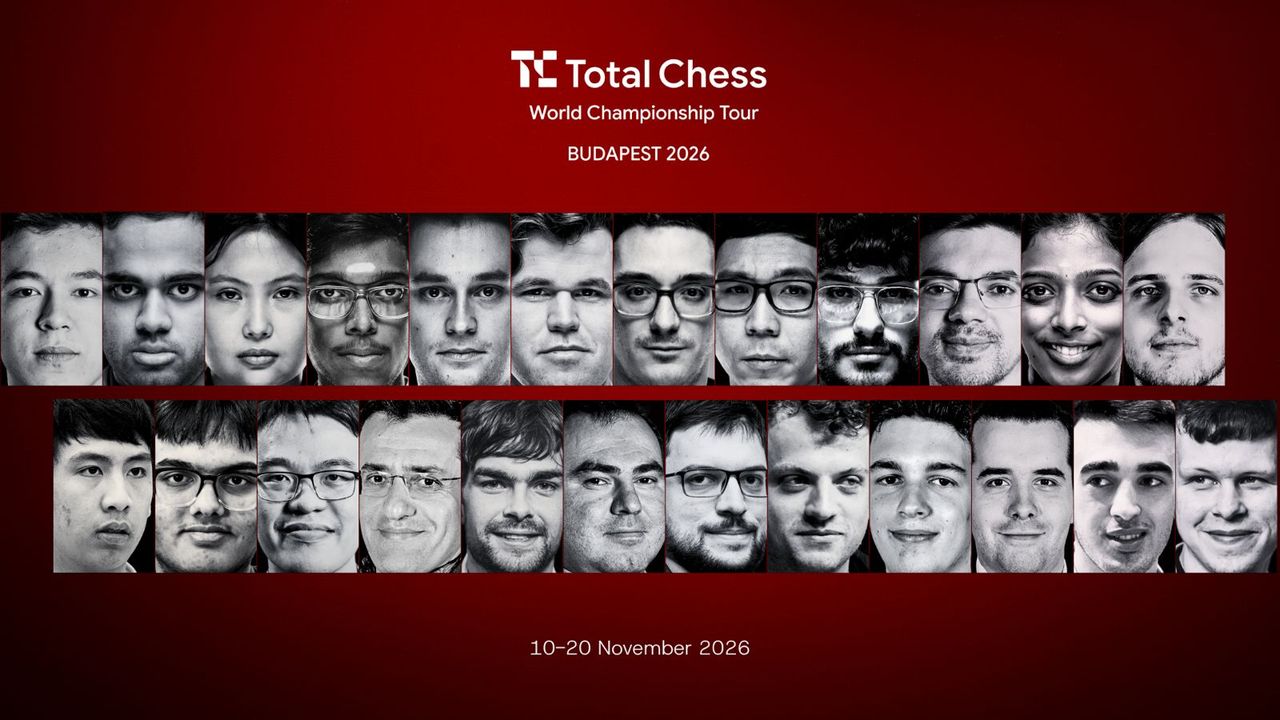
Alongside Carlsen and Abdusattorov are a series of big dogs: GM Fabiano Caruana, GM Wesley So, GM Vincent Keymer, GM Alireza Firouzja, GM Anish Giri, GM Praggnanandhaa R, GM Arjun Erigaisi and GM Hans Niemann.
Former World Championship challenger GM Ian Nepomniachtchi is also involved. The Russian is making a now-rare appearance at a top event. Nepo is joined by GM Levon Aronian, GM Maxime Vachier-Lagrave and the always unorthodox GM Richard Rapport, who is a clear outsider but who could certainly thrive in this format.
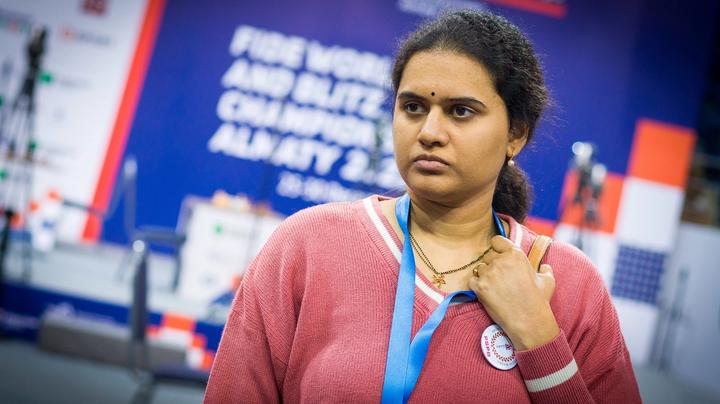
The field includes two leading female players, IM Bibisara Assaubayeva and GM Vaishali Rameshbabu.
But three conspicuous names are missing.
Reigning World Champion GM Gukesh D and his challenger GM Javokhir Sindarov will not play. Their World Championship match in Geneva begins on November 24, just four days after Budapest concludes.
GM Hikaru Nakamura is also absent, despite qualifying via his rating. The American has made his annoyance clear.
That leaves Total Chess in a curious position: its inaugural pilot features the world's highest-rated player, but neither of the two men about to contest the sport's traditional crown.
For Carlsen, however, that distinction may be part of the attraction.
What Exactly Is Fast Classic?
The format is Total Chess's biggest innovation — and potentially its biggest controversy.
The tournament begins on November 10 with a nine-round blitz competition, used to establish tiebreak rankings.
The 24 players then divide into four groups of six, playing ten Fast Classic games each over five days.
These games use a time control of 45 minutes plus a 30-second increment.
Wins earn three points, draws one and defeats nothing.
Then things become more complicated.
The knockout stage combines four blitz games, two rapid games and one Fast Classic game per day, over two days.
And the results carry different weights.
A blitz victory earns one point, a rapid win four and a Fast Classic win eight.
The idea is to reward success across different formats while giving the longer games greater importance.
Whether this produces more exciting chess, or simply a more complicated way of determining a winner, remains to be seen.
The organisers also hope the faster pace will make the competition more appealing to spectators, broadcasters and sponsors.
Another World Championship? Really?
Chess has been here before.
The sport has repeatedly experimented with new formats, shorter time controls and alternative ways of measuring the strength of its leading players.
The Grand Chess Tour previously experimented with a universal rating system, an idea Total Chess has revisited with its own combined rating proposal.
The new project goes considerably further.
From 2027, the plan is to stage a full international tour culminating in a Grand Final.
The winner will become FIDE World Combined Champion.
For FIDE, the attraction is obvious. It offers another high-profile competition with Carlsen at its centre, despite the Norwegian having abandoned the traditional World Championship cycle.
For Carlsen, it provides the opportunity to compete for an officially recognised title without returning to the months of preparation and lengthy head-to-head matches he came to dislike.
And for the organisers, it is a chance to make elite chess more accessible to spectators accustomed to faster, more varied sporting contests.
But there is a bigger question.
Chess already has classical, rapid, blitz, freestyle and other championship formats. Does it really need another world champion?
Or could Total Chess eventually produce a more meaningful measure of all-round playing strength than any single discipline?
That is the argument its organisers will have to win.
The Budapest Experiment
The pilot will take place at the Anantara New York Palace Hotel from November 10 to 20.
After the opening blitz competition, the group stage runs from November 11 to 15.
The knockout semifinals take place on November 17 and 18, followed by the finals on November 19 and 20.
The winner will take the Budapest pilot title, not the FIDE World Combined Championship, which is planned for 2027.
The official schedule promises an unusually intense programme, with players competing at several time controls during the knockout stages.
For now, Total Chess is an experiment.
But it is an experiment with FIDE's backing, a field packed with elite grandmasters and the sport's most recognisable player at its centre.
Carlsen may no longer want to be the traditional World Champion.
But if Budapest proves anything, it may be that he has found a new kind of championship worth winning.
For the full player list, schedule, rules and latest developments, see our Total Chess 2026: Everything You Need To Know guide.