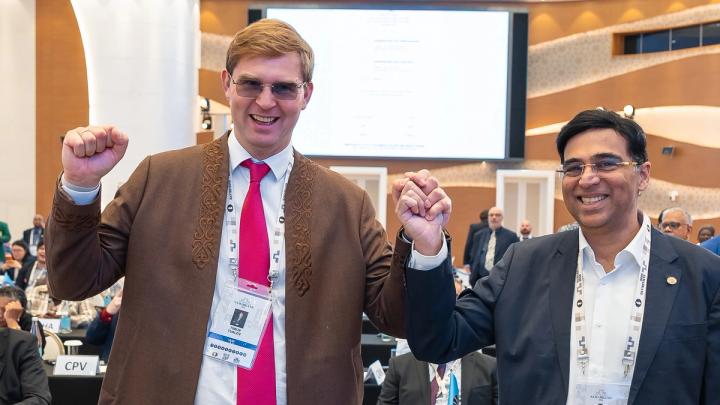
Africa Endorsed Timur Turlov. First It Had to Decide Who Was Allowed to Sign the Letter.
The African Chess Confederation, 48 votes strong, backed the Turlov–Anand ticket the day before the FIDE election. The endorsement took two months, one ethics hearing, and a ruling on who gets to hold the bank cards.
The African Chess Confederation endorsed Timur Turlov for FIDE president on Thursday, two days before the vote in Samarkand and roughly eight weeks after the confederation stopped being sure who its president was.
Africa has 48 of about 200 votes at the FIDE General Assembly. It is the largest bloc in world chess, which is why every candidate has spent the summer there developing a sudden and sincere interest in junior academies. The ACC's letter, signed by president Benard Wanjala, says Turlov's Development Fund "resonated strongly" with African priorities. It notes that Turlov's Freedom Holding had been funding chess on the continent since 2023, before he was a candidate — "this history is important to us because it demonstrates that his engagement with chess did not begin with the current electoral campaign." Which is the nicest thing anyone in this election has said about anyone.
Read more: FIDE election 2026 overview
The letter closes by reminding every federation to vote independently, in the tradition of a father handing over the car keys and saying he trusts you completely.
Two of the three candidates presented to the African delegates. The statement thanks Turlov and Jan Henric Buettner, another presidential candidate, for "passionate presentations." Then: "We were, however, unable to hear from the third candidate – Wadim Rosenstein." That is the whole sentence. There is no follow-up. In diplomatic writing this is known as a period.
The reason the signature matters is that until this week it wasn't clear whose it should be. Wanjala beat the incumbent, Tshepiso Lopang of Botswana, 25–24 in Addis Ababa on July 27. Four days later Lopang wrote to inform him she would be staying on in a "caretaker capacity" — keeping the bank accounts, the records and the office — until a bribery complaint she had filed against him was resolved. The alleged bribe was about $1,500. The FIDE electoral rules have no provision for a losing candidate to keep the building. She kept the building.
On Monday, a FIDE ethics panel held a public hearing in Samarkand. On Tuesday it ruled, and it managed something rare: it found both parties not guilty of what they accused each other of, and one of them guilty of everything else. Wanjala was cleared on every count — the bribery allegations "have not been established to the comfortable satisfaction of the Panel," a phrase that should be embroidered on a T-shirt. Lopang was cleared of making a baseless accusation, since the material she had "provided an apparent factual basis for raising it." She was then found guilty on five separate articles of the code for the thing nobody disputed: not handing over.
The sanction is a twelve-month ban from every chess office on Earth, and she needs to hand over within 30 days. If she needs to fly somewhere to do it, the ACC will pay — economy class, receipts required. World chess has now formally ruled on whether a woman gets an aisle seat to surrender.
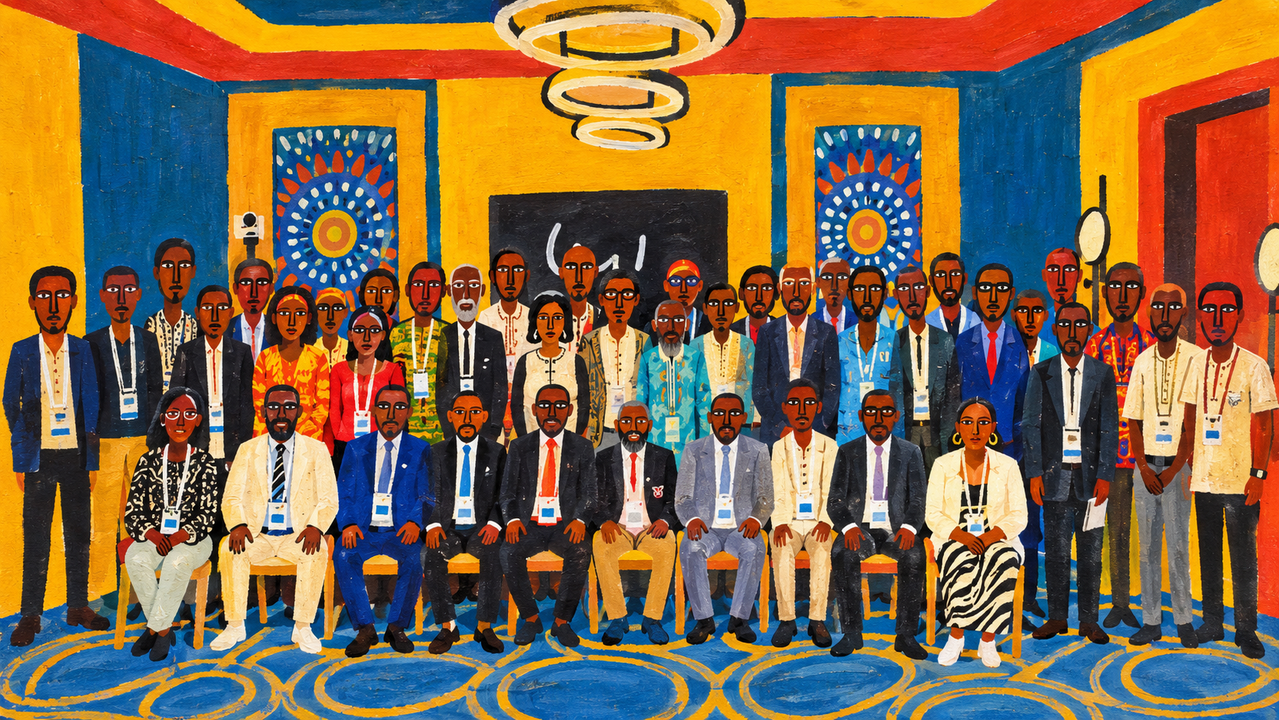
On Thursday the ACC board voted as a block back Wanjala's leadership, then endorsed Turlov the same day.
There is a small absurdity in where all this landed. Over the summer Wanjala was widely read as Buettner's man (Buettner’s team celebrated his win on social media), and Lopang has thrown in with Rosenstein. The confederation Wanjala now runs endorsed neither. Rosenstein, whom Lopang backs, didn't present. Buettner presented and got a thank-you note. Turlov got the letter.
Will the letter deliver solid 48 votes? The letter itself says no, in bold. Continental endorsements in FIDE politics tell you where the leadership sits; the delegates vote by secret ballot, and African federations have a long and honorable tradition of listening politely to their confederation and then counting for themselves. But a bloc that spent the summer with two presidents now has one, and he has named a preference, and he did it 24 hours before the vote. In this election, that passes for stability.
Delegates vote on Saturday. Lopang has 30 days.