FIDE Seeks Legal Opinion Over Russian Championships After Donetsk Row
Chess's world governing body has told World Chess it has yet to decide whether to recognise the results of controversial championships in Sochi, as it seeks guidance on the consequences of Russia's suspension.
FIDE frequently seems to find itself caught between a rock and a hard place.
And nowhere is that more obvious than in its spicy, controversial and always-complicated relationship with Russia.
As FIDE watchers will know, the world governing body of chess is obliged to enforce a landmark ruling by the Court of Arbitration for Sport (CAS) against the Chess Federation of Russia (CFR).
At the same time, it insists that individual Russian players should not be punished for the actions of their federation. It's a precarious position to take and requires some balancing.
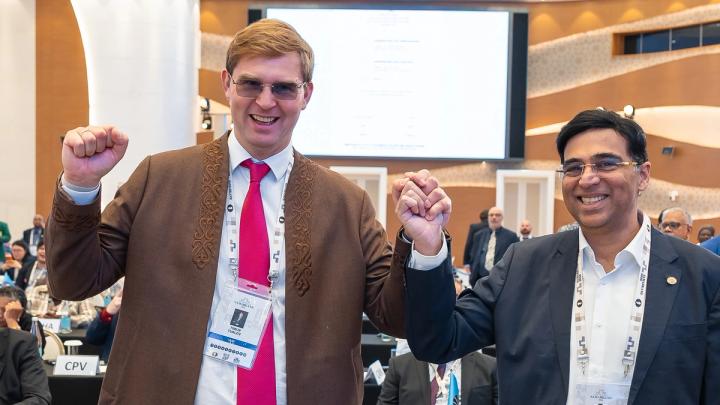
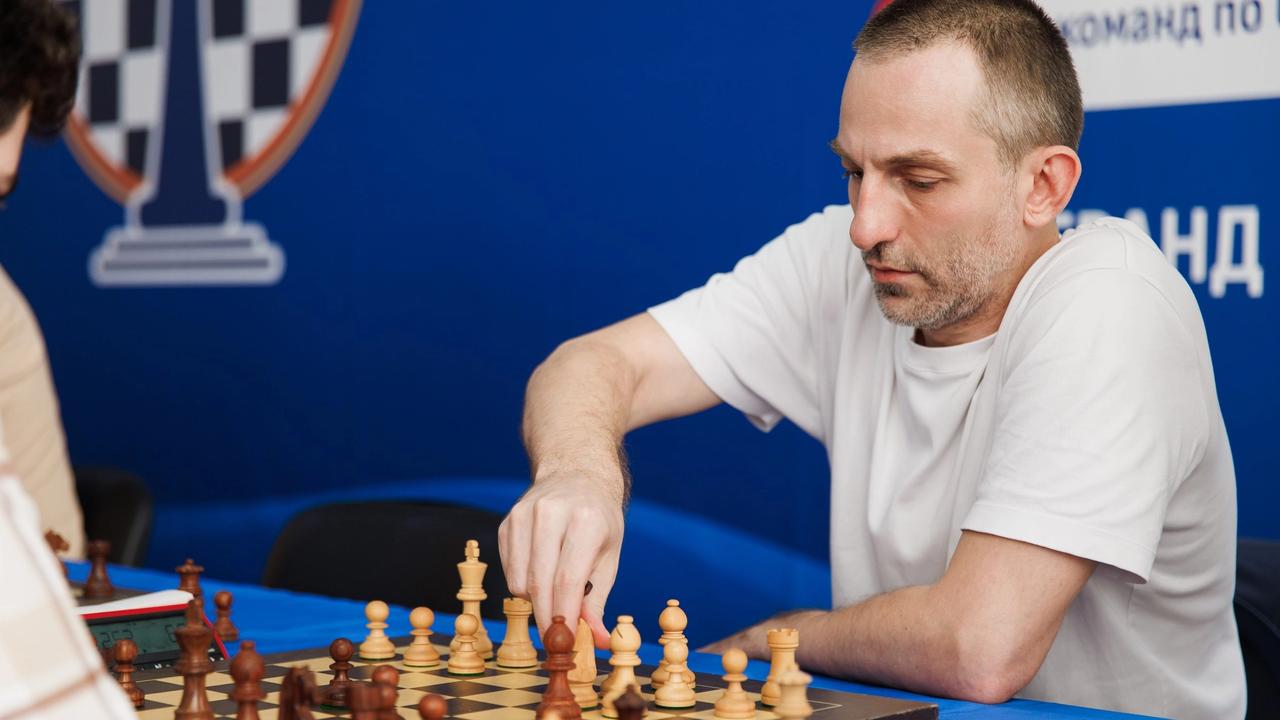
The latest controversy centres on the Russian Rapid and Blitz Championships in Russia's resort city of Sochi, where some of the country's biggest chess names—including GMs Daniil Dubov, Vladislav Artemiev and Alexander Grischuk (pictured above), and GM Kateryna Lagno—were among the competitors.
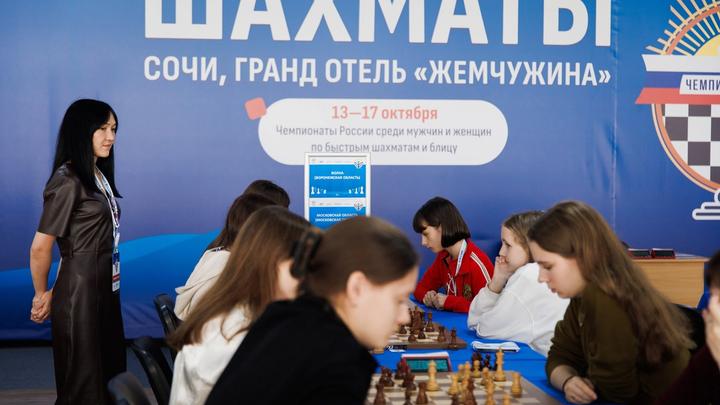
Dubov completed a remarkable double, winning both the individual rapid and blitz championships. Lagno took the women's rapid title, while WIM Margarita Potapova won the women's blitz competition. The event was staged at the Grand Hotel Zhemchuzhina from October 13 to 20,
But while the Chess Federation of Russia may have hoped the chess would attract attention, a real controversy was unfolding in the team competitions.
A women's team representing Russian-occupied Donetsk, competing under the pointed name "Friendship of the Peoples of Russia", was allowed to take part despite a formal protest from the Ukrainian Chess Federation (UCF). The protest also concerned a team representing Crimea.
And now, following World Chess's original report on the controversy, FIDE has confirmed that it is seeking legal guidance before deciding whether the championships should count towards international ratings.
"FIDE is currently conducting further internal discussions and has formally requested an opinion from the FIDE Constitutional Commission regarding the implementation of the CAS decision and its implications for the rating of tournaments held in Russia during the suspension, while also taking into account the rights of individual athletes," a FIDE spokesperson told World Chess.
It means that, although the championships have taken place and their results are known, their status within FIDE's international rating system remains unresolved.
Russia's Suspension
The CFR has been suspended from FIDE since June 10, 2026, following its failure to comply with a CAS ruling concerning chess activities in occupied Ukrainian territory.
The ruling ordered the Russian federation to cease regulating chess activities and events in Sevastopol and the regions of Crimea, Donetsk, Kherson, Luhansk and Zaporizhzhia, and to formally confirm that it had done so.
The federation was given a deadline to comply, with a three-year suspension stipulated as the consequence of failing to meet those requirements.
When the deadline passed, FIDE imposed the suspension, which remains in force for three years or until the CFR complies with the award.
Yet the FIDE Council also made clear that individual Russian players should retain their right to compete in international chess and receive ratings.
That distinction is now at the centre of the Sochi dispute.
"For FIDE, two principles are equally important: strict compliance with decisions of the Court of Arbitration for Sport, and the protection of the rights of individual chess players to participate in FIDE-rated competitions," the spokesperson said.
FIDE explained that its June resolution instructed its Management Board to develop a procedure allowing tournaments held inside Russia to remain within the international rating system, excluding events in the Ukrainian territories specifically covered by CAS.
That is where things become complicated.
The Sochi championships took place within Russia's internationally recognised borders.
But the participation of teams representing occupied Donetsk and Crimea raises a separate question: does allowing those teams into Russian national championships amount to the CFR continuing to exercise authority over chess in territories where CAS has ordered it to stop?
The answer is not necessarily straightforward.
The CAS award concerns the federation's regulatory activities in the occupied territories. The presence of players or teams from those regions in a tournament elsewhere does not, by itself, establish that the award has been breached.
Much could depend on how those teams were organised, which bodies authorised their participation and whether the CFR continued to exercise regulatory authority over chess in the territories concerned.
FIDE's response does not directly resolve that question.
FIDE Points To Egyptian Precedent
In its response to World Chess, FIDE also cited an unusual precedent: the suspension of the Egyptian Chess Federation in 2024.
According to the governing body, tournaments held in Egypt continued to receive international ratings while its national federation was suspended in March and April of that year.
These included the Hurghada Open 2024 and the Alain ACMG Expo Festival Egypt 2024.
"There have also been previous cases in which tournaments held in countries whose national federations were suspended continued to be FIDE-rated," the spokesperson said.
FIDE indicated that such precedents would be considered in deciding how to handle the Russian championships.
But the comparison has an obvious limitation.
The Egyptian case concerned the general principle of whether tournaments could continue to receive international ratings during a national federation's suspension.
The Russian case also involves a specific CAS ruling restricting the CFR's activities in named Ukrainian territories.
The question is therefore not simply whether Russian chess players should be able to earn rating points.
It is whether the participation of teams representing occupied Ukrainian territories in Russian national championships is compatible with the restrictions imposed by CAS.
What Happens Next?
FIDE says its monthly rating cycle gives it time to consider the matter before making a final decision.
"FIDE ratings are updated at the end of each month," the spokesperson told World Chess.
"This gives FIDE time to reach a decision regarding the rating of the Russian Individual and Team Rapid and Blitz Championships, taking into account the opinion of the Constitutional Commission, the applicable FIDE Council decisions and relevant precedents from similar cases."
The governing body has not said when the Constitutional Commission will deliver its opinion, or whether the participation of teams representing occupied Ukrainian territories will be considered separately from the wider issue of rating tournaments in Russia.
Nor has it indicated whether it might approve some results while withholding recognition from others.
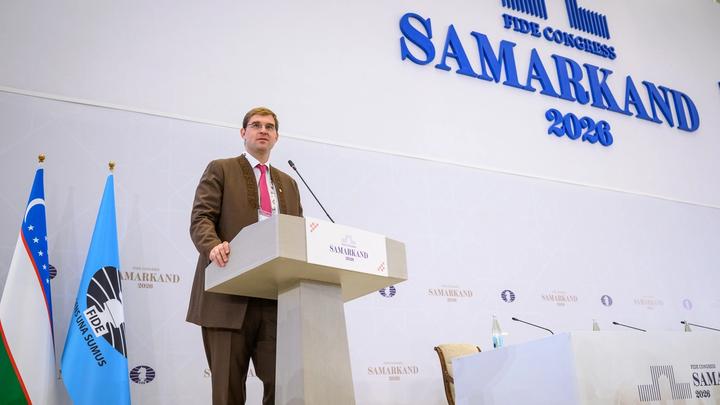
The controversy is an early, but perhaps not unexpected hot potato for FIDE's new president, Timur Turlov, elected in September after campaigning on a commitment to respecting international law and CAS decisions.