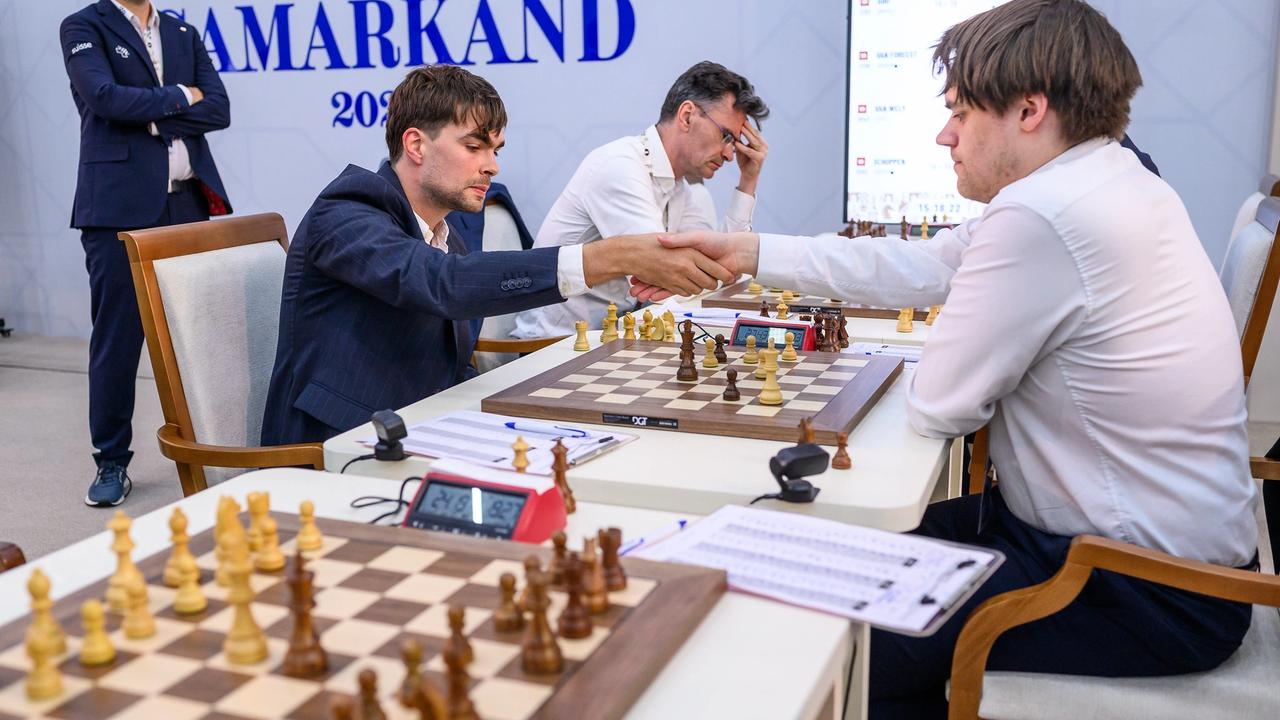
FIDE Backs Shorter Classical Chess Games—But Draws Line At Three Rounds A Day
The world governing body is preparing to relax classical chess time controls after a General Assembly vote, but disagreements remain over how far the changes should go.
The perennial debate over whether classical chess should move with the times or remain faithful to the long format we know and love resurfaced at FIDE's General Assembly.
And this time, there was movement. Just not quite as much as some would have liked.
FIDE has confirmed that delegates backed a proposal to shorten classical time controls, potentially allowing tournament organisers to squeeze more games into fewer days.
♟ FIDE General Assembly adopts resolution on shorter time controls: What it means The FIDE General Assembly has formally supported a resolution based on a proposal by the Icelandic Chess Federation concerning shorter time controls in classical chess. However, the adoption of the resolution does not mean that the regulations change immediately. Under the FIDE Charter, the General Assembly is empowered to approve general guidelines for FIDE activities, while amendments to specific rules and regulations fall within the competence of the FIDE Council. The Council will therefore prepare and submit a framework for discussion and approval that implements shorter time controls while allowing for further analysis of their impact. Under the proposed approach, the use of 60 minutes plus 30 seconds per move (60+30) would no longer require special approval. In certain cases, 45+30 would also be permitted. At the same time, two important limitations would remain in place: no more than two games per day for tournaments counting towards titles and norms, and no more than one norm obtained in a tournament played with a shortened classical time control. Read more here https://t.co/0uAGtGbxjH
— International Chess Federation (@FIDE_chess) October 12, 2026
But while the appetite for change is clearly there, the governing body's officials remain divided over just how far classical chess should be pushed.
The move follows a proposal from the Icelandic Chess Federation to make 45 minutes plus a 30-second increment per move an accepted classical time control—and allow players to contest three games a day.
But there's more.
FIDE's Qualification Commission opposed the proposal, while its Council favours a more cautious approach. And although the General Assembly supported the Icelandic resolution with 33 votes in favour, the rules have not yet changed.
Under FIDE's constitution, the General Assembly can set policy, but the Council must approve specific regulatory amendments.
The disagreement goes to the heart of an increasingly important question for chess: how much can classical games be shortened before they stop being classical?
Traditionally, high-level classical tournaments have used time controls of at least 90 minutes plus a 30-second increment.
FIDE has already been experimenting with faster formats. A pilot scheme introduced for 2026 allows approved tournaments to use 60+30, or in certain circumstances 45+30, while still counting towards classical ratings and title norms.
Now the Council wants to make 60+30 generally available without special permission.
It also proposes automatically permitting 45+30 at qualifying FIDE Circuit tournaments and events without players rated 2400 or above.
However, it opposes allowing three games per day in tournaments where players can earn international titles or norms, arguing that playing so much serious chess risks compromising the quality of competition.
There is another concern: whether grandmaster and international master norms achieved under shorter time controls should carry the same weight as those earned in traditional classical tournaments.
Under the proposed framework, players would still be allowed to count only one norm earned at a shortened time control towards a title.
The debate comes as classical chess faces increasing pressure from faster formats, including Freestyle Chess and the forthcoming Total Chess World Championship Tour, which will combine different speeds of play.
For organisers, shorter games offer obvious advantages. Tournaments could be completed in five or six days rather than nine, potentially reducing costs for players and organisers alike.
For traditionalists, the danger is that speeding up classical chess undermines the deep calculation and strategic thinking that distinguish it from rapid.
FIDE says further consultation will take place before a final decision on the broader use of 45+30 and the three-games-per-day proposal, potentially at an extraordinary online General Assembly later this year.
FIDE, like classical chess, likes to take its time.