London Chess Classic Reveals A Field That Reflects Chess's Changing Order
Nodirbek Abdusattorov returns to defend his title against a field mixing established stars, rising talents and British veterans — as London's flagship tournament looks to the future.
When your correspondent was first shown around the London Chess Classic by its organiser, the British chess impresario IM Malcolm Pein, more than a decade ago, it was a rather different affair.
Back then, the UK's premier chess tournament was staged in the salubrious surroundings of Kensington, served as the final leg of the Grand Chess Tour, and was almost synonymous with GM Magnus Carlsen.
The Norwegian had won the inaugural event in 2009, repeated the feat in 2010, and helped turn the Classic into one of the most prestigious fixtures on the international chess calendar.
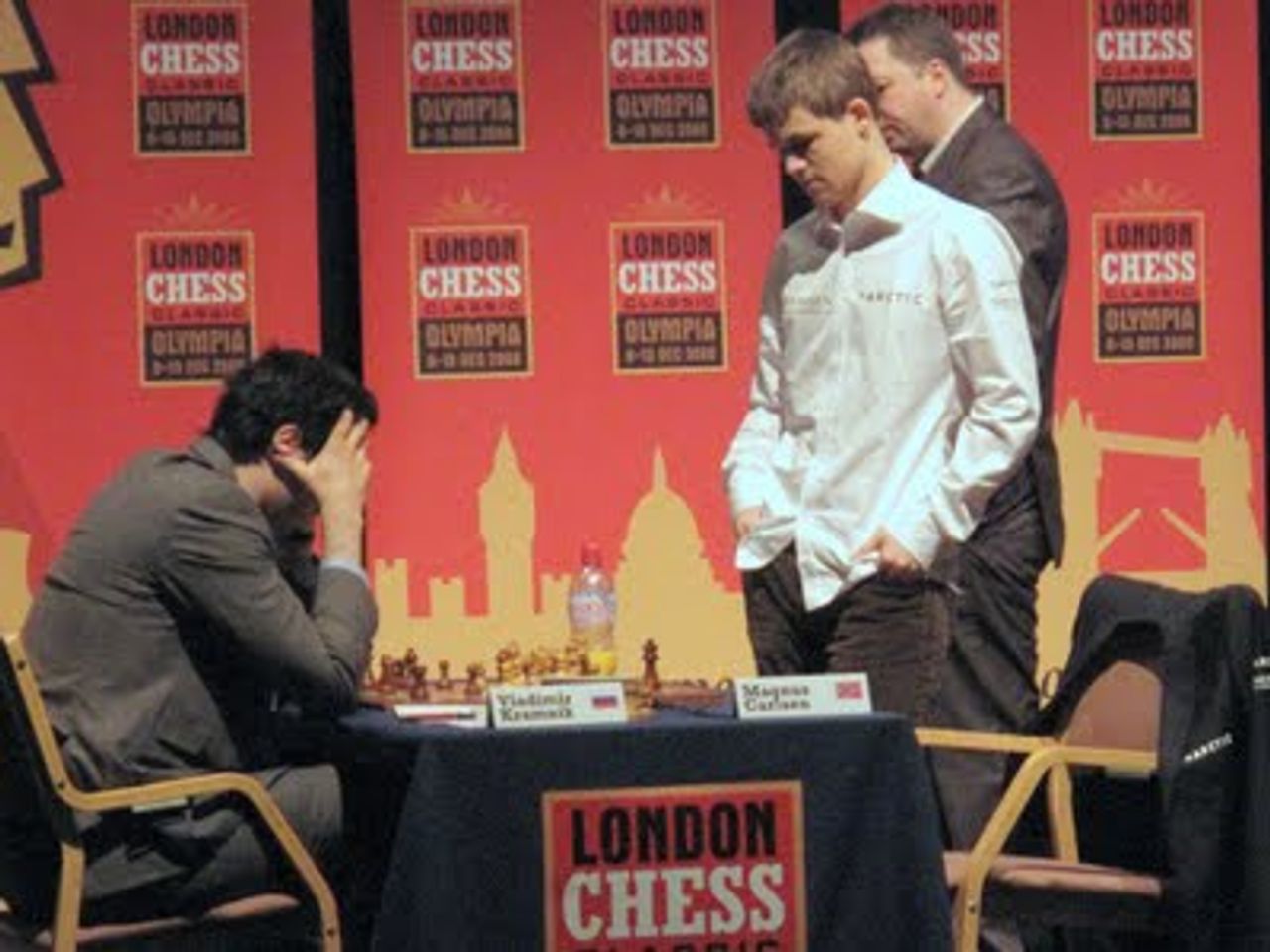
Seventeen years later, the landscape looks rather different.
The organisers have revealed eight of the ten players for the 2026 XTX Markets London Chess Classic, and the line-up offers an intriguing snapshot of a chess world undergoing a generational shift.
At its head is GM Nodirbek Abdusattorov, the 22-year-old Uzbek star who demolished the field last year with six consecutive victories and finished two points clear.
He returns hoping to become the first player since Carlsen in 2010 to successfully defend the London title.
And he does so at a particularly interesting moment for Uzbek chess.
Uzbekistan's triumph at September's Chess Olympiad in Samarkand confirmed its emergence as one of the game's great powers, while Abdusattorov's compatriot GM Javokhir Sindarov is preparing to challenge GM Gukesh D for the World Championship.
That match begins in Geneva on November 25, the same day as the first round of the London Masters.
The coincidence is a reminder of just how dramatically the balance of power has shifted since the Classic was founded.
Old Guard, New Generation
Alongside Abdusattorov is the evergreen GM Levon Aronian, now representing the U.S., whose career spans the Carlsen era and beyond.
India's pocket hotshot GM Nihal Sarin adds another member of the younger generation, while American GM Andy Woodward and Ukraine's GM Ihor Samunenkov bring further youthful ambition.
Then there is the British contingent.
Tournament stalwart GM Michael Adams, now 54, remains one of England's most enduring chess figures, having competed at the highest level across several generations. Adams has competed in every Classic since it started.
He’s been part of the London Chess Classic since the very first edition in 2009 and he’s returning for 2026! @MickeyAdamsGM, London Chess Classic 2023 champion, is back! Organised by @schoolschess and sponsored by @xtxmarkets. 📸 Photos: Ray Morris-Hill and Lennart Ootes https://t.co/GcMhBvl1si
— London Chess Classic (@london_chess) October 9, 2026
GM Luke McShane, long regarded as one of the country's most naturally gifted players, also returns, alongside GM Gawain Jones, who won the Classic in 2024.
It is an appealing mixture: players whose careers began before some of their opponents were born, facing young grandmasters determined to establish themselves among the elite.
Two places in the ten-player Masters remain to be announced.
A Different Kind Of Classic
The London Chess Classic has changed considerably since its early years.
Launched in 2009, it became part of the Grand Chess Tour between 2015 and 2019, regularly attracting the world's biggest names.
But its importance has never rested solely on the strength of its top boards.
Organised by the charity Chess in Schools and Communities, the event has also developed into a major festival, bringing together elite competition, amateur tournaments and educational programmes.
This year, the organisers are introducing a new ten-player Challengers tournament, with the winner earning a place in the 2027 Masters.
It is a significant addition, creating a direct route into the elite event rather than relying entirely on invitations.
There will also be a major Open tournament, rapid and blitz competitions, and a schools festival expected to welcome more than 1,000 children.
The opening programme includes a blindfold tournament at the Tower of London, while the main festival will take place at the London Novotel West in Hammersmith.
The wider Classic runs from November 24 to December 7.
A Place In A Crowded Calendar
All this comes as elite chess faces increasing competition for players, audiences and prestige.
New formats such as Freestyle Chess and FIDE's forthcoming Total Chess circuit are challenging the traditional dominance of classical tournaments, while organisers compete to offer distinctive events in an increasingly crowded calendar.
The London Chess Classic has responded not by abandoning its identity, but by building around it.
Classical chess remains the centrepiece. Yet the tournament now offers something broader: an opportunity for aspiring players to compete in the same festival as established grandmasters, for young talent to earn promotion, and for schoolchildren to experience elite chess at close quarters.
There may be bigger prize funds elsewhere and events with more of the world's top ten.
But the London Chess Classic retains something that is increasingly valuable in modern chess: a sense of continuity.
From Carlsen to Abdusattorov, from Adams to Woodward, the names change. The tournament's place in British chess endures.