How The FIDE Election Works: Sport's Most Bitter And Backstabbing Vote Explained
The election to be head of the world chess federation is, fittingly, quite like a game of chess.
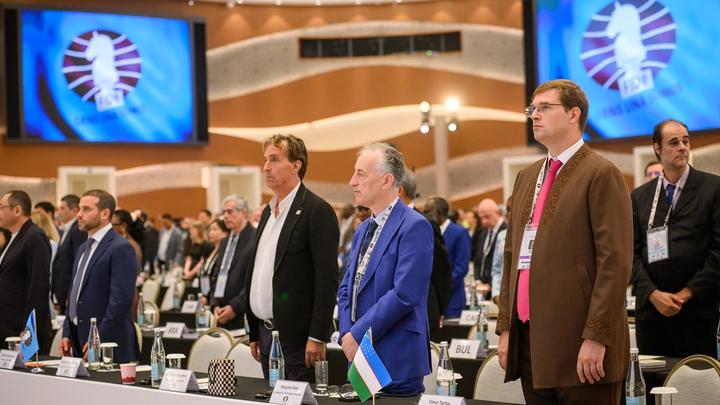
Every four years, around 200 delegates gather in a conference hall to decide who will run world chess.
There are no campaign rallies, no televised debates and no public vote. Chess players or the wider chess community don't get a say.
Instead, the President of FIDE is elected by representatives of its national federations, each casting a single vote regardless of whether they represent India, Iceland or the Solomon Islands.
Read our full guide: FIDE Election 2026: Everything You Need To Know
The process takes only a few hours but the politics behind it can last years.
For decades, FIDE presidential elections have developed a reputation unlike almost any other vote in international sport. Allegations of vote-trading, diplomatic pressure, political alliances, last-minute defections and bitter personal rivalries have become almost as much a part of the process as the ballot itself.
One Federation, One Vote
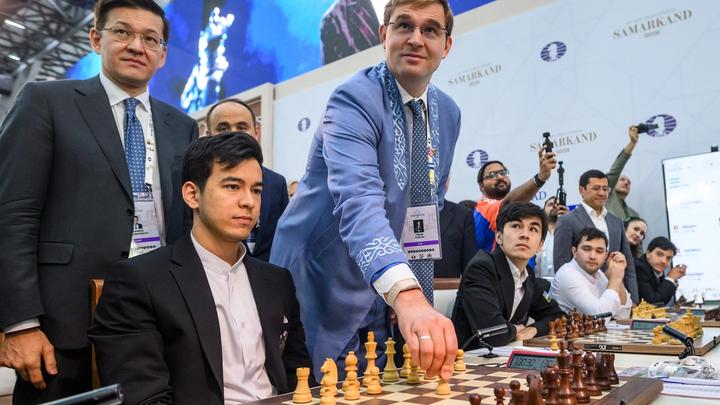
Campaigning officially started for the 2026 election on June 26, before delegates cast their votes in Samarkand between September 26 and 27.
So far, two candidates have formally declared their intention to stand, both German-based chess sponsors: Wadim Rosenstein, the man behind WR Chess, and Jan Henric Buettner, the man behind Freestyle Chess. FIDE's incumbent president Arkady Dvorkovich, of Russia, is also expected to stand.
The system for how votes are counted is simple—too simple, critics argue.
Every member federation in good standing receives one vote at the General Assembly. Large chess powers such as the United States, India, Germany and China each have exactly the same voting strength as the smallest federations. This year Russia, historically the strongest chess federation, will not vote, as its federation was suspended earlier this month.
Candidates do not run alone. They present an entire presidential ticket, including the president, deputy president and a team of elected officials who would lead FIDE together.
Victory requires a majority of votes cast.
In reality, however, the election is won long before delegates arrive at the General Assembly.
Why Campaigns Matter
The months before an election are a diplomatic marathon.
Candidates travel across continents meeting federation presidents, attending tournaments and making their case directly to delegates. Every federation has different priorities: some want greater financial support, others want more tournaments, stronger development programmes or changes to FIDE governance.
Unlike player elections in many sports, ordinary chess fans have no vote. Instead, success depends on persuading federation leaders one by one.
That has often made FIDE elections intensely personal and political.
A History Of Controversy
The political reputation of FIDE did not emerge overnight.
Perhaps the first defining moment came in 1985, when FIDE President Florencio Campomanes controversially terminated the marathon World Championship match between GMs Anatoly Karpov and Garry Kasparov after 48 games. The decision divided the chess world and overshadowed the following presidential election, where Campomanes survived a determined challenge despite widespread criticism.
A decade later, Campomanes himself was forced out after a no-confidence revolt following years of disputes over governance and finances. His departure marked one of the most dramatic leadership changes in FIDE history.
The Ilyumzhinov Era
Few figures dominated chess politics more than Kirsan Ilyumzhinov.
The former president of Kalmykia led FIDE for more than two decades after winning office in 1995. During his presidency, critics repeatedly accused his administration of concentrating power and relying on political patronage to secure votes from national federations. Supporters argued that he invested heavily in developing chess around the world and personally funded many events.
Every major election during his tenure was fiercely contested.
In 2006, Dutch businessman Bessel Kok challenged Ilyumzhinov on a reform platform but lost comfortably.
In 2010, the former World Champion Karpov mounted another high-profile campaign backed by his former rival Kasparov, promising greater transparency and commercial reform. In many people's eyes Karpov should have been the dream ticket, but he too was defeated by a wide margin.
Perhaps the most famous challenge came in 2014 when Kasparov himself entered the race.
Despite being arguably the most recognisable chess player in history, Kasparov lost heavily after months of campaigning. Afterwards he argued that positive ideas alone were not enough to overcome the political networks built over many years inside FIDE.
Throughout these elections, accusations over proxy voting, pressure on delegates and behind-the-scenes political manoeuvring regularly surfaced, helping cement FIDE's reputation for hard-fought internal politics.
A New Era—Or More Of The Same?
Since Dvorkovich became president in 2018, FIDE has projected a more modern public image, overseeing commercial growth, expanding elite competitions and benefiting from chess's post-pandemic boom.
But presidential politics has never disappeared.
As the 2026 election approaches, candidates are once again travelling the world meeting federations, assembling alliances and seeking support from delegates before votes are cast in Samarkand.
That is why the FIDE presidency is often described as the most political job in chess—and why every election is fought over so bitterly. Get ready for it!