The Horrible, Horrible FIDE Presidential Debate I Just Sat Through—Winners And Losers
Wadim Rosenstein promised to be available 24/7, then vanished after four minutes. Timur Turlov talked like a man who has built something. Jan Henric Buettner brought an org chart. Ilya Merenzon on FIDE's first, and worst, presidential debate.
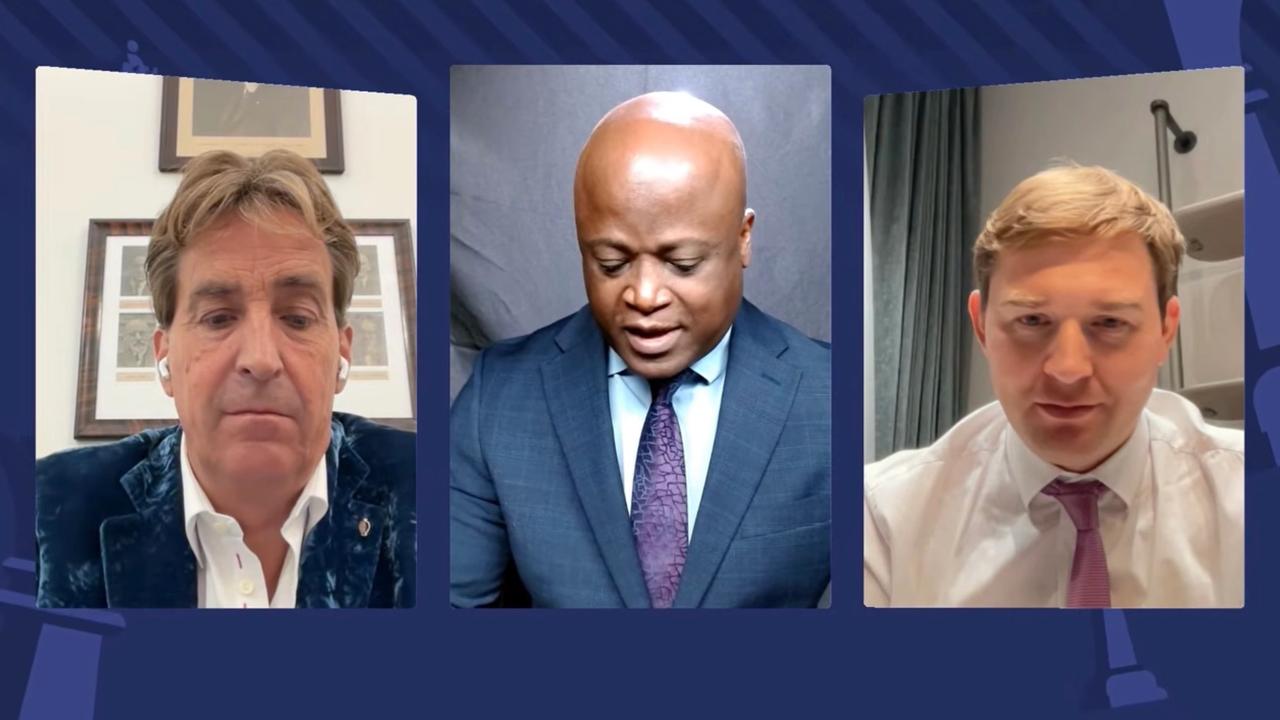
The first debate of the 2026 FIDE presidential election was held on September 9, bringing together candidates Timur Turlov, Jan Henric Buettner and Wadim Rosenstein. The Chess.com broadcast was moderated by GM Maurice Ashley, 17 days before FIDE’s member federations vote in Samarkand.
-----------------
I have watched a lot of strange chess in my life. I have watched a World Championship Match end with two winners. I have watched a FIDE General Assembly vote to abolish the term limits it had introduced a few years earlier, and then applaud itself. Nothing prepared me for Wednesday.
Read our complete guide: FIDE Election 2026: Everything You Need To Know
The first (I think) presidential debate in FIDE's 102-year history was hosted by chess.com, streamed to chess.com's 2.5 million subscribers, and watched by roughly a thousand of them. The rest of the world had something better to do, which, as it turned out, was a reasonable assessment.
The Wadim Rosenstein problem
Let me start with the man who wasn't there, because he was the best part.
Wadim Rosenstein opened. He was, and I mean this, terrific. He would not stoop to personal attacks. He would not turn the election into a financial show. He asked the big question: will FIDE belong to one man, to a group, or to all 200 federations? And he closed with a promise. He would be available to every federation, personally, 24 hours a day, 7 days a week.
Then his internet "died."
I want to be precise about the timing, because history might ask. He said "twenty-four seven," he stopped talking, and he was never seen again. Maurice Ashley, a man who has commentated on very complicated chess positions without blinking, had to announce, in the voice of a pilot explaining an engine fire, that chess.com had made "multiple attempts" to reconnect the candidate and that the debate would continue without him. It continued without him for 85 minutes.
It was probably a stunt. But even if it was not, this is what Mr Rosenstein did: delivered his speech, and made sure he was never asked a question about it.
The other two candidates spent the next hour and a half arguing about whether FIDE should be paid for by its president. Buettner says no, it's why Coca-Cola won't return your calls. Turlov says yes, it's called stability. Rosenstein is a man who recently started funding chess out of his own pocket while campaigning against men who fund chess out of their own pockets, and there is no sentence in any language in which that sounds good on a live stream. So he didn't say it. He said "twenty-four seven" and pulled the plug, and for the rest of the night his position on everything was "unreachable," which is the only position in this election nobody has filed a complaint about.
The cost was also real. His entire pitch, since he materialised in 2022 with a chequebook, is that he is the organiser. The professional. The one who turns up. On Tuesday, the organiser did not turn up.
Meanwhile, two billionaires
With Wadim gone, we were left with a German who founded AOL Europe and a Kazakh who founded a bank, debating how to run a federation whose entire annual budget is small.
Jan Henric Buettner has a plan. It has a CEO, a CFO, four division heads, an eight-person board and a treasurer from Eswatini. He wants FIDE at $50 million a year. He has also given every federation president his personal WhatsApp number. I don't know if that's governance or a hostage situation, but I admire it.
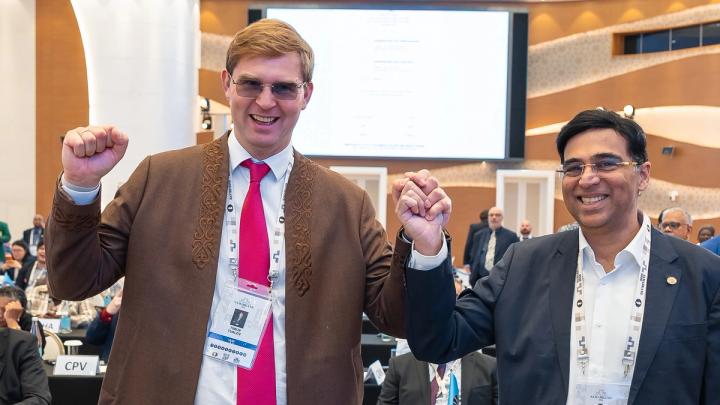
Timur Turlov, by contrast, has a bank, a NASDAQ ticker and Vishy Anand. I will say something here that will surprise readers who know how I feel about FIDE presidents: he was actually convincing. He talked like a man who has actually built something, because he has: a digital bank with twelve million customers, which is more people than have ever heard of FIDE. When he talked about the Development Fund, $6 million and up, and about knocking on the doors of Nvidia and Citi, he did not sound like a patron promising to be generous. He sounded like a man who has done a product roadmap and is mildly puzzled that FIDE has never seen one. That is the one thing this federation has never had: someone who understands scale, and who came by it the boring way. Asked about his management team, he said he would announce it after the election, which in FIDE dialect usually means "me," but from Turlov sounded, unnervingly, like a man who intends to hire people. He is also prepared to become FIDE’s "backstop." He said the word with the ease of someone who has already been the backstop for two years and found the water pleasant.
Then they fought about it. Buettner: FIFA doesn't have a backstop. Formula 1 doesn't have a backstop. No Fortune 500 company will sponsor a federation that is already the personal project of its president. Turlov: without a backstop, who pays? It was the only real moment of the night, and it is the only argument FIDE has had since 1982, when it discovered that the cheapest way to fund yourself is to elect someone rich.
Things you only notice if you've been in the room
Both candidates were asked about the "digital future" by a commercial platform, on the commercial platform's own stream, and both explained how FIDE would regulate commercial platforms. Turlov: as a partner. Buettner: by building its own. Both were charming to the host.
Both agreed the classical World Championship is sacred. This is Buettner, whose Freestyle project exists specifically to kill it, and Turlov, who paid for the last one. They arrived at the same answer because three weeks before a vote you do not tell 200 federations you're touching the crown jewels. Anand will be "consulted." Vishy was, over the course of one evening, the running mate of one candidate and the moral authority of the other.
And the best segment of the entire night, by a distance, was the intermission: a pre-recorded film of Maurice in Barcelona running street chess with people who sleep rough. It was warm, it was human, and it contained no billionaires.
What the 200 voters saw
Strip the noise and here is the ballot: one man with a spreadsheet, one man who has built something at scale, and one man with a strong opening and a router.
The trouble with a stunt is that it works exactly once, and it goes in the minutes forever: "Candidate Rosenstein disconnected after his opening statement and could not be reached." Twenty-four seven. Every federation president who reads that will remember the last time they emailed a FIDE president and could not be reached, and it will not have been Wadim's fault, and it will not matter.
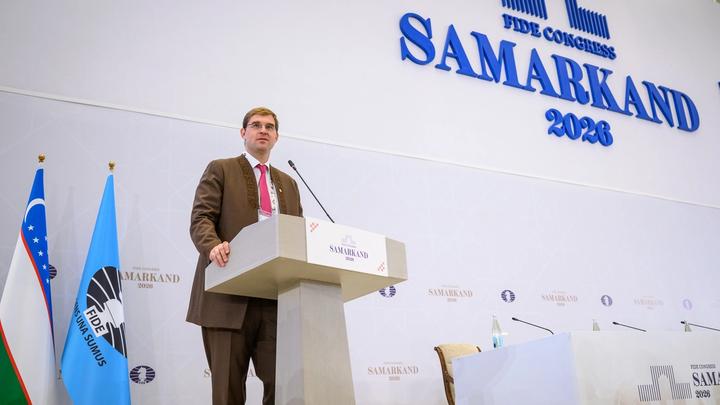
The election is on September 26 in Samarkand, in a ballroom, at an hour when the internet is not required. Wadim will be there in person.
By Ilya Merenzon, CEO of World Chess