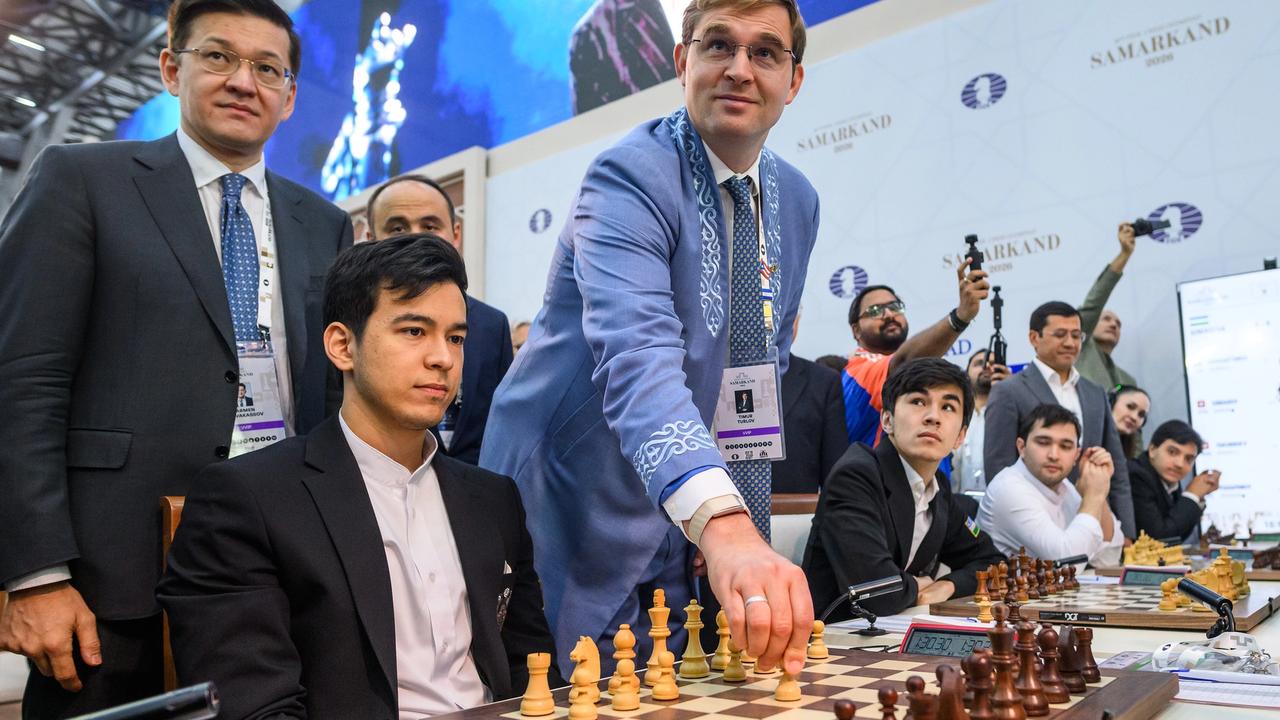
Turlov Backs Russia Suspension—As Former Russian Sports Minister Joins FIDE Leadership
New FIDE President Timur Turlov has backed keeping the Chess Federation of Russia suspended as a former Russian sports minister joins FIDE's leadership—with a former member of FIDE's legal team predicting the row will end at CAS.
Running FIDE is a big balancing act, right from the word go. And so it seems for GM Viswanathan Anand's new boss who has wasted little time weighing up one of the most politically sensitive issues in world chess.
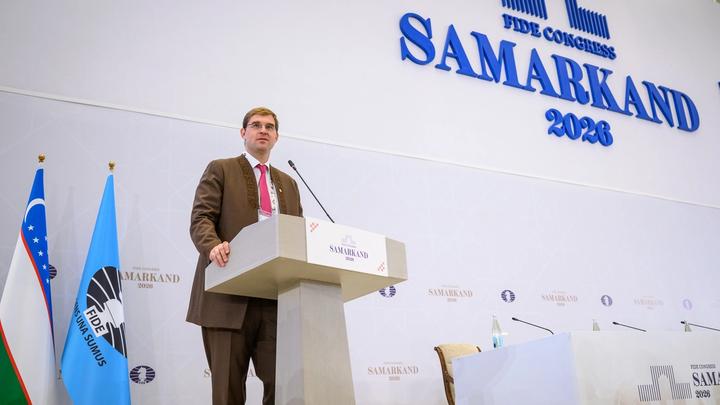
Less than 24 hours after winning the FIDE presidential election, Timur Turlov told delegates at the General Assembly in Samarkand that FIDE must continue to respect the Court of Arbitration for Sport (CAS) ruling that led to the suspension of the Chess Federation of Russia (CFR).
"We must follow the CAS decisions," Turlov said, according to Russian media citing TASS.
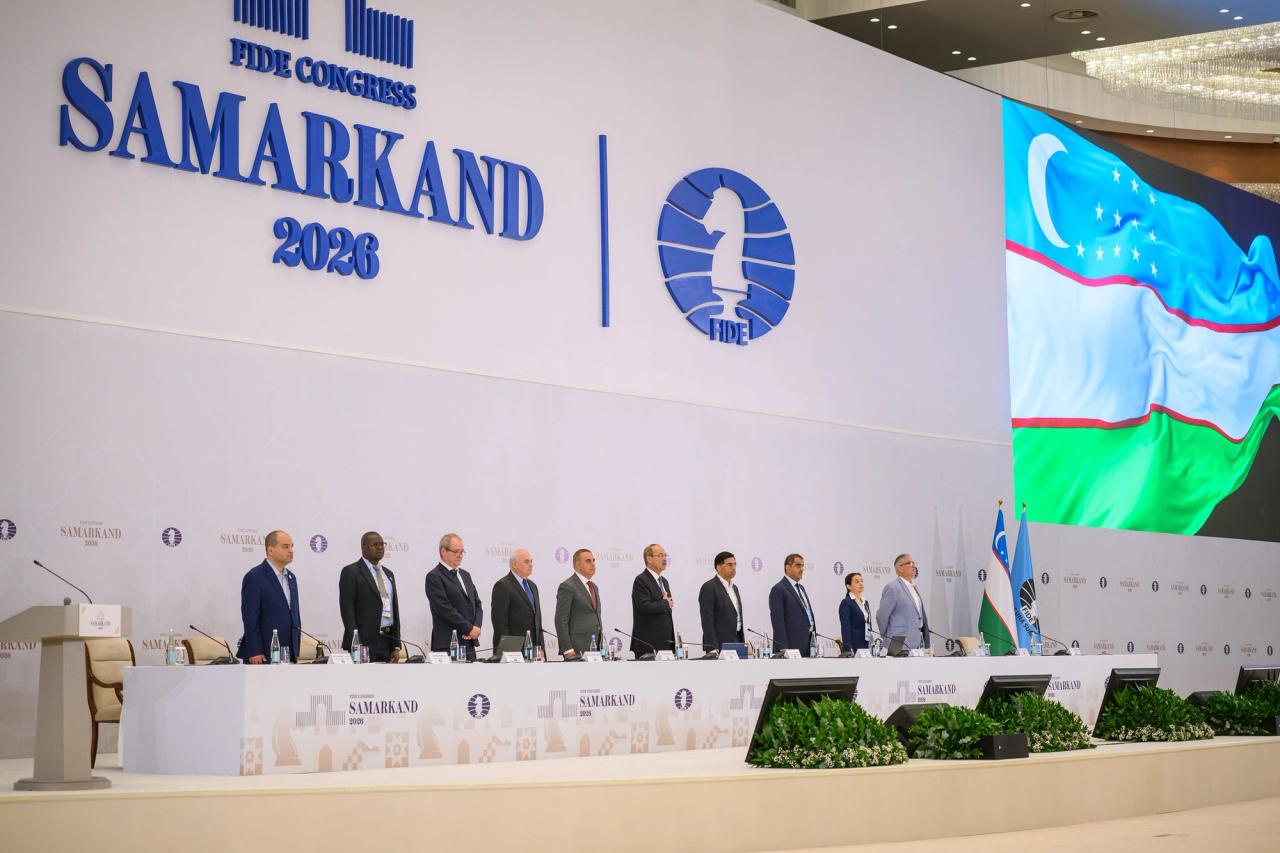
He added that he hoped a way out of the impasse could eventually be found and the CFR could return with full rights once the conditions imposed by CAS had been met.
Delegates then rejected proposals from the chess federations of Armenia, Belarus, Cuba and Nicaragua to restore the CFR's membership, leaving its suspension in place.
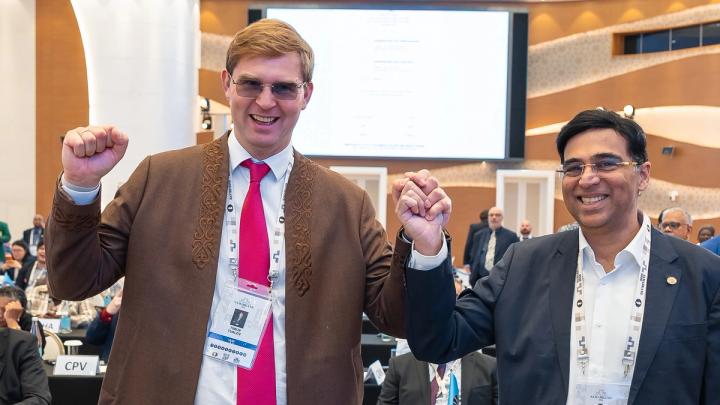
It was an early test for Turlov, the Russian-born Kazakh billionaire who defeated Wadim Rosenstein 110-85 in Saturday's second-round presidential ballot.
Russia was, as usual, one of the defining issues of the election campaign with Turlov being asked to clarify his business links with the country of his birth. Turlov said his previous links were severed.
Turlov, who renounced his Russian citizenship and became a Kazakh citizen in 2022, told Reuters before the vote that compliance with the CAS ruling was a "red line".
"We will follow this CAS ruling because we have to be compliant with the Olympic movement," he said.
That position has now survived his first encounter with the issue as FIDE president. But events in Samarkand also threw up another spanner in the works.
Kolobkov Controversy
Former Russian sports minister Pavel Kolobkov was elected one of FIDE's Vice Presidents after receiving 78 votes at the General Assembly.
Kolobkov, an Olympic fencing champion who served as Russia's sports minister from 2016 to 2020, had been the subject of a pre-election challenge from Ukraine over his eligibility to stand.
That complaint was rejected and Kolobkov stood as an independent candidate.
After his election, Kolobkov told TASS he viewed his 78 votes not simply as personal support but as recognition of Russia as a "great chess power". The CFR carried a news report of his election.
He said the chess world had missed Russian players and could not imagine the development of the game without Russia.
Ukraine has subsequently called for Kolobkov to be removed from the post as did several prominent campaigners against Russian influence on FIDE.
Turlov responded that FIDE's Electoral Commission had confirmed Kolobkov was standing independently and said that if the issue was taken to CAS, FIDE would abide by its decision.
IM George Mastrokoukos, a former member of FIDE's legal team, told World Chess he believed the decision would ultimately be overturned at CAS.
"I think it is a gross violation of the FIDE Statutes which will eventually lead to a won case in CAS for the Ukrainian Chess Federation," Mastrokoukos said.
#chess It is NOT a good start for the new FIDE administration to ignore and bypass the Ukrainian Chess Federation @UAchessfed in appointing a Ukrainian vice-president without their official approval. In addition to the fact that Mr Podolyak has absolutely no relation to chess,…
— George Mastrokoukos (@GMastrokoukos) September 27, 2026
"I think Timur is getting some really bad advice from FIDE's Chair of the Electoral Commission, Mr Rivello, and from FIDE's lawyers. They were claiming similar absurd stuff before FIDE lost the other case in CAS last March."
Turlov wasn't the only FIDE critic to pass comment. IM Malcolm Pein, who ran for office and backed Jan Henric Buettner's bid for the presidency, said:
I have withdrawn from the @FIDE_chess election for Vice Presidents as Pavel Kolobkov, a former Minister of Sport in the Russian Govt was elected. I will not sit on the FIDE Council if he is there. I will assist in any legal action against FIDE in CAS
— Malcolm Pein (@TelegraphChess) September 26, 2026
Another trip to Lausanne would ensure that one of the most contentious legal battles of the Dvorkovich era follows Turlov straight into his presidency.
The contrasting developments underline the complexity of FIDE's continuing Russia problem.
The CFR's membership was temporarily suspended in June after FIDE concluded that it had not complied with a CAS award requiring it to cease regulating chess activities and events in Sevastopol, Crimea, Donetsk, Kherson, Luhansk and Zaporizhzhia.
CAS had ruled that failure to comply within 90 days would trigger a three-year suspension, unless the CFR subsequently fulfilled the requirements.
FIDE has stressed that the sanction concerns the federation rather than individual Russian players.
Turlov had repeatedly said during the election campaign that he hoped Russian chess could eventually return fully to international competition—but only through compliance with the legal rulings binding FIDE.
His first General Assembly as president has now produced an unusual picture: the Chess Federation of Russia remains suspended, while a former Russian sports minister sits among FIDE's Vice Presidents.
For Turlov, the balancing act has begun.