Dvorkovich Launches Bid For Third FIDE Term With Billionaire Turlov As Running Mate
The head of the international chess federation faces his most competitive election yet with two opponents already declared. But he does have a billionaire onside.
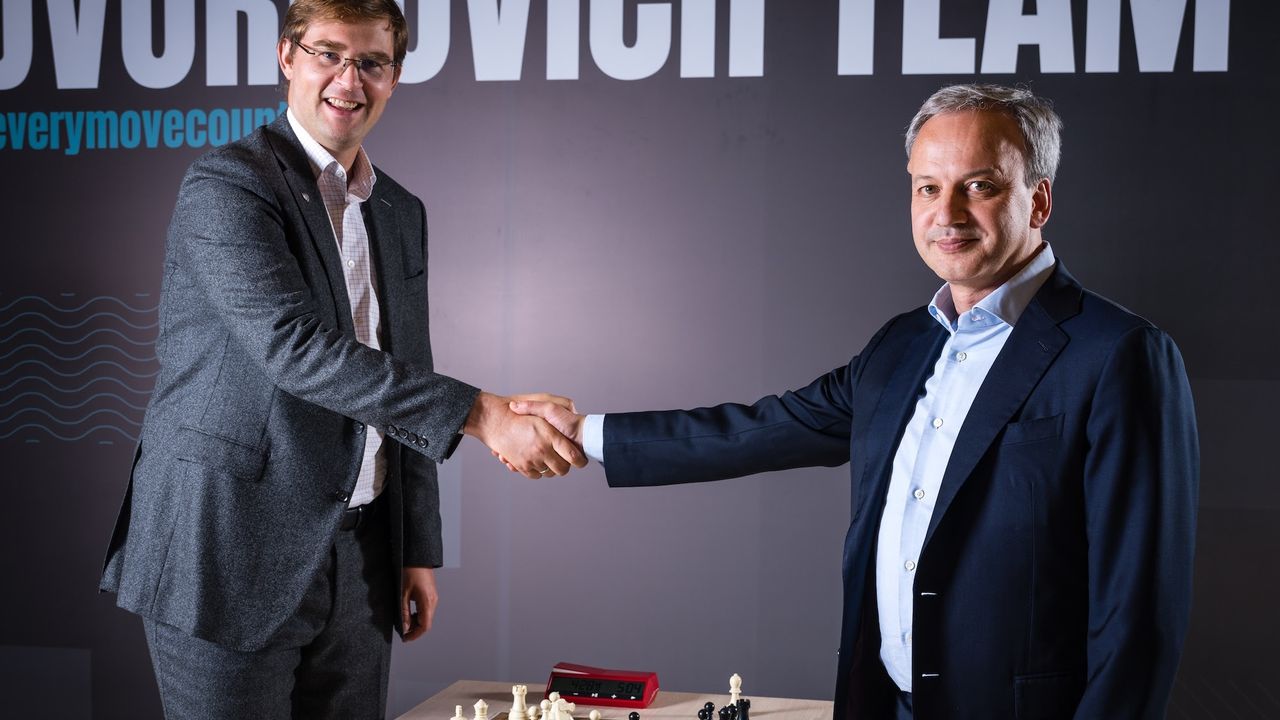
Arkady Dvorkovich has formally entered the increasingly competitive race for the FIDE presidency, confirming he will seek a third term and naming Kazakhstan Chess Federation president Timur Turlov as his candidate for Deputy President.
The incumbent's announcement comes days after both Wadim Rosenstein and Jan Henric Buettner launched rival campaigns, setting up the most contested FIDE presidential election in eight years. It also comes after FIDE suspended Dvorkovich's home federation, Russia, on June 11 following a Court of Arbitration for Sport ruling.
Dvorkovich has promised a campaign focused on reducing bureaucracy, expanding digital services, increasing support for national federations and investing further in youth chess.
"Growth alone is not enough," Dvorkovich said in a statement announcing his candidacy. "The next stage must be about renewal. FIDE must become even more open, more efficient and more responsive."
♟ Eight years ago, I committed to building a stronger, fairer, global FIDE.
— Arkady Dvorkovich (@advorkovich) June 29, 2026
Serving as the president of FIDE for the past eight years has been an exceptional honour.
Together, we have strengthened FIDE, significantly expanded and improved global events and invested more in… pic.twitter.com/vFXkYLnB1f
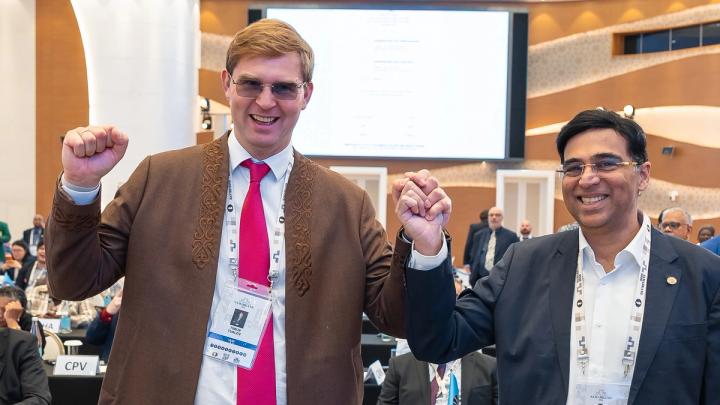
Turlov, the 38-year-old billionaire founder of Freedom Holding Corp and FIDE's biggest financial backer, replaces five-time World Champion GM Viswanathan Anand as the deputy presidential candidate on the ticket. Anand, who has served as Deputy President since 2022, said he would remain involved in the campaign in an advisory role.
Campaign moves into the open
Although the official election campaign has only just begun, manoeuvring has been underway for months.
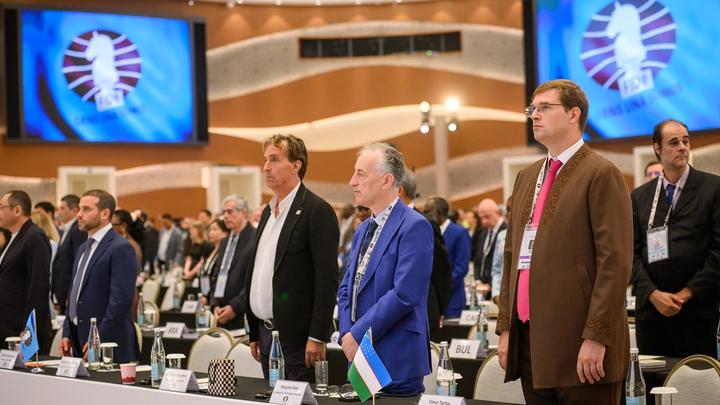
The FIDE presidential election will be decided by delegates from the federation's approximately 200 national federations at the General Assembly during the 46th Chess Olympiad in Uzbekistan in September. Candidates must submit a joint presidential ticket, including a deputy president, backed by between five and eight federations representing all four continental regions. A simple majority decides the election.
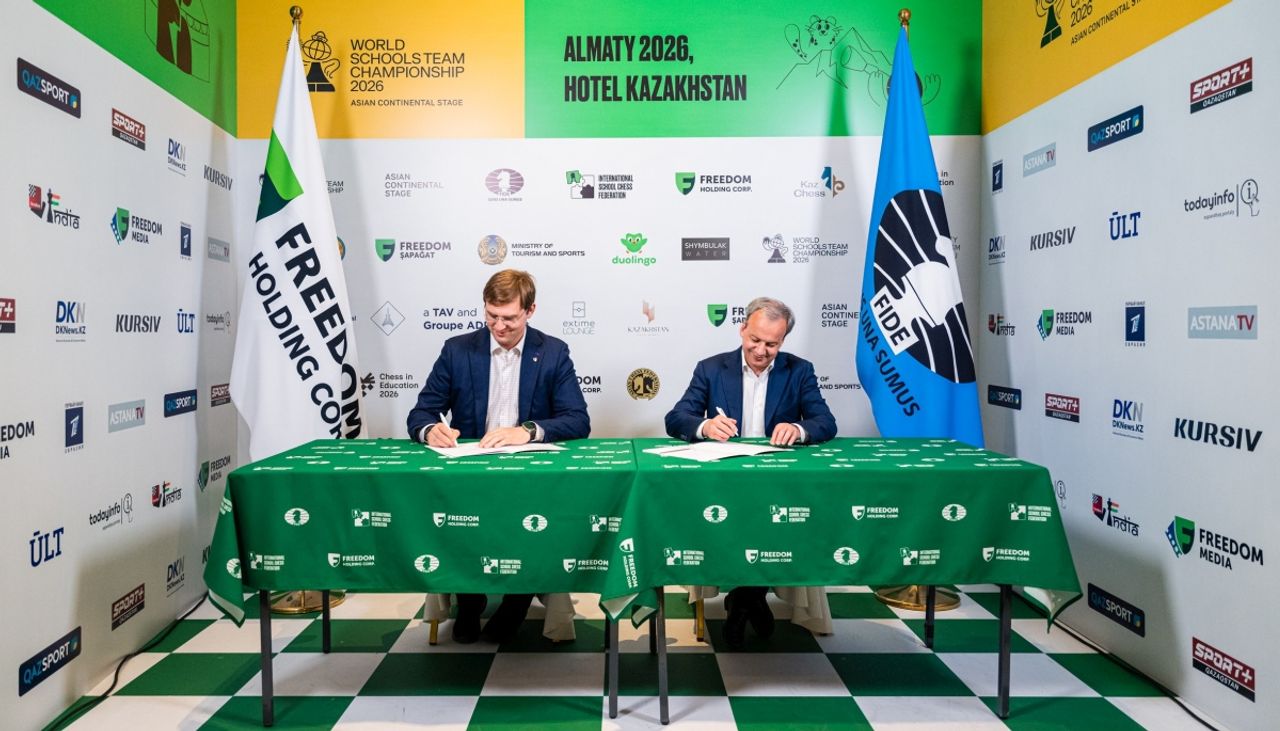
Dvorkovich is seeking a third consecutive four-year term after first winning office in Batumi in 2018 before comfortably defeating Ukrainian challenger GM Andrii Baryshpolets in Chennai four years later.
His candidacy is only possible because FIDE members voted in 2023 to abolish the federation's two-term presidential limit. The move proved controversial because term limits had been one of Dvorkovich's own governance pledges during his successful 2018 campaign, and critics argued the rule change was designed specifically to allow him to remain in office. Supporters countered that federations should retain the freedom to re-elect a successful president if they choose.
Challengers still emerging
Dvorkovich enters what is shaping up to be the most competitive FIDE presidential election since 2018.
Before his announcement, two rival candidates had already declared their intention to challenge for the presidency.
Rosenstein, the founder of WR Chess, officially entered the race on Friday, campaigning on a platform of stronger governance, faster decision-making and greater support for national federations. The 36-year-old has secured the backing of the German Chess Federation, having recently become its official FIDE delegate, and is running alongside Singaporean businessman Gordon Tang as his deputy presidential candidate.
Hours later, Jan Henric Buettner, the entrepreneur behind Freestyle Chess, also launched his campaign. Buettner has chosen English chess organiser IM Malcolm Pein as his running mate and says his campaign will focus on strengthening national federations, improving governance and consulting extensively with member federations before publishing a detailed manifesto. Unlike Rosenstein, however, Buettner does not have the backing of his home federation, with the German Chess Federation publicly distancing itself from his candidacy.
Dvorkovich's announcement means the contest now features three declared candidates for the presidency.
Eight years of growth—and controversy
Few dispute that Dvorkovich's presidency has coincided with significant growth for international chess.

During his two terms, FIDE has overseen record participation, expanded women's and youth events, attracted new commercial partners, increased prize funds and benefited from the boom in chess following the COVID-19 pandemic and the Netflix series The Queen's Gambit. FIDE has also broadened development programmes across Africa, Asia and Latin America.
But his presidency has also been marked by persistent controversy.
A former Russian deputy prime minister, Dvorkovich has faced repeated scrutiny over his political connections following Russia's invasion of Ukraine. Although FIDE suspended Russian and Belarusian national teams from competition and removed Russia as a host of official events after the invasion, critics have argued the federation has remained too closely aligned with Russian interests.
His own position attracted particular attention in 2022. Dvorkovich, 54, initially spoke against the war before later issuing a statement expressing pride in Russian soldiers, prompting criticism both inside and outside the chess world.
Questions surrounding Russia's role in FIDE have continued throughout his presidency, particularly over disputes involving the Chess Federation of Russia, the status of occupied Ukrainian territories and decisions concerning Russian participation in international competition. Those issues have led to legal challenges, ethics proceedings and continuing debate among member federations. More recently, the Court of Arbitration for Sport ruled against the Chess Federation of Russia over its activities in occupied Ukrainian regions, leading FIDE to suspend the federation's membership earlier this month.
Earlier this month, the powerful Chess Federation of Russia's Supervisory Board voted to back Dvorkovich as the country's candidate for the upcoming election, overcoming a challenge from former FIDE president Kirsan Ilyumzhinov.
CFR president Andrey Filatov even went as far to say he has "no doubt our candidate will win" after the session. Russia is certainly confident its man will remain president.
Critics have also questioned whether FIDE has become overly reliant on Russian-linked sponsors and leadership, while supporters argue Dvorkovich has successfully insulated the organisation from geopolitical turmoil and delivered unprecedented commercial and sporting growth.
A new deputy
The selection of one of the world's richest men in Turlov is the most significant personnel change on the incumbent's ticket. Turlov's holding company spends approximately $15 million annually on chess support. He also recently addition of the ChessBase. Freedom Holding Corp's market capitalization exceeds $8 billion.
Under Turlov's leadership, Kazakhstan has rapidly expanded school chess, hosted major international tournaments and emerged as one of the world's fastest-growing chess nations.
С Новым годом!
— Timur Turlov (@TimurTurlov_) January 3, 2026
Жана жыл кутты болсын!
Смелости, любви, настоящих друзей!
Не теряйте себя и то, во что верите! Помните, что счастье в том, чтобы создавать настоящие ценности для тех, кто с вами рядом. Служить своему народу и стране.🦅🌹 pic.twitter.com/SKnzt89c0R
"The results we have achieved in Kazakhstan have convinced me of a simple truth," Turlov said. "A practical, modern and digital approach to chess development works — and it can be scaled globally."
However, Turlov's inclusion on the ticket does little to ease fears of Russia's influence on FIDE through Dvorkovich.
Turlov built much of his company's early business in the Russian financial system before the firm shifted its structure and branding following Russia's full-scale invasion of Ukraine in 2022.
Turlov also supported a controversial motion proposed by the Kyrgyz Chess Federation at the 2024 FIDE General Assembly that called for restrictions to be lifted on Russian teams at chess events. The motion was defeated amid an international outcry, but last December two similar proposals were approved.
Despite renouncing his Russian citizenship to become a Kazakh national, Turlov is regarded with an element of suspicion by many of Dvorkovich's critics.
Dvorkovich said a full election manifesto would be released in the coming weeks following consultations with national federations around the world.