Carlsen Teeters On The Edge Of Losing No.1 Status After Budapest Nightmare
Magnus Carlsen has spent 17 years above the rating mark that separates chess's elite from its exceptional few. After a winless group stage at Total Chess, the world number-one is just 1.2 points away from falling below it.
No one saw a wobble like this coming. They really didn't.
For almost 17 years, GM Magnus Carlsen has been able to take one thing for granted in chess. Whatever happened at the board, there's always been that reassuring figure beside his name: 2800.
Now, for the first time since he was a teenager, that certainty is beginning to waver, and he appears in serious danger of being ejected from that hallowed 2800-club only he currently inhabits.
Carlsen enters Monday's rest day at the inaugural Total Chess World Championship Tour in Budapest with a live classical rating of just 2801.2, having lost 21.8 points in five days. Ouch. He remains world number-one, but only just.
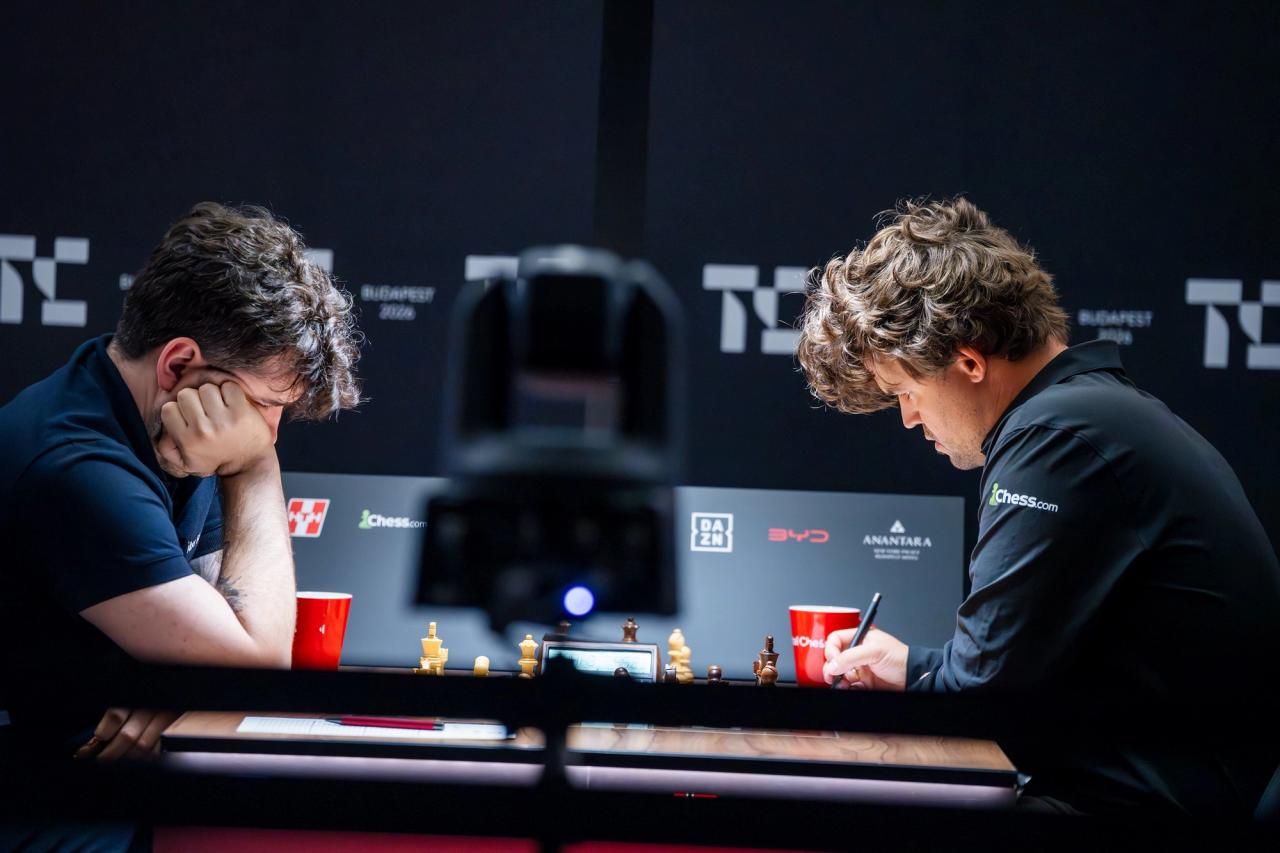
Carlsen has certainly arrived at this edgy position in, for him, remarkable circumstances.
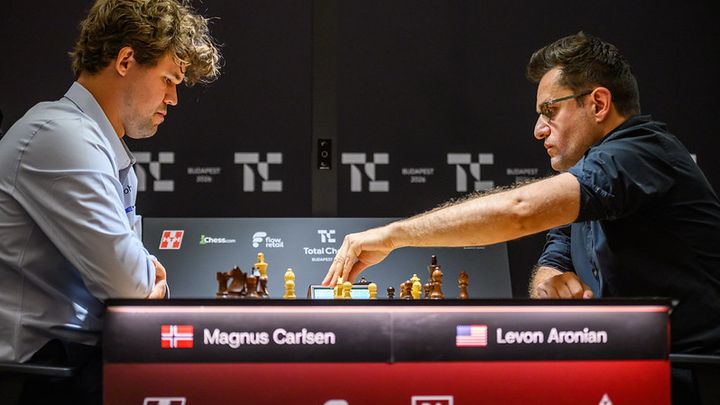
In ten games of the tournament's experimental Fast Classic format, approved by Carlsen himself, the king of chess failed to win once. He drew nine and lost one, to Armenia's outsider GM Haik Martirosyan, finishing fifth in a six-player group won by GM Anish Giri.
While Giri progresses to the knockout competition for the title, Carlsen will spend the remainder of the event fighting for places 17 to 20. How the mighty have fallen in this new event.
For chess fans, this is baffling. Carlsen won the opening blitz competition with 7/9, and it seemed like business as usual.
The Norwegian father of one, the man who has spent most of his career making the world's strongest grandmasters look bang average, was on his way to yet another title. Was there any point in even watching?
But then it got gnarly.
Seventeen years above 2800
Carlsen first crossed the 2800 barrier in November 2009, aged just 18, following a spectacular 8/10 performance at the Pearl Spring tournament in Nanjing, China.
At the time, the legendary GM Garry Kasparov's record rating of 2851 still stood as the highest ever achieved.
Slightly tongue-in-cheek, Kasparov remarked upon his own feat and whether he should come back on X:
😂 Time for a comeback? But I think my 255 months at #1 was enough, or I wouldn’t have retired in the first place!
— Garry Kasparov (@Kasparov63) November 15, 2026
Carlsen eventually surpassed it, reaching 2882 in May 2014, a record that remains the benchmark for classical chess.
But the remarkable thing about Carlsen's rating history is how long he has stayed there. It seems like forever.
Rival GMs Fabiano Caruana, Levon Aronian, Vladimir Kramnik and Viswanathan Anand have all belonged to the exclusive 2800 club. Almost all eventually fell back below the threshold. Carlsen did not.
Even when his form got a bit ruffled, even when his enthusiasm for classical chess appeared to dim, his rating remained comfortably above the line. Well, it's seriously under threat now.
Indian GM Srinath Narayanan hit the nail on the head.
"For many years, Magnus felt like 'more than just a man,'" he posted on X. "We called it the 'Magnus effect'. Magnus now feels human. A terrific human, but nevertheless, a human."
“If you make yourself more than just a man, if you devote yourself to an ideal, and if they can't stop you, then you become something else entirely.” For many years, Magnus felt like 'more than just a man.' We called it the 'Magnus effect'. Magnus now feels human. A terrific human, but nevertheless, a human.
— Srinath Narayanan (@srinathchess) November 14, 2026
The ranking that survived
The irony is that Total Chess was designed to offer something different from the traditional classical tournaments Carlsen has increasingly criticised.
Its Fast Classic games give players 45 minutes plus a 30-second increment per move, with two games against the same opponent each day. Yet the results count towards FIDE's classical rating list, making the experimental format unusually consequential.
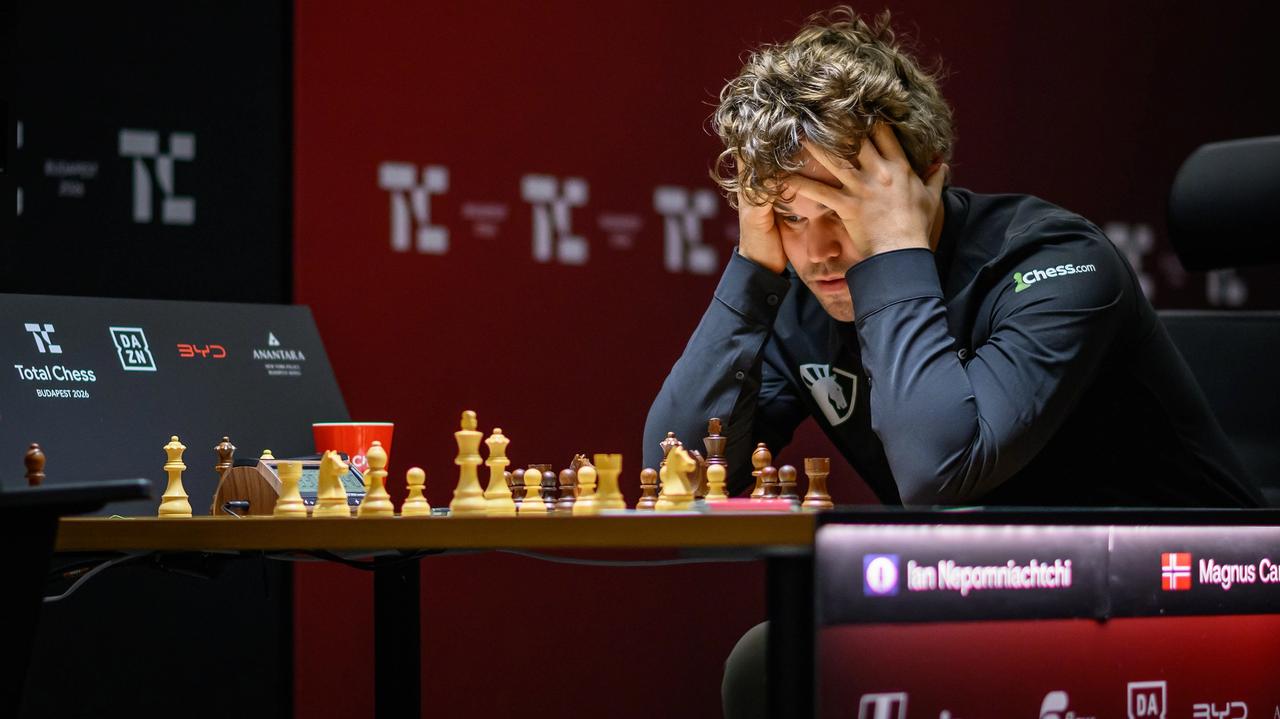
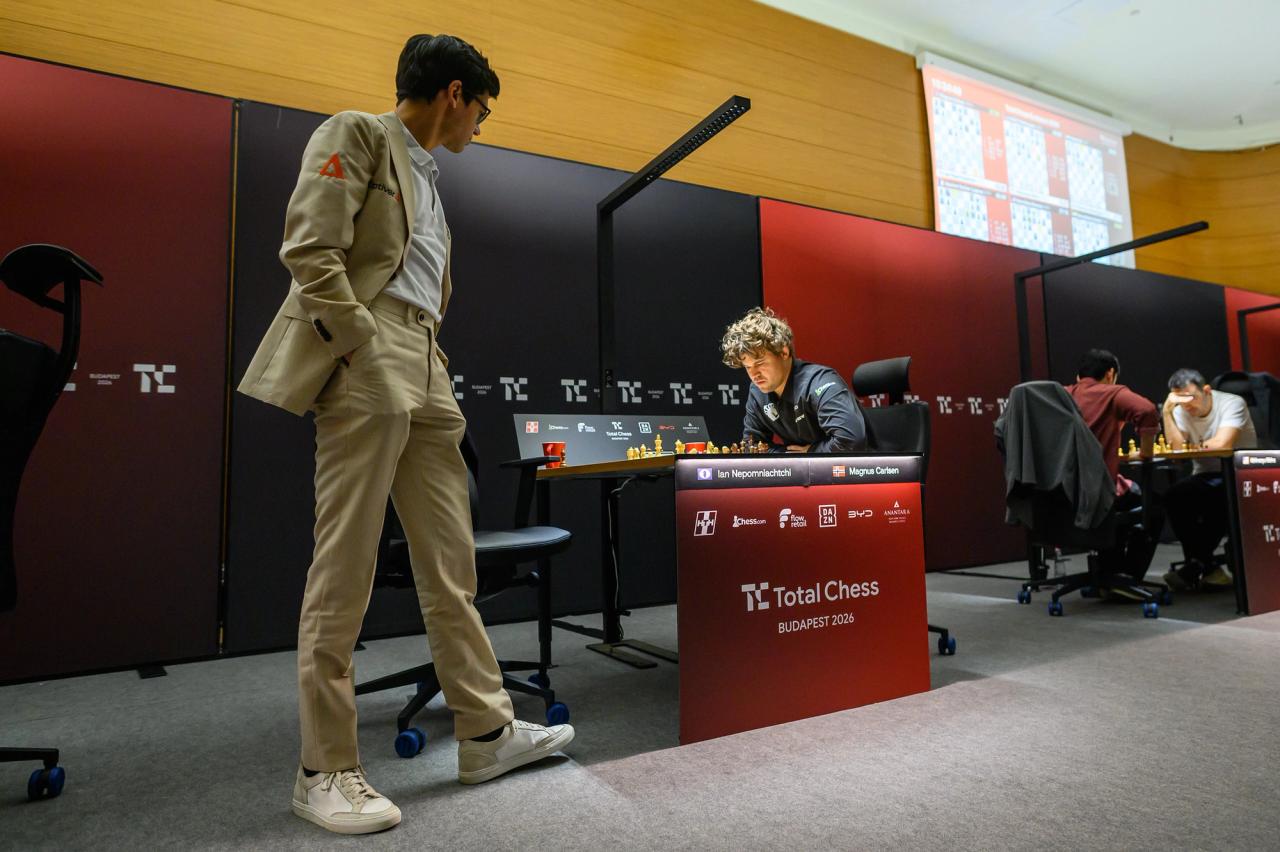
Carlsen has struggled to adapt. Against Martirosyan he suffered his only defeat, while promising positions against other opponents went unconverted. On Sunday, two draws against his old rival GM Ian Nepomniachtchi completed a group stage without a single victory.
Games against these two are always an event, and IM Anna Rudolf, reporting from the playing hall for the official broadcast, suggested that Carlsen's difficulties against Nepomniachtchi had been compounded by his handling of the clock.
The Norwegian appeared to miss several opportunities in their first encounter, she said, while the second was a more balanced affair. Both ended in draws, confirming Carlsen's fifth-place finish in Group C and consigning him to the knockout bracket for places 17 to 20, an outcome which would have been difficult to imagine when he won the opening blitz competition five days earlier.
For much of the weekend, even his world number-one ranking appeared in danger.
Caruana had been accumulating rating points while Carlsen was losing them, briefly closing the gap to little more than five points. But the American's final-round defeat to GM Vladislav Artemiev allowed the technically inactive American GM Hikaru Nakamura, although we all know he's been busy, to return to second place.
Carlsen survived at number-one on 2801.2, ahead of Nakamura on 2792.0 and Caruana on 2790.0.
It was not quite the sort of triumph to which he has become accustomed.
Carlsen has occupied first place on every official FIDE classical rating list since July 2011, an uninterrupted reign of more than 15 years. Even after voluntarily relinquishing the world championship in 2023, he remained the world's highest-rated player while China's GM Ding Liren and then GM Gukesh D of India inherited the crown.
The last 1.2 points
There is a temptation whenever Carlsen struggles to declare that an era is ending. Similar predictions have accompanied his occasional poor tournaments for years, and they have generally proved premature. We resisted the temptation to lead on that question in this article here, in fact.
The great Magnus Carlsen obviously remains one of the world's most formidable rapid and blitz players, that won't have changed overnight. His victory in Budapest's opening competition demonstrated that. Nor does a poor week under an experimental time control necessarily mean his underlying playing strength has collapsed.
But ratings are unforgiving. They record results, not explanations.
When Carlsen first crossed 2800 in 2009, Barack Obama had only recently entered the White House. Since then, the Norwegian has won five world championship matches, broken Kasparov's rating record and watched two successors inherit the title he chose to surrender.
Through it all, his rating remained above 2800.
Monday offers a welcome pause before the knockout matches begin on Tuesday. Carlsen can no longer win the inaugural Total Chess title, but his remaining games may still be important: for the first time for donkey's years, the 2800 barrier is no longer comfortable.
With just 1.2 points to spare, there is no room for another mistake.