Turlov Wants Facial Recognition And AI In FIDE War On Chess Cheating
One policy proposal did pop out of the FIDE presidential debate.
There is no doubt the FIDE election presidential debate was a horrible, horrible viewing experience for the few—including us—who tuned in to watch it.
World Chess CEO Ilya Merenzon has already written about that here.
But buried somewhere among the awkward exchanges, technical problems and general sense that everyone involved would rather have been somewhere else, there was something worth paying attention to.
One policy, in particular, stood out.
Your face could become your chess ID.
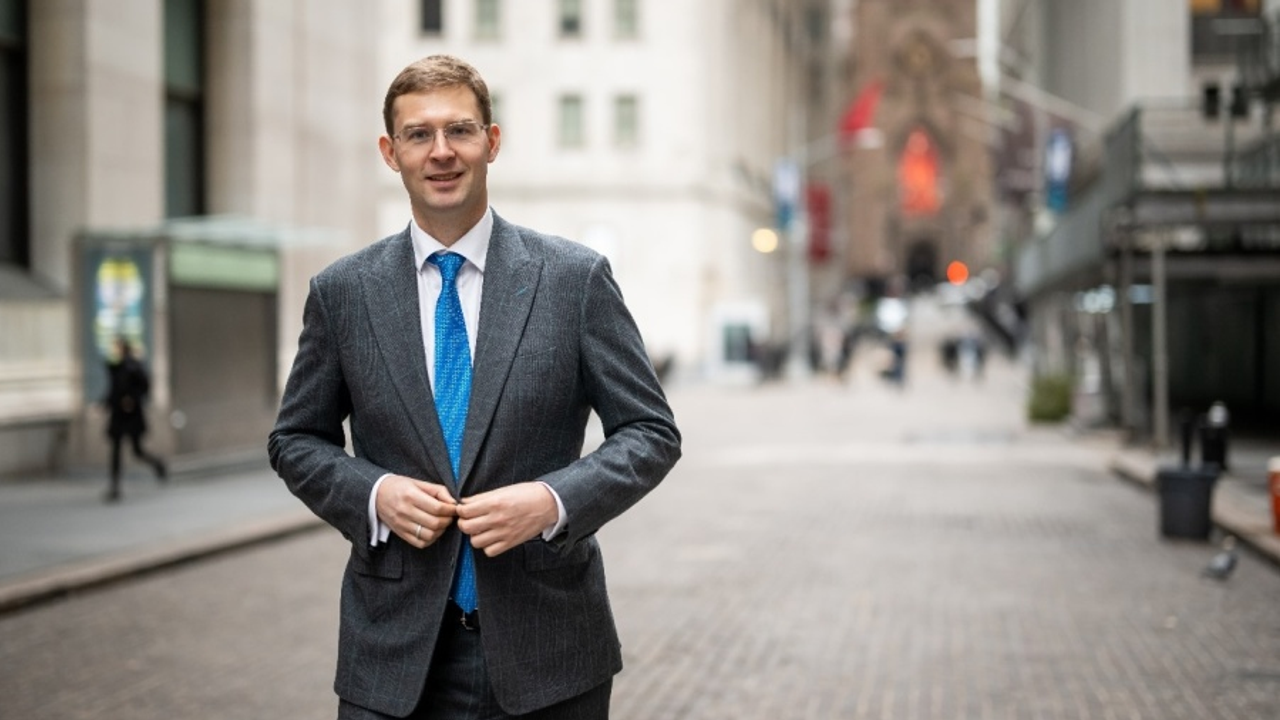
FIDE presidential candidate Timur Turlov proposed using facial recognition to identify players online as part of a new technology-driven assault on cheating.
Speaking during Wednesday's FIDE presidential debate, Turlov said the federation should devote resources to developing what he hopes could become one of the world's most effective AI-powered anti-cheating systems.
But his most eye-catching proposal was biometric identification.
“I think with current very cheap biometric identification we can prove that a single person will have a single account if they want to play competitive chess,” Turlov said.
Asked exactly what he meant by biometrics, Turlov was unequivocal.
“It’s face recognition. It’s the simplest solution and it’s banking-quality identification.”
Turlov, who is running against Jan Henric Buettner and Wadim Rosenstein in the September 26 election, pointed to his experience in Kazakhstan, where he said bank accounts can be opened by taking a photograph with a phone and checking it against official identification.
He suggested chess would not necessarily require the same level of verification.
“If the player is a professional and we have a picture, we can make sure that that’s exactly this person playing,” he said.
For other players, Turlov argued biometric authentication could at least prevent the same individual from operating multiple competitive accounts.
The proposal comes as cheating remains one of the most divisive issues in professional chess.
Online platforms already use sophisticated statistical methods to identify suspicious play, while FIDE has increasingly been forced to confront the consequences of public cheating allegations involving elite players.
Turlov believes artificial intelligence could become part of the solution.
With AI models now capable of tackling extraordinarily complex mathematical problems, he argued that FIDE should invest in developing a powerful anti-cheating engine, potentially in collaboration with existing technology companies and chess platforms.
For Turlov, the objective is not merely catching cheats. It is protecting the integrity of FIDE ratings by ensuring the person behind an online account is actually the player they claim to be.
He acknowledged that no system would eliminate cheating entirely and said any security technology would have to evolve continually.
The proposal would also raise obvious questions over privacy, data storage and exactly how a global biometric chess identity system would operate across FIDE's member federations.
But it was also one of the few moments in the debate when the election moved away from personalities, complaints and campaign politics and towards a concrete proposal that could directly affect chess players.
Whether FIDE's member federations like the idea of facial recognition is another matter.
Turlov, the president of the Kazakhstan Chess Federation and founder and CEO of Freedom Holding Corp., has made digitalisation one of the central themes of his campaign.
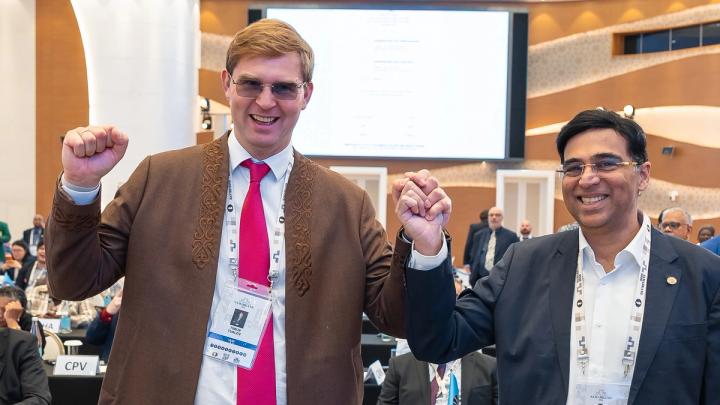
He is running alongside five-time world champion Viswanathan Anand against Buettner and Malcolm Pein, and Rosenstein and Gordon Tang.
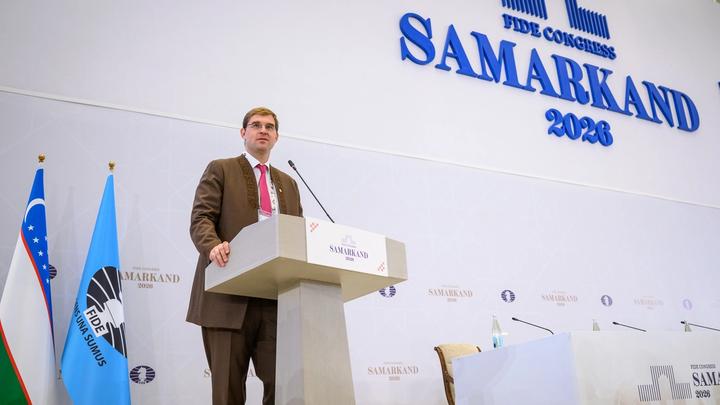
FIDE's member federations will elect their next president at the General Assembly in Samarkand on September 26.