FIDE Defends Letting Russian Team Enter World Champs Event (Despite Having Banned Russian Teams)
The world chess governing body insists a Russian university team is not a Russian national team. Critics say the distinction is just a loophole.
FIDE is at it again. This week, the world governing body of chess, the supposed custodian of the game for everyone, was forced to defend yet another controversial ruling which, somehow, appears to favour Russian chess.
FIDE's decision to allow a Russian university team to compete in the final of a world championship event kicked up a big stink. FIDE responded by insisting that, despite having followed the international norm and banned Russian teams, allowing a Russian team does not breach the governing body's ban on Russian teams.
Understand? We can explain—but it should be no surprise to hear that FIDE's justification has done little to quiet criticism.
For more than four years, FIDE has maintained that Russian national teams are barred from official team competitions as part of sanctions imposed following Russia's full-scale invasion of Ukraine.
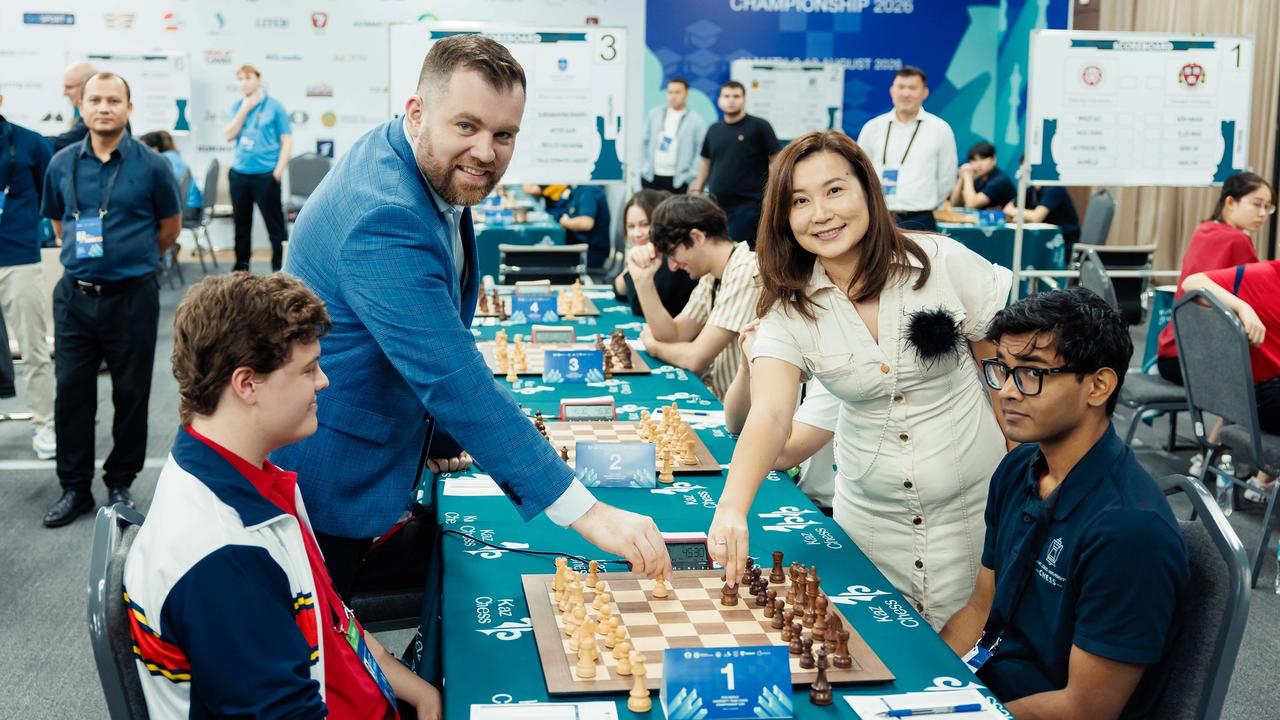
Yet this week, the federation confirmed that Ural State Mining University—a team consisting of Russian players representing a Russian institution—were able to compete in the inaugural FIDE World University Team Chess Championship Final in Almaty, Kazakhstan.
That competition, sponsored by FIDE presidential candidate Timur Turlov's Freedom Holdings, is now fully underway. Ural State has been doing very well: securing first place in Group A with one day to spare, having smashed Unimelb 4-0 in both rounds on day two.
🤩 Day 2 brings high-level competition and inspiring stories to FIDE World University Team Championship Finals
— International Chess Federation (@FIDE_chess) August 5, 2026
♟️ The inaugural FIDE World University Team Championship Finals continued on Wednesday in Almaty as the battle for the knockout stage intensified, with university teams… pic.twitter.com/Yu6GRkId2v
Critics argue that while the team is technically entered under the name of a university rather than the Chess Federation of Russia (CFR), the practical effect is the same: a Russian team competing for a FIDE world title.
All the usual suspects on X immediately highlighted the issue.
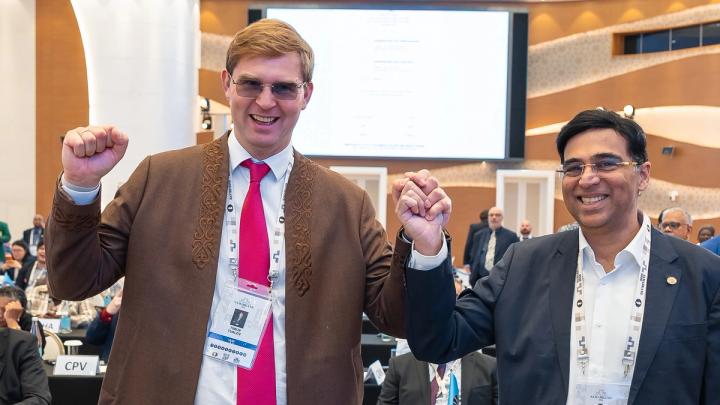
GM Peter Heine Nielsen, a long-time critic of Russian influence on FIDE, appealed directly to his former employer and now FIDE's interim president, GM Viswanathan Anand.
It should be noted that Anand is Turlov's running mate in the upcoming FIDE election next month.
Dear FIDE President @vishy64theking
— Peter Heine Nielsen (@PHChess) August 4, 2026
It is your duty to ensure that public supporters of Russia's 🇷🇺 brutal war against Ukraine 🇺🇦 is disqualified.
This is IOC and FIDE rules.
The Ural State Mining University 🇷🇺 publicly supported Russia's 🇷🇺 war numerous times:
🧵1/4
Responding to criticism, FIDE published an official statement rejecting claims that it had relaxed its sanctions.
"The team representing Ural State Mining University is fully eligible to participate in the FIDE World University Team Chess Championship Final. Any suggestion to the contrary is without factual or legal basis," FIDE said.
The federation argued that the event is fundamentally different from traditional team championships because entries represent universities rather than national federations.
According to FIDE, teams qualify as educational institutions, not national representatives, and existing sanctions apply only to national teams representing Russia.
Under that interpretation, Ural State Mining University is simply another university competitor, regardless of where it is based.
The Apparent Contradiction
The controversy stems from the contrast between that interpretation and FIDE's long-standing public position on Russian participation.
Following recommendations by the International Olympic Committee in 2022, FIDE prohibited Russian national teams from official competitions while continuing to allow many Russian players to compete as neutrals in individual events.
Two months ago, FIDE was forced to act against Russia again, suspending the CFR for territorial breaches after an intervention from the Court of Arbitration for Sport.
Yet FIDE has still found a way.
The IOC distinction—individuals may compete, teams representing Russia may not—has been central to FIDE's sanctions policy. But the World University Championship appears to create a gray area.
Although competitors wear their university's name rather than "Russia," the participating institution is Russian, its players are Russian, and the team is competing in a FIDE world championship.
For critics, the distinction is legalistic rather than substantive. FIDE appears to have found a pathway for a Russian team to enter a world championship despite its continuing ban on Russian teams.
That may satisfy the letter of FIDE's regulations. Whether it satisfies their spirit is another question.