'No Russian Teams': FIDE Blocks Russia From 2026 Chess Olympiad
Russia will miss a third successive Chess Olympiad after FIDE rejected a last-minute attempt to return its national teams for Samarkand 2026 — even under a neutral flag.
Russia's national teams will not compete at the 2026 Chess Olympiad in Samarkand next month after FIDE's leadership voted against allowing them back into the competition.
The decision, taken behind closed doors on August 23, has now been reported by both the Ukrainian Chess Federation and, from the Russian side, by Alexander Tkachev, executive director of the Chess Federation of Russia. FIDE is yet to issue a statement confirming its position, but it is expected soon.
"Our national teams will not be at the World Chess Olympiad," Tkachev told Russian media, saying the decision had been taken by the FIDE Council following the "initiative" of acting FIDE president GM Viswanathan Anand.
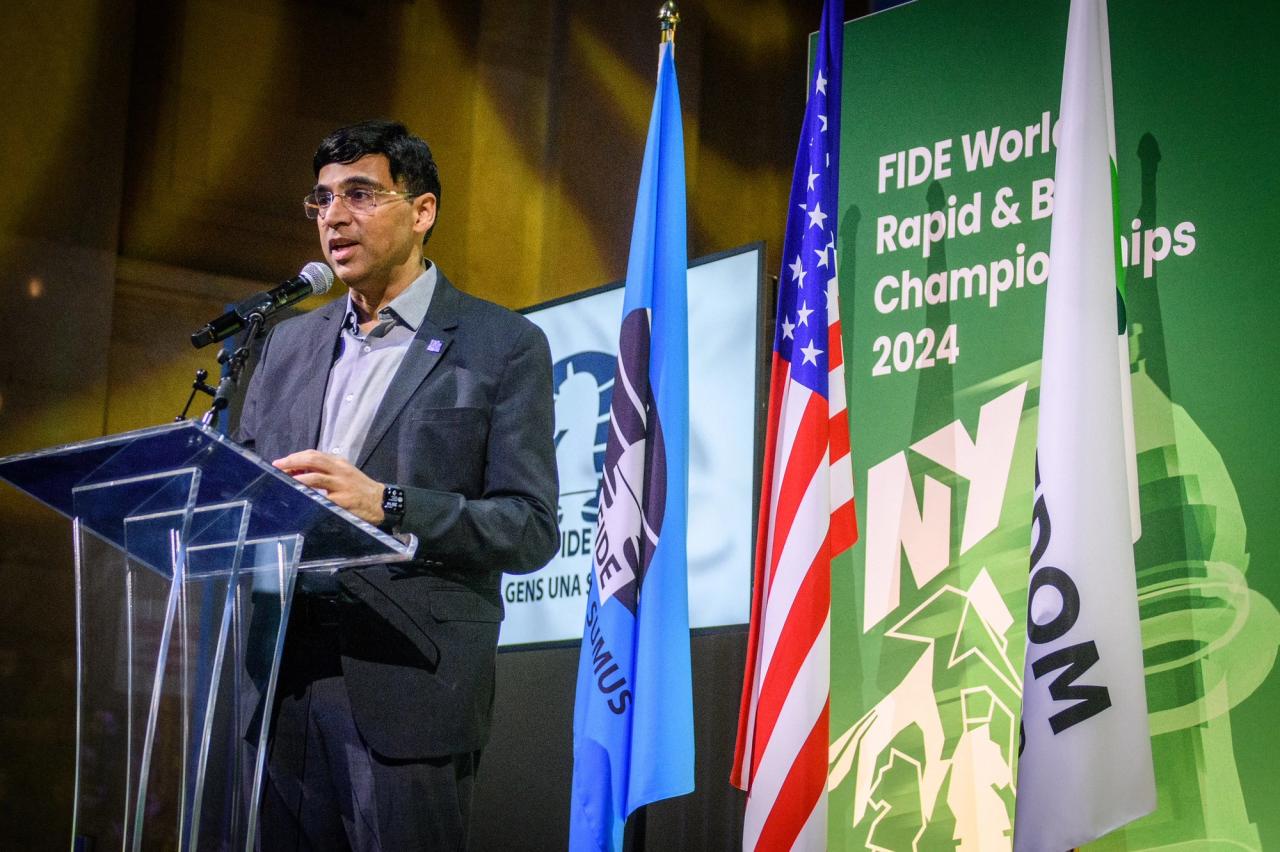
If Tkachev's account is correct, it marks arguably the first major public political intervention from Anand, India's legendary five-time World Champion, since his appointment to FIDE's executive in 2022.
Tkachev followed up with what reads like a pointed barb at the FIDE board: "Fortunately, there are people who prioritise the game over political considerations and are concerned about their own careers. But there are also people who put their personal interests above everything else, and there are currently more of them on the board. This time, they won."
Tkachev was far from the only senior Russian official who voiced their displeasure.
Russian Reaction
Sergey Smagin, the Chess Federation of Russia's vice president, told TASS: "Of course, the non-admission to the Chess Olympiad 2026 affects both us and the tournament itself. Everyone understands that without the greatest chess power in the world, the tournament cannot be considered complete.
"Already in many sports, they understand that victory without the participation of Russians is not as sweet."
He added: "I'm confident our return is inevitable; the only question is when it will happen."
The Council's ruling means Russia will miss a third consecutive over-the-board Olympiad after sitting out Chennai 2022 and Budapest 2024.
The decision is particularly significant because Russia had been pushing until the last moment for its teams to be readmitted—and Russian players were preparing on the assumption that they might yet be going to Uzbekistan.
Only days before the vote, GM Aleksey Grebnev told Sport-Express that the Russian men's team had already held a training camp in Kislovodsk, the Russian spa city remembered in chess for hosting elite Soviet-era international tournaments in the 1960s.
Asked whether he expected to play if Russia was admitted, Grebnev said preparations were continuing and he was staying "ready for any scenario."
Later in the same interview he was more explicit: "I hope Russia will be admitted to the competition." He listed Uzbekistan, India and the U.S. as his favourites for gold. The interview appeared immediately before FIDE made its decision.
FIDE's General Assembly had controversially voted in December 2025 for Russian and Belarusian teams to be readmitted to official FIDE competitions, while leaving the Council to settle the rules governing adult teams and national symbols following consultations with the International Olympic Committee. The decision sparked widespread derision among Western federations.
Belarus has since been fully reinstated. In July, FIDE lifted all restrictions on the Belarus Chess Federation and confirmed that Belarusian teams would compete in Samarkand under their national flag.
Russia’s position became considerably more complicated, however, after a Court of Arbitration for Sport ruling concerning the Chess Federation of Russia’s activities in Ukrainian territories occupied by Russia.
Ahead of Sunday’s meeting, the Ukrainian Chess Federation wrote directly to FIDE Council members warning them against allowing a Russian team to compete.
The UCF argued that the Russian federation was "automatically suspended" under the CAS award of March 11 after failing to cease chess activity in Sevastopol and the regions of Crimea, Donetsk, Kherson, Luhansk and Zaporizhzhia.
It also argued that Article 13.6 of the FIDE Charter prevents the national team of a suspended federation from taking part in FIDE competition—regardless of whether it competed under the Russian flag, a neutral flag or another designation.
Ukraine went further, warning that it reserved the right to challenge any contrary FIDE decision before CAS and seek enforcement of the award through the Swiss courts.
The outcome therefore represents a significant victory for the Ukrainian federation.
First, vice-president Volodymyr Kovalchuk broke the news on Sunday evening, writing that FIDE had voted against admitting the Russian teams and reproducing what he said was a message from a FIDE vice-president: "No Russian Teams at the Olympiad!"
Kovalchuk claimed the decision had been reached despite pressure from Arkady Dvorkovich. Dvorkovich remains formally FIDE president but suspended his activity in July following EU sanctions, leaving Anand exercising presidential powers.
The decision also comes after FIDE faced repeated criticism for appearing to soften its stance on Russian teams.
At the 2025 Women's World Team Championship in Linares, FIDE allowed an all-Russian line-up to compete as "Team FIDE" under its neutral flag. Ukraine protested, while critics warned the move could be the thin end of the wedge towards Russia's full return.
Then, earlier this month, Ural State Mining University was allowed to compete in—and won—the inaugural FIDE World University Team Championship in Almaty. FIDE maintained that the university represented an institution rather than the Chess Federation of Russia and was therefore eligible, but the victory was immediately celebrated in Russia as a national success. Chess Federation of Russia president Andrey Filatov hailed "our chess players" and called the victory a "wonderful gift to Russian fans."
Those episodes had fuelled suspicions among Ukraine and its supporters that FIDE was gradually finding ways to bring Russian teams back into international chess. Sunday's decision in Samarkand therefore represents a significant reversal of that direction—and, for the time being at least, draws a much firmer line at the Chess Olympiad.
The episode is also certain to feed into an increasingly bitter FIDE presidential election.
Former FIDE Events Coordinator and legal-team member IM George Mastrokoukos, now a prominent critic of the organisation's current leadership, linked the Russia controversy directly to the campaign being run by Jan Henric Buettner and IM Malcolm Pein. Mastrokoukos, a supporter of Buettner, worked on FIDE regulations and CAS cases during his years with the federation.
#chess #FIDE_elections #Russia According to initial (not official nor confirmed) information, the FIDE Council voted today against lifting the suspension of the Russian Chess Federation. Any other decision would have damaged even more Turlov's failing campaign.
— George Mastrokoukos (@GMastrokoukos) August 23, 2026
Make no mistake…
"It is no secret that FIDE has been turned into a Russian entity instead of an international, neutral organisation," Mastrokoukos wrote.
"This is why the Buettner/Pein campaign exactly asks FIDE to become again a neutral federation—which will strictly follow International Law and enforce CAS decisions."
That is Mastrokoukos's political assessment rather than an established finding against FIDE, but it illustrates how quickly the Russia question is becoming intertwined with the election battle.
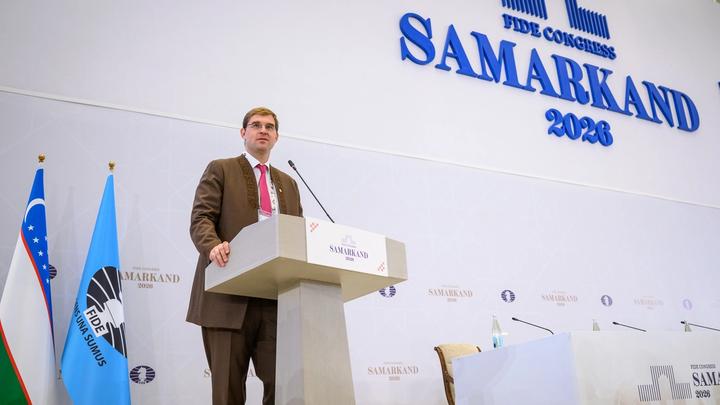
The Olympiad and FIDE Congress will both take place in Samarkand next month, with the presidential election being held during the General Assembly.
FIDE has already confirmed a record field of 208 Open teams and 192 Women’s teams for the Olympiad. Russia is absent from both.
What happens after the election, however, remains to be seen.
UPDATE: FIDE has now published its FIDE Council decision here, confirming Russian teams will not be able to play at the 2026 FIDE Olympiad.