


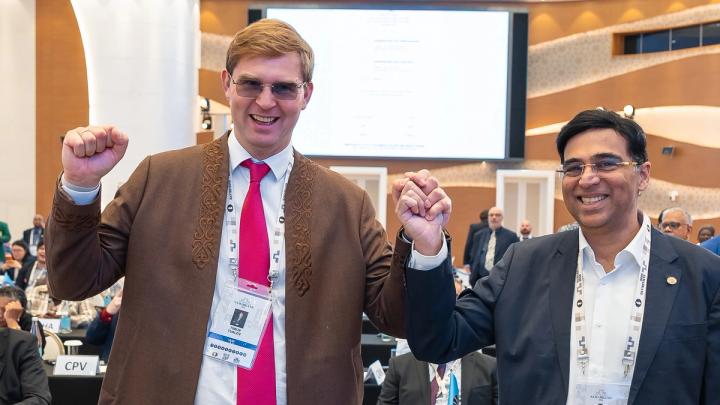
Latest: Timur Turlov Elected FIDE President
Timur Turlov has been elected president of the International Chess Federation (FIDE), defeating Wadim Rosenstein in a second-round vote at the FIDE General Assembly in Samarkand on September 26.
Turlov received 96 votes in the first round—one short of the majority required for victory—with Rosenstein on 76 and Jan Henric Buettner on 20.
After Buettner was eliminated, he and running mate IM Malcolm Pein endorsed Turlov. The second ballot ended 110-85 for Turlov, with one abstention.
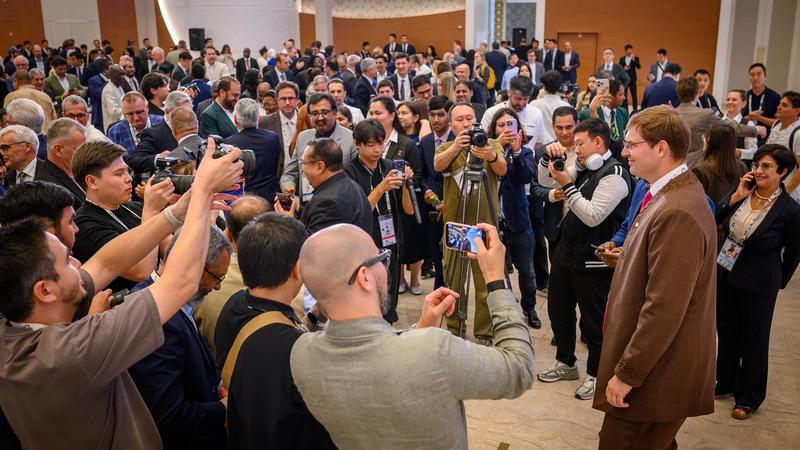
FIDE Election 2026 At A Glance
Winner: Timur Turlov
Deputy President: GM Viswanathan Anand
Date: September 26, 2026
Location: Samarkand, Uzbekistan
First round: Turlov 96, Rosenstein 76, Buettner 20
Second round: Turlov 110, Rosenstein 85
Outgoing president: Arkady Dvorkovich
Five-time World Champion GM Viswanathan Anand, Turlov's running mate, becomes FIDE Deputy President.
The result ends Arkady Dvorkovich's eight-year presidency and makes the 38-year-old Turlov the second youngest elected president in FIDE history.
Read more: Timur Turlov Wins FIDE Election As Billionaire Takes Control Of World Chess
How the election unfolded: World Chess looks back at a campaign featuring allegations of bought votes, sanctions, legal threats, millions of dollars in promises—and even an alleged Bentley bet.
FIDE presidential elections have rarely been genteel affairs.
From the ousting of Friðrik Ólafsson back in '82, to the rise of the last permanent president Dvorkovich, they are notoriously rough, bitchy and backstabbing. Each campaign is like a new season of Succession. And the 2026 contest was absolutely no exception.
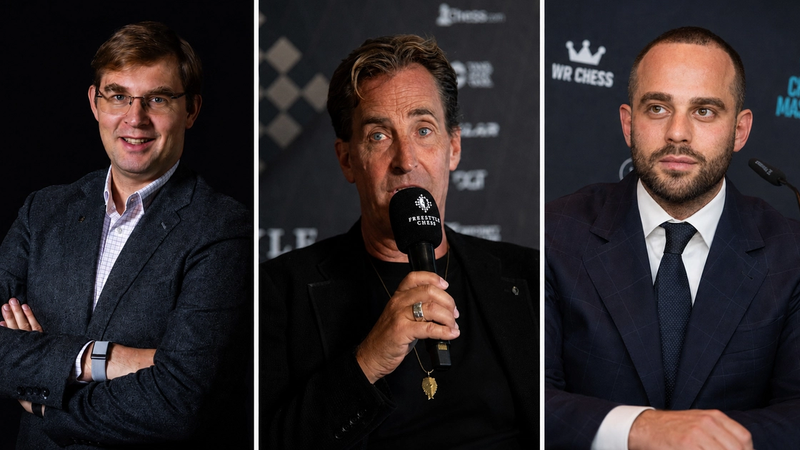
Three tickets contested the election: Timur Turlov and GM Viswanathan Anand, Wadim Rosenstein and Gordon Tang, and Jan Henric Buettner and IM Malcolm Pein. Turlov came out on top.
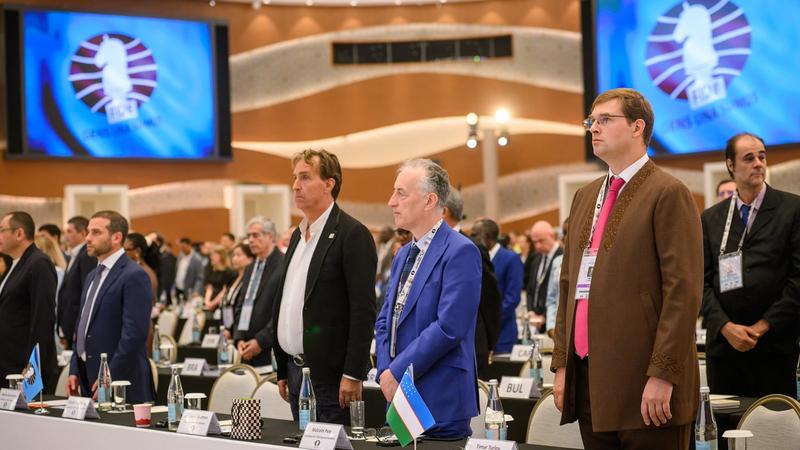
2026 FIDE Election Results
First round
Timur Turlov: 96 votes
Wadim Rosenstein: 76 votes
Jan Henric Buettner: 20 votes
No candidate secured the required majority on the first ballot. Buettner was therefore eliminated and subsequently endorsed Turlov ahead of the runoff.
Second round
Timur Turlov: 110 votes
Wadim Rosenstein: 85 votes
Abstentions: 1
Turlov therefore won the election and was elected FIDE president, with five-time World Champion GM Viswanathan Anand becoming Deputy President.
You can watch the election unfold in full here:
When was the 2026 FIDE election?
The election took place on September 26, 2026, during the FIDE General Assembly held alongside the Chess Olympiad in Samarkand, Uzbekistan.
Who ran for FIDE President in 2026?
Three tickets contested the election: Timur Turlov and Viswanathan Anand, Wadim Rosenstein and Gordon Tang, and Jan Henric Buettner and Malcolm Pein.
FIDE confirmed the three tickets after nominations closed in July.
It was a remarkably business-heavy field. Turlov, Rosenstein and Buettner are all eye-wateringly rich entrepreneurs who have invested heavily in chess.
Their routes to the election—and their visions for FIDE—were very, very different.
What happened in the FIDE presidential debate?
The three candidates to become the next FIDE president met for their first televised debate on September 9—and it did not take long for things to go wrong.
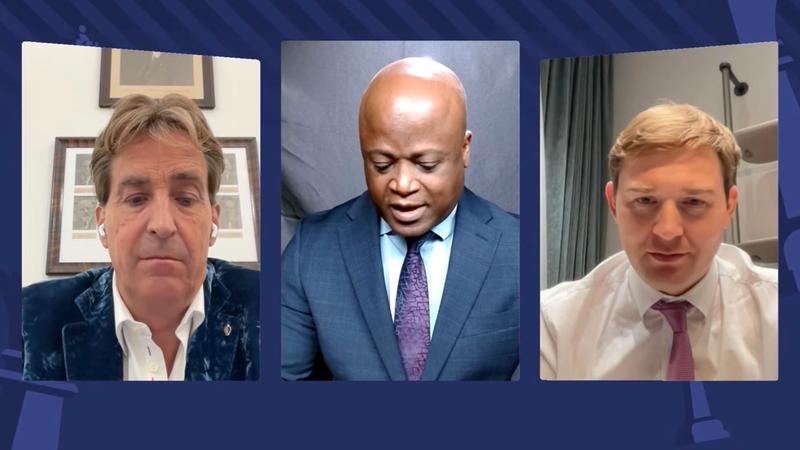
The 90-minute Chess.com broadcast, moderated by a stumbling GM Maurice Ashley (he's usually so smooth!), brought together Turlov, Buettner and Rosenstein ahead of the September 26 vote in Samarkand. Rosenstein, however, disappeared from the discussion after barely four minutes, having just promised that a FIDE president should be available "24/7".
That left Turlov and Buettner to make their cases largely without him.
Turlov presented himself as the experienced executive in the room, repeatedly pointing to his record of building businesses and chess organisations.
He spoke about increasing FIDE’s revenues, attracting commercial partners and giving national federations greater financial support.
Buettner offered a more structural pitch. He argued that FIDE needs clearer lines of responsibility, stronger professional management and less power concentrated around its president. His proposals included a new organisational structure intended to make the federation more accountable and effective.
But the encounter produced little sustained confrontation between the candidates and few detailed answers about how their promises would be delivered. With Rosenstein absent for almost the entire broadcast, one third of the contest went largely unscrutinised.
The debate nevertheless provided the clearest public comparison yet between the two candidates who remained. Turlov looked like a man campaigning on his record as a builder; Buettner looked like a reformer armed with an organisational chart. Rosenstein’s unexplained departure inevitably became the evening’s defining moment.
Read Ilya Merenzon’s full analysis: The Horrible, Horrible FIDE Presidential Debate I Just Sat Through.
Who is Timur Turlov?
Result: Elected FIDE President—110-85 in the second round.
Russian-born Timur Turlov is a 38-year-old billionaire businessman, founder and CEO of Freedom Holding Corp and president of the Kazakhstan Chess Federation who has been gradually becoming a more and more prominent figure in chess. Oh, and he's a father of six.
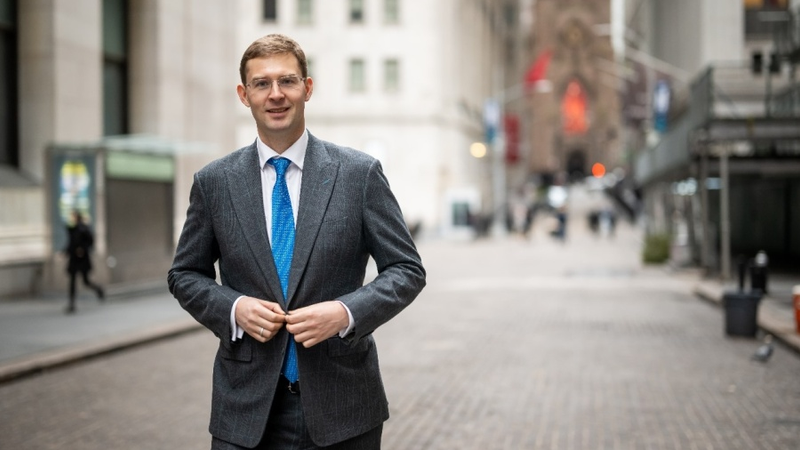
Turlov didn't enter the election as a presidential candidate. He was a sponsor appearing at big events like the FIDE Candidates in Cyprus in front of signage showing his business interests. It was almost accidental that Turlov is now leading the chess world.
Turlov was initially the running mate of incumbent FIDE President Arkady Dvorkovich, the technocratic former deputy prime minister of Russia who was seeking a third term. That changed dramatically, and swiftly, after 54-year-old Dvorkovich was sanctioned by the European Union and withdrew from the election.
Turlov moved to the top of the ticket and the legend Anand, Dvorkovich's deputy president and now FIDE's Vice President, became his running mate.
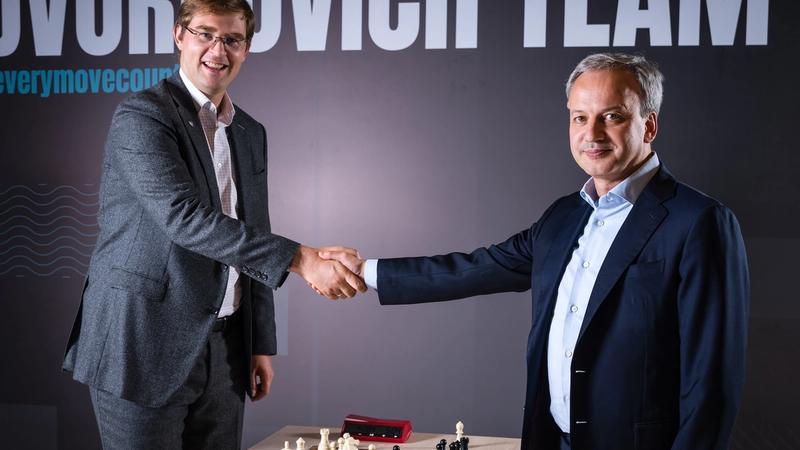
"This was not originally my plan," he told the August edition of the British Chess Magazine. "My original ambition was to help FIDE with digital transformation. But when Arkady decided not to continue, I felt that the experience I have in building institutions, managing international organisations and developing chess could be useful in taking FIDE to its next logical stage."
Turlov's late entry into the race, replacing Dvorkovich, made him the closest thing the election had to a continuity candidate.
Dvorkovich won the 2018 election by a landslide and the previous election in 2022 by 157 votes to 16. Controversies aside, in those eight years he managed to drag the federation from Cold War relic to functioning sports body.
Turlov couldn't simply assume those votes would transfer to him, but he did inherit a formidable network of relationships built up during Dvorkovich's time in office.
Dvorkovich himself publicly backed Turlov to succeed him. Those opposed to Russia's influence on FIDE saw this and his business background in Moscow as a problem, although Turlov insisted he had severed interests in Russia and renounced his citizenship in 2023.
One eye-catching policy proposal Turlov made as part of his FIDE platform was the introduction of facial recognition and AI-powered anti-cheating technology. Whether that gets off the ground, we'll find out.
Who is Jan Henric Buettner?
Result: Eliminated in the first round with 20 votes; subsequently endorsed Turlov.
Jan Henric Buettner is a breezy German entrepreneur best known in chess as the driving force behind the Freestyle Chess project, which this year put on its first Freestyle World Championship event in partnership with FIDE. The event was held at Buettner's plush Weissenhaus Private Nature Luxury Resort in Germany and came after Buettner fell out publicly with Dvorkovich.
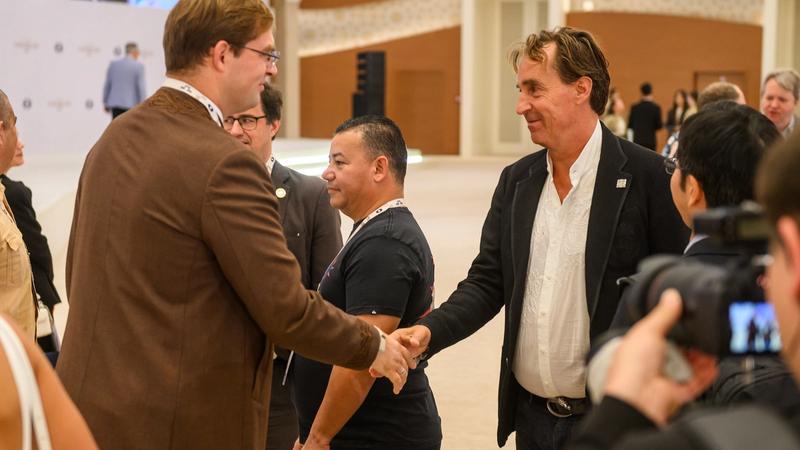
FIDE and Freestyle eventually made up after last year's successful Freestyle Chess Tour concluded in Cape Town. The new version of a chess world title, with the two sides working together, was announced shortly after.
This was before Buettner decided to go for Dvorkovich's job.
Buettner's running mate was IM Malcolm Pein, the English chess organiser, publisher and International Director of the English Chess Federation. Pein had strong credentials himself and may have considered a run, having been involved in the 2018 election as a running mate.
Buettner pitched himself as a reform candidate and argued that FIDE's national federations should be treated as the organisation's owners rather than its clients.
Buettner and Pein also became increasingly outspoken about the conduct of the election itself, raising concerns about FIDE's neutrality, electoral rules and the relationship between the governing body and Turlov's campaign.
In an interview published on the Perlen vom Bodensee chess blog published on August 22, Buettner made at least one eye-catching claim when, with as direct a comment as you'll find in a FIDE election, he put a price on a vote.
Buettner alleged that a corrupt system has developed in which "every four years someone comes along and distributes money," while saying his campaign will not pay federations for votes.
"The price for a vote is $40,000 in Europe, $5,000 in Africa," he said. Wow, there it was, out in the open.
Buettner's campaign, which focused on winning delegate votes rather than publicity, promised as an antidote to distribute 20 per cent of FIDE revenue, excluding prize funds, to national federations.
Pein remained one of FIDE's biggest critics and vociferous on the subject of Russian influence.
Who is Wadim Rosenstein?
Result: Runner-up—85 votes in the second round.
Germany's newly-installed FIDE delegate Wadim Rosenstein was another super-rich German-based businessman and also another one of chess's most prominent recent investors. Along with Turlov he had had to clarify questions about his business interests with Russia.
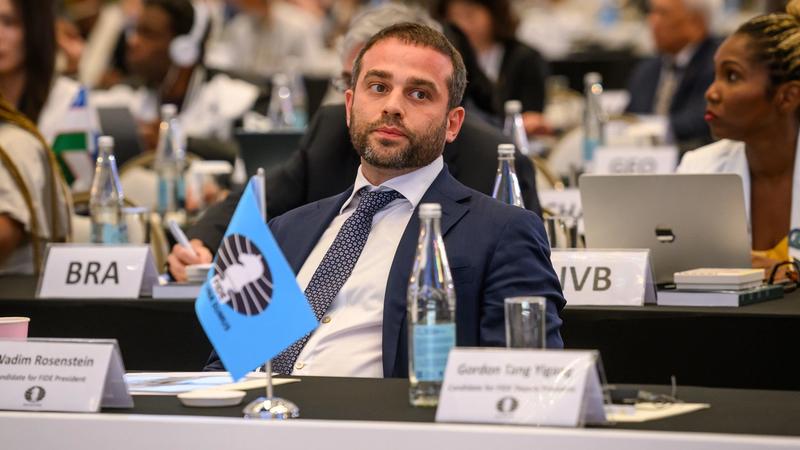
The 36-year-old Rosenstein is the founder of WR Chess and in the run-up backed a series of major events, including the FIDE World Rapid and Blitz Team Championships in Hong Kong where he played in the same team alongside GM Magnus Carlsen. He also pushed the WR Women’s Chess Tour, which appears to have been a strong success.
Rosenstein, the most PR savvy of the candidates, ran alongside Singapore-based businessman Gordon Tang.
In April, before he had declared himself as being in the running, Rosenstein made a cheeky offer to "help out" FIDE by providing an alternative venue, free of charge, to host the FIDE's flagship Candidates Tournament when fears were raised over the safety of players. FIDE swiftly declined.
Rosenstein's campaign was particularly active in seeking and publicising federation endorsements in South America, Europe, Africa and Asia, and positioned itself as an alternative to the existing FIDE leadership.
Rosenstein was also involved in some of the election's fiercest disputes, including formally asking FIDE's Electoral Commission to examine questions surrounding Turlov's eligibility and disclosures.
How does the FIDE election work?
The basic principle is remarkably simple. Too simple, some say. It is the controversial one federation, one vote mechanism for choosing a president. It is a system that creates a level playing field but, say critics, is also wide open to abuse.
Each eligible FIDE member federation represented at the General Assembly receives a single vote.
Here's the latest on who is eligible: FIDE Election 2026: The Nations That Can't Vote—And Those Still Facing Questions
That means India, the U.S. and China have exactly the same voting power as far smaller chess nations. Some are microstates and remote island territories no bigger than a village club, such as St. Helena, Palau, Tuvalu. Djibouti, a historical example, famously had only a single active FIDE-rated player for years.
We've explained the system in more detail in How The FIDE Election Works: Sport's Most Bitter And Backstabbing Vote Explained
Going into the vote in Samarkand, a more fundamental question emerged: will every eligible voter actually make it? Visa problems have left a number of election delegates outside Uzbekistan, with FIDE warning it could move the Congress if necessary to guarantee their right to participate and vote. That didn't happen.
Despite that warning, the Congress got underway in Samarkand and everything went smoothly.
How many votes are needed to win the FIDE election?
The important number is a majority of the valid votes cast.
The exact winning number therefore depended on how many eligible federations were represented and cast valid ballots in Samarkand.
With roughly 200 federations potentially involved, 100 was a useful shorthand for the race.
And with three candidates, the first ballot was particularly important.
Nobody secured the required majority, so the contest moved to another ballot.
Who appeared to be winning the FIDE election?
Beforehand, we really didn't know and didn't want to make a prediction. Nobody really knew.
World Chess was tracking the public endorsements here, but to reiterate, this was not a prediction.
There was, however, one decidedly unofficial indicator of where the race was heading. And it proved correct.
A small prediction market on Manifold attracted a sudden burst of activity apparently linked to Samarkand on the Tuesday before the election. Turlov/Anand moved from an opening price of around 40 percent to 82 percent, while Rosenstein/Tang fell from 23 percent to 4 percent and Buettner/Pein stood at 7 percent.
This was emphatically not a poll. The market was tiny, its traders were anonymous and there was no evidence that it represented how FIDE delegates intended to vote. What made it interesting is that most of the activity arrived within the same hour while the FIDE Congress was under way in Samarkand.
READ MORE: Somebody in Samarkand Has Already Called the FIDE Election
The campaign also produced plenty of rumours. World Chess CEO Ilya Merenzon reported from Samarkand that Rosenstein brought a sizeable campaign operation to the Congress, while Buettner had a much smaller team. One unconfirmed rumour circulating among delegates even claimed that Rosenstein and Buettner had a Bentley riding on whether Buettner received more or fewer than 30 votes.
READ MORE: There Is, Allegedly, a Bentley Riding on the FIDE Election
Why didn't Arkady Dvorkovich stand?
Until July, the expectation was that Dvorkovich, the son of a prominent Soviet arbiter with chess in his blood, would seek a third term.
Indeed, he formally launched his campaign with Turlov as his candidate for deputy president.
Then everything changed, in a way that was just so-FIDE.
The European Union imposed sanctions on Dvorkovich, and he subsequently stepped away from the election and suspended his FIDE presidential activities.
Turlov replaced him at the top of the ticket, with Anand moving into the deputy presidential slot.
That transformed the election overnight.
But Dvorkovich did not disappear from the campaign. He was, somewhat controversially, at the African Chess Confederation where Bernard Wanjala was elected as the new president. It was clear Dvorkovich's relationships with national federations—and the question of how much of his formidable electoral coalition Turlov could inherit—remained central to the contest.
What were the big issues in the FIDE election?
Where to start? The future of chess. Geopolitics (allegedly). Russia's meddling (again, alleged), corruption (definitely alleged), Carlsen's on-going participation in the big events. You name it, the election of Turlov to the president of FIDE will have a bearing on it.
Why did the FIDE election become so bitter?
Because the candidates increasingly started complaining about each other.
Rosenstein asked FIDE to investigate questions surrounding Turlov's eligibility and disclosures.
Turlov rejected allegations made against him and his representatives threatened legal action over claims they regarded as defamatory.
Buettner and Pein raised concerns about election integrity and FIDE neutrality.
The result was an election fought not only for federation votes but through FIDE's own electoral, legal and disciplinary machinery. It was all quite bewildering, to be honest. Who were the good guys here? It was difficult to work out.
As World Chess put it: They're All Turning On Each Other: FIDE Election Turns Into Bunfight Between Candidates
Why didn't Russia vote in the FIDE election?
The thorny issue. The answer is: the Chess Federation of Russia was suspended, our full report on that is here, and therefore did not have a vote in Samarkand.
But that didn't mean Russia ignored the vote.
Dvorkovich spent eight years working the room in FIDE, doing things the Russian way. Turlov was Dvorkovich's original running mate and was backed by the former president.
Russia took an interest.
Who were the FIDE Vice President candidates?
Four elected Vice Presidents were also chosen in Samarkand. FIDE originally approved 18 candidates for the four positions, but former FIDE Deputy President Georgios Makropoulos died on September 15, just 11 days before the vote. The remaining candidates included former world champion GM Rustam Kasimdzhanov, former Women's World Champion GM Xu Yuhua, Spanish journalist and former FIDE communications chief David Llada Fernández and former Russian sports minister Pavel Kolobkov.
Read our full guide to the 18 candidates fighting for four FIDE Vice President positions.
Where did the FIDE election take place?
The election took place on Saturday, September 26 during the FIDE General Assembly in Samarkand, Uzbekistan.
That meant for a few days in September, virtually the entire political and playing elite of world chess were in the same city.
Who won the 2026 FIDE presidential election?
Timur Turlov won the 2026 FIDE presidential election, defeating Wadim Rosenstein 110-85 in a second-round ballot in Samarkand on September 26.
Turlov had received 96 votes in the first round, one short of the 97 required for an outright victory. Rosenstein received 76 and Jan Henric Buettner 20.
After Buettner was eliminated, he and running mate IM Malcolm Pein endorsed Turlov. Turlov then won the runoff 110-85, with one abstention.
Buettner finished third in the first round with 20 votes and was eliminated. Despite having said shortly before the election that there was "no deal" and "no second-round arrangement" with Turlov, Buettner and Malcolm Pein endorsed Turlov ahead of the runoff.
What did Turlov say after being elected?
In a press release sent out by FIDE following the result, Turlov said: "We are all one family, and we will continue working as one. This is a great responsibility and a vote for a better future of our sport.
"I am grateful to everyone who supported my campaign and to everyone who took part in this election. We may have different opinions, but we all share one belief – that chess is important and that we can do much more to develop it around the world by making our Member Federations stronger and more independent," he added.
"I look forward to moving chess forward and giving the game the spotlight it deserves," Turlov concluded.
What did Dvorkovich say?
In his congratulations to Timur Turlov, former FIDE President Arkady Dvorkovich wished him success in his work.
"Timur has already done a great deal for chess, and I am sure he will do even more now as FIDE President. He and his team have the energy, a clear plan, and resources to deliver and this election result shows Timur has significant backing. We are all one family, and we all share the same goal – for chess to be bigger, better and stronger in the world," Dvorkovich said.
What did Buettner say?
Buettner was gracious in defeat and quickly congratulated Turlov and Anand following the result.
"The member federations of FIDE have made their decision," he said. "That decision deserves our full respect. I wish the new leadership every success, because when FIDE succeeds, chess succeeds."
Buettner thanked the federations that met with him and deputy presidential candidate Malcolm Pein during the campaign, including those that ultimately supported another ticket.
He said that travelling to meet people across the chess world, hearing what federations need and learning from their experience had been one of the most valuable parts of the campaign.